
Death + Ace of Cups
Explore how these two tarot cards interact in a reading through symbolic overlap, contrast, and shared narrative. Tarot combinations often reveal meaning that neither card fully expresses on its own.
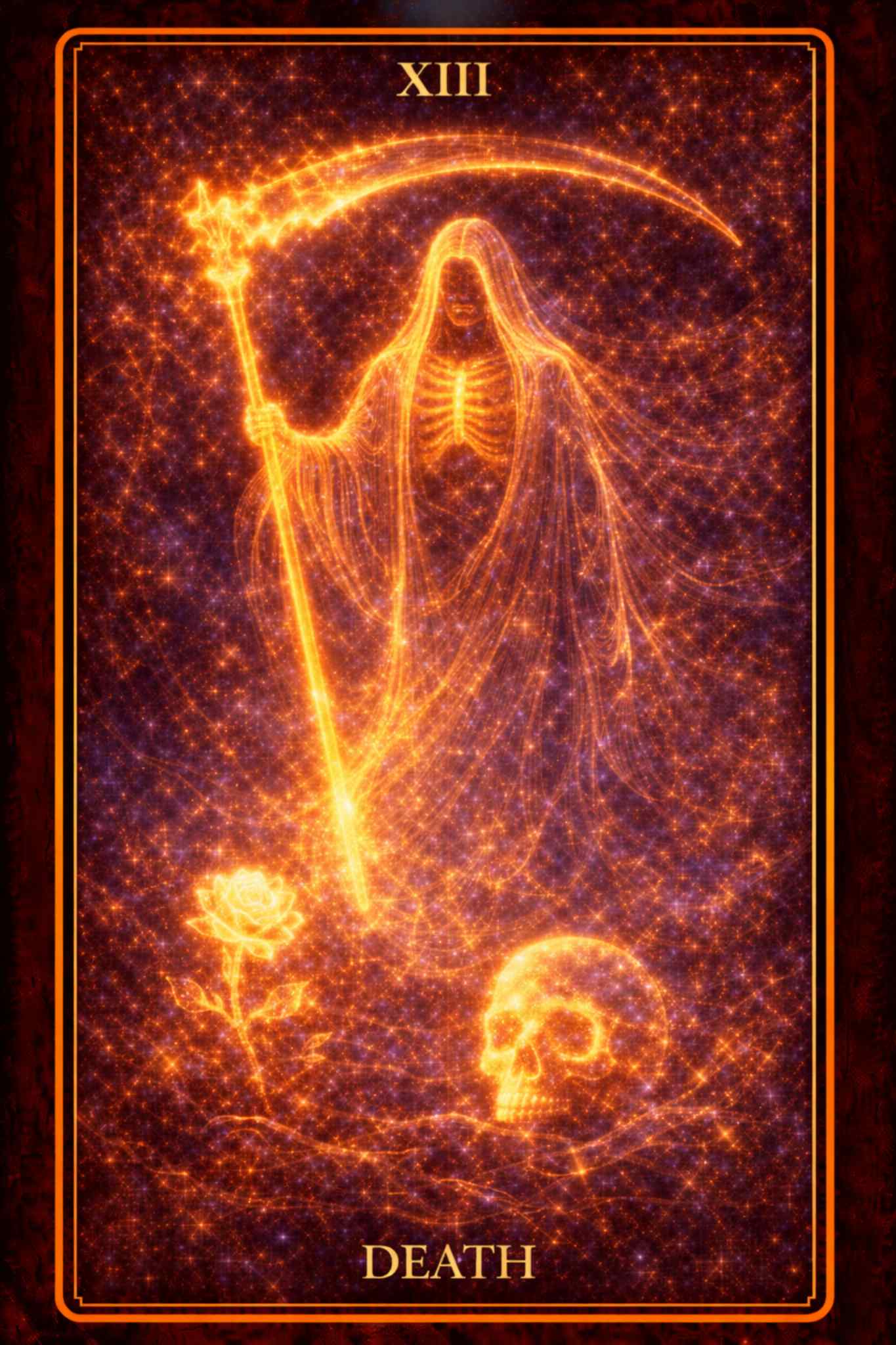
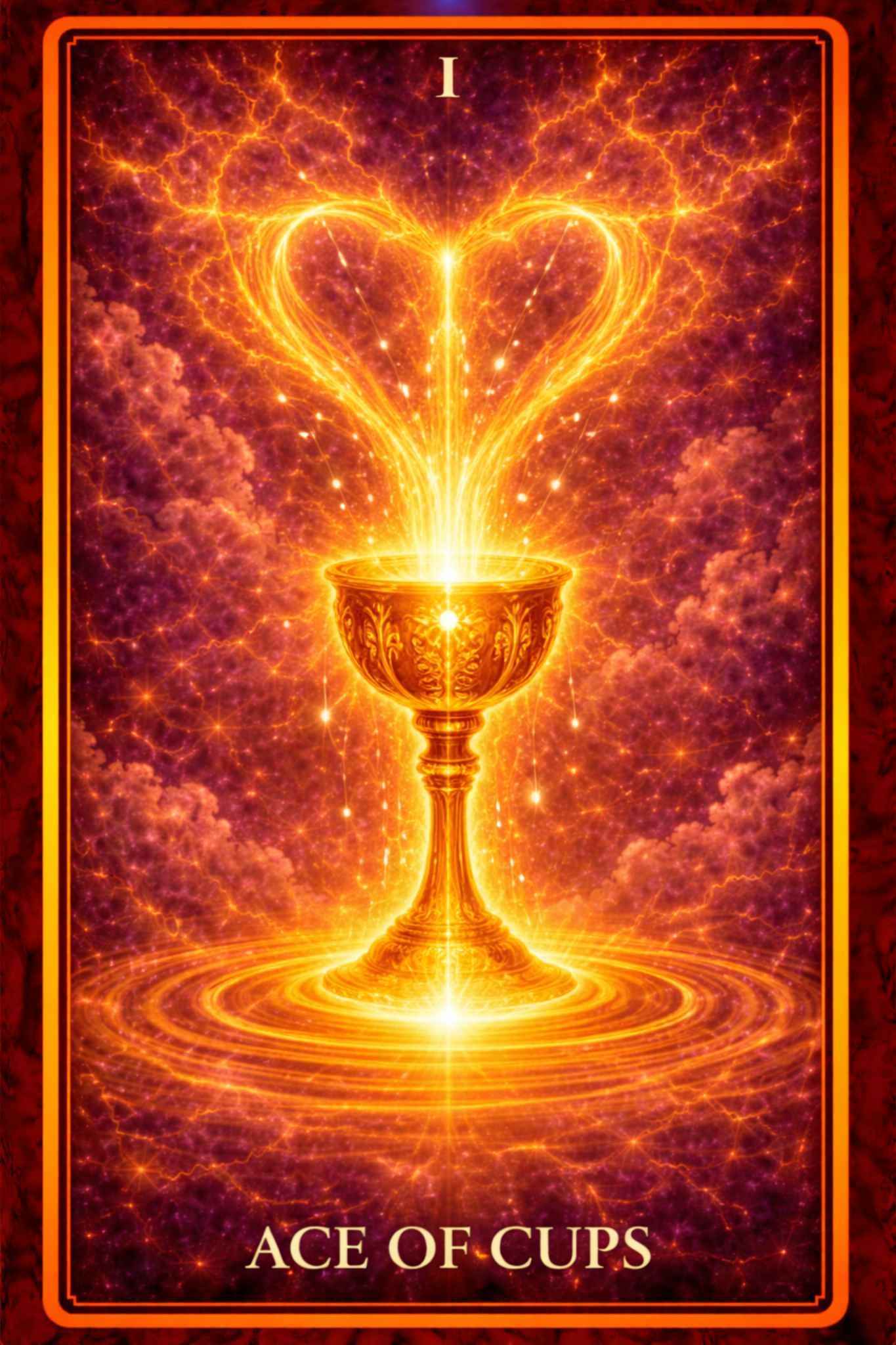
Death and Ace of Cups tarot combination meaning
A cup can be offered only after the old water has been poured away. That is the quiet tension inside Death and Ace of Cups: the heart is ready for new feeling, but the vessel has first been changed by release. Death brings the natural completion of an emotional form that has finished its life in the soul. Ace of Cups brings tenderness, receptivity, and the first clean movement of feeling after that completion. Together they do not speak of drama for its own sake. They describe the sensitive threshold where an old attachment, expectation, grief, fantasy, or emotional identity has begun to dissolve, and something softer is trying to arrive in its place, not unlike the inward sensitivity explored in the High Priestess and Ace of Cups, where feeling begins quietly before it becomes visible.
This pairing can feel surprisingly gentle, even when the subject is serious. Death does not need to be read as catastrophe here. It is the card of organic ending, the moment when a feeling, role, or relationship pattern can no longer remain alive in its previous shape. The Ace of Cups does not erase that ending. It gives it moisture, grace, and emotional possibility. The new feeling may be love, forgiveness, compassion, creative inspiration, spiritual openness, or simply the first sign that the heart is becoming available again. Yet the new cannot be forced into the old container. The deeper message is that emotional renewal becomes real only when the previous form has been honored, released, and allowed to complete itself.
There is a difference between beginning again and pretending the past did not matter. Death and Ace of Cups asks for that distinction with unusual clarity. The Ace of Cups may bring a fresh emotional impulse, but Death asks whether the person is truly open to a new chapter or only reaching for a softer version of the old one. This is where the pair becomes emotionally mature. It does not rush grief into romance, disappointment into hope, or closure into instant replacement. It invites the heart to become clean enough to receive without carrying the old story into every new drop of feeling.
When the old vessel changes shape
Death changes the structure of emotional identity. The Ace of Cups fills the new structure with living water. This can describe a time when someone realizes that the way they once loved, hoped, needed, or opened themselves has changed at the root. They may still be capable of tenderness, perhaps even more capable than before, but the tenderness no longer comes from the same place. A former innocence may have ended. A repeated longing may have lost its authority. A familiar emotional role may have become too small. The new heart does not arrive by erasing experience; it arrives because experience has refined what the heart can honestly receive.
This is especially important in love and relational readings. Death with Ace of Cups can point to emotional renewal after a period of letting go, yet it should not be flattened into a promise of new romance. It is more precise than that. It may show that love itself is changing form. A person may feel affection differently, release a pattern of pursuit, soften after a long season of guarding themselves, or discover that grief has made room for a more honest kind of openness. In some situations, a connection can renew if both people allow the old version of the bond to complete. In others, the feeling remains meaningful while the relationship shape changes. The question is less whether love exists and more whether the old container can still hold the truth of what love has become.
A similar emotional threshold appears in Death and The Star, where release opens a path toward healing and quiet trust. Yet the Ace of Cups brings that process closer to the skin. The Star can feel wide, spiritual, and spacious; the Ace of Cups feels intimate, immediate, and vulnerable. With Death, that vulnerability carries memory. It is the first water after a long dry season, and because of that, it deserves care rather than pressure.
Love, tenderness, and the courage to receive
In love readings, Death and Ace of Cups often describes a heart moving through a necessary change before it can receive clearly. This may involve releasing an old attachment style, a previous emotional story, a fantasy of how love should feel, or a bond that has changed beyond its former meaning. The Ace of Cups suggests that tenderness is still possible. Death asks that tenderness to be rooted in truth. If someone is opening again, the opening may feel fragile because it is no longer protected by old illusions. That fragility can be sacred. It shows that the person is learning to feel without pretending that nothing has ended.
This pairing can also speak to reconciliation in a careful, grounded way. A relationship may find a softer beginning if both people are willing to let the old pattern die rather than decorate it with new words. The Ace of Cups brings the emotional impulse to reconnect, forgive, or offer warmth. Death asks whether the deeper cycle has actually shifted. Without that shift, the cup simply refills the same cracked vessel. With the shift, the connection may become more honest, less performative, and more emotionally alive. The emphasis is on changed relating, not on returning to a previous emotional arrangement.
For the love layer of this reading, Ace of Cups love meaning adds useful context because it explores emotional openness, affection, and the beginning of feeling. When joined with Death, that beginning becomes more nuanced. It is not only a bloom. It is a bloom after pruning. The sweetness is real, but it carries the discipline of release inside it.
What has to be released before feeling becomes clean
The shadow of this combination appears when a person wants the fresh water of the Ace without accepting the ending of Death. They may seek emotional relief, a new attraction, a healing conversation, or a symbolic restart while still holding tightly to the old interpretation. This can create a confusing atmosphere where the heart says it wants renewal, but the deeper self is still trying to preserve the past. Death makes that impossible for long. It asks what is being kept alive through memory, fear, guilt, or habit. It asks whether the emotion itself is living, or whether the person is trying to revive a shape that has already finished its purpose.
This does not make the process cold. In fact, the Ace of Cups keeps the whole pairing compassionate. The release may involve tears, gratitude, tenderness, and the wish to bless what was rather than reject it. Sometimes the cleanest ending is the one that still carries love. Sometimes the most loving act is to stop forcing an old version of love to keep performing life. Death and Ace of Cups holds that paradox with unusual grace: the heart may grieve and soften at the same time, lose an old form and discover a truer emotional current underneath.
This is where Death spirituality meaning becomes especially relevant. Death in spiritual work often concerns the shedding of identity, the completion of an old cycle, and the quiet dignity of inner renewal. With the Ace of Cups, that spiritual shedding becomes emotional. The soul is learning that openness is strongest when it is no longer built on denial.
Timing and emotional readiness
Timing with Death and Ace of Cups has a clear rhythm: closure first, then receiving. The new emotional movement may already be visible, but the cards suggest that it should be handled gently while the old pattern is still leaving the body and mind. This is a time to grieve without rushing to replace, to open without performing certainty, and to allow the heart to become honest before it becomes eager. If something has ended internally, the outer world may take longer to reflect that truth. The person may still be speaking the language of the old story while the soul has already moved toward another shore.
Want to explore this combination in a more personal way?
If this pairing feels important right now, a simple tarot spread can help you reflect on it with more context.
When this pair appears around a developing connection, it asks whether the feeling is arising from true renewal or from the need to escape emptiness. When it appears around an existing relationship, it asks whether the bond can take a new form without pretending to be unchanged. When it appears around healing, it says that relief may come through acceptance rather than replacement. The old water has to drain. Only then can the cup hold something that does not taste like the past.
A reflective layout such as the past present future tarot spread fits this pair well because the cards naturally divide the process into what is complete, what is becoming tender, and what may be allowed to emerge. Used carefully, that structure can help separate genuine renewal from the impulse to carry an old emotional script forward under a softer name.
Ready to see how this applies to your situation?
A focused tarot reading can help you explore how Death + Ace of Cups may reflect your current situation, not just the general meaning of the cards.
The quiet blessing after release
Death and Ace of Cups ultimately describes the moment when the heart begins to feel again in a changed language. The old emotional form may have completed its cycle, but feeling itself has not disappeared. It has become more truthful. Something in the person is ready to receive differently, love differently, forgive differently, create differently, or simply meet life without the same old wound defining every response. The cup is not a reward for suffering. It is the sign that life continues to move through the places that have been cleared.
The deepest question in this pairing is simple and difficult: what remains alive after the old story falls away? If the answer is tenderness, then that tenderness deserves space. If the answer is grief, then grief deserves dignity. If the answer is a new beginning, then that beginning should be allowed to grow in a form that belongs to the present rather than the past. Death and Ace of Cups is the image of emotional water returning to a changed landscape. It is soft, serious, and quietly hopeful because it understands that the heart can begin again without betraying what it had to release.
More combinations with Death
More combinations with Ace of Cups
Continue with Death
Explore Related Guides by Topic
If you want to explore this combination through a more specific emotional lens, these tarot guides can help you follow the broader pattern behind the reading.