
The Tower + Five of Wands
Explore how these two tarot cards interact in a reading through symbolic overlap, contrast, and shared narrative. Tarot combinations often reveal meaning that neither card fully expresses on its own.
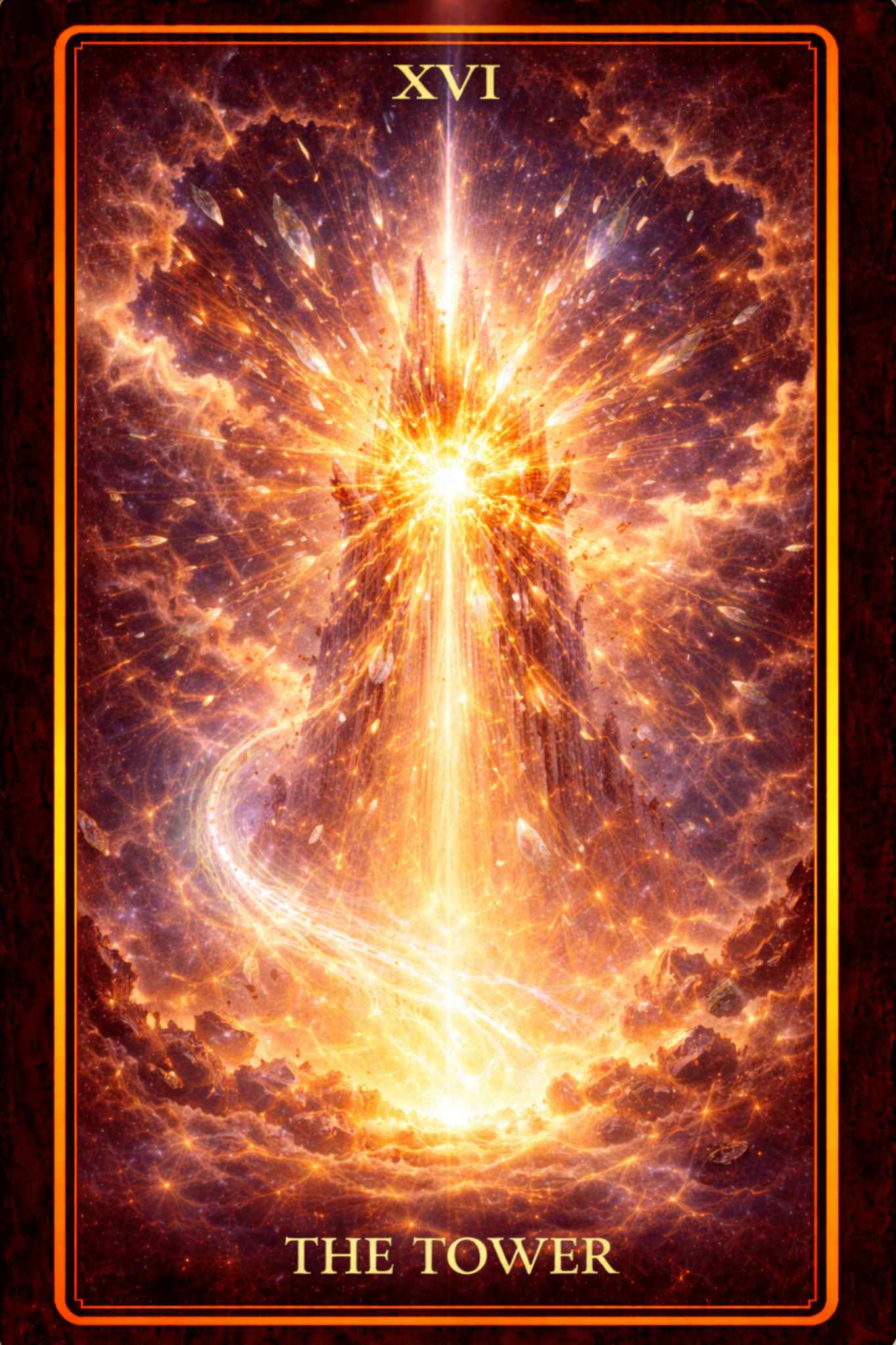
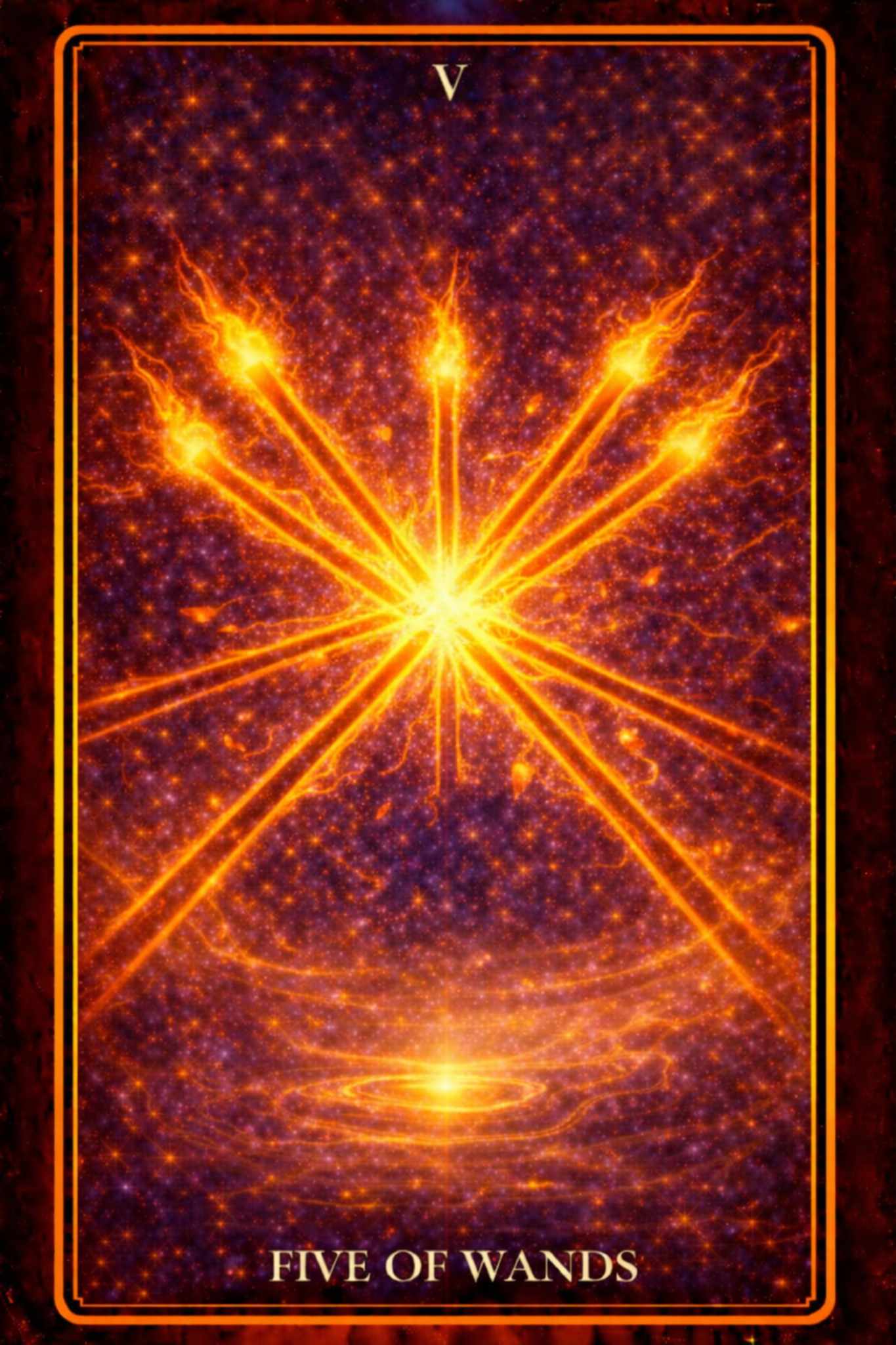
Tower and Five of Wands Tarot Combination Meaning
Some conflicts do not begin on the surface. They begin as pressure, friction, crowding, and repeated strain inside a structure that keeps insisting it can still contain everything. Tower and Five of Wands speak to that exact stage, though the Tower here is not only the image of sudden collapse. It can also be understood as revelation through overload, the moment when hidden weakness becomes visible because too much heat has been building in one place for too long. The Five of Wands brings agitation, rivalry, competing agendas, provocation, restless energy, and the feeling that several impulses are trying to dominate the same field at once. Together, these cards show conflict becoming diagnostic. The clash matters because it reveals where the frame has already lost resilience, where the system has been surviving through constant management rather than through genuine structural strength, and where one more surge of friction is enough to make the underlying instability impossible to ignore.
This shift in emphasis changes the emotional meaning of the pair. The Five of Wands on its own can remain transitional. It may describe trial, challenge, creative irritation, competition, or the kind of active disagreement that still belongs to a living process. Beside the Tower, the reading becomes less about simple argument and more about exposure. Heat is no longer just heat. It becomes evidence. The deeper issue is not merely that people are clashing, but that the clash is illuminating a structure that has already grown too tense, too fragmented, or too overburdened to carry conflict without beginning to split. That is why this combination can feel so intense. It brings the outer noise of struggle into direct contact with the hidden architecture beneath it, and once that happens, it becomes much harder to pretend that the latest argument is only about the latest argument.
When conflict stops being a passing phase
The Five of Wands often carries a sense of too many forces moving at once. There may be competition for space, for recognition, for influence, for control, or simply for the right to have one’s energy matter. This can remain manageable for a while, especially in situations that are naturally dynamic or full of strong personalities. Yet there is a point at which movement stops being productive and starts becoming corrosive. The Tower, viewed through this lens, shows that the environment has reached that point. A system that once absorbed friction now reveals how much stress it has been storing. The issue is no longer that people disagree. The issue is that the disagreement has become the instrument through which fragility is exposed.
This often appears in conditions where tension has been normalized. A relationship may keep going despite repetitive conflict because both people are used to the cycle. A team may continue functioning despite rivalries because everyone has accepted friction as part of the culture. A person may remain outwardly coherent despite intense inner contradiction because they are skilled at compartmentalizing. Then something changes. The next argument lands harder. The next provocation reaches deeper. The next collision does not disperse back into routine. The Tower marks that threshold. It does not have to mean theatrical destruction. It can simply mean that the old method of containing the heat has stopped working, and from that moment onward, the conflict begins telling the truth more loudly than anyone’s preferred story about stability.
What the struggle is revealing
One of the most useful ways to read this pair is to treat the conflict as information rather than only as disruption. The Five of Wands shows the symptom in motion: agitation, competition, clashing will, reactive energy, and the exhaustion of too many unresolved pressures sharing the same space. The Tower shows what that symptom points to. Somewhere underneath the visible heat, the structure has been carrying more than it can integrate. The bond has been relying on management instead of repair. The group has been relying on effort instead of alignment. The psyche has been relying on suppression instead of reorganization. Under these cards, the clash becomes revealing precisely because it is not random. It hits the weak beam, the compromised seam, the part of the arrangement that was already under strain before the latest flare-up ever began.
This is why the combination should not be flattened into simple disaster language. It is fierce, though it is also intelligent. The conflict may feel messy, yet the mess has meaning. A person may wish everything would calm down immediately, though calm may have been part of what kept the deeper truth hidden. In some cases, the situation has already spent months or years being “handled” without ever being healed. The Five of Wands then acts like accumulated static in the air, and the Tower is the moment the atmosphere finally discloses what the strain has been doing all along. That is a very different reading from mere chaos. It suggests that something valuable becomes possible once the pressure can no longer hide inside appearances.
- Tower in this pairing can be read as revelation through pressure, the exposure of a system that has lost the ability to absorb strain without showing its fractures.
- Five of Wands brings rivalry, agitation, competing agendas, reactive heat, and the scattered force of too many active tensions at once.
- Together they often show conflict acting as a revealer, making visible the weakness, overstrain, or fragmentation already present beneath the struggle.
- The central challenge is to stop treating the clash as an isolated event and begin reading it as evidence about what the structure can no longer sustain.
- The deeper invitation is to let the exposed instability teach you what kind of framework is actually needed for tension, intensity, and difference to be held more truthfully.
Love and relationship meaning
In relationship readings, Tower and Five of Wands often point to a bond in which repeated friction has stopped being incidental and has started becoming revelatory. Arguments, defensiveness, competing emotional needs, sexual frustration, pride collisions, and recurring irritations may all be present, though the real weight of the pair lies in what these conflicts are exposing. One or both people may have been trying to keep the relationship intact through containment alone, managing tension rather than transforming it. The Five of Wands shows the heat between them. The Tower shows that the heat is now reaching a point where the old structure of the bond cannot hold it in the same way. What once returned to normal after a fight may no longer do so. What once seemed manageable begins to reveal how much fatigue, resentment, or incompatibility has been quietly accumulating underneath.
That does not always mean the relationship is ending. It means the relationship is being forced into truth. Sometimes a couple has grown skilled at surviving conflict without ever asking why the same pressure points keep igniting. Under these cards, that pattern becomes harder to sustain. The latest clash may reveal how authority is negotiated, how tenderness disappears under stress, how one partner competes where the other seeks repair, or how both people have been treating volatility as passion when it is actually a sign of deeper instability. This can be painful, especially when care still exists. Yet care alone does not make a structure resilient. The Tower in this pairing asks whether the relationship can reorganize around honesty rather than around repeated cycles of heat, apology, and temporary reset.
At its healthiest, this pair can force a relationship out of decorative peace and into meaningful recognition. The fight becomes the doorway through which a more accurate understanding enters. Two people may finally name what has been exhausting them, what has been provoking them, and what has been making each disagreement carry the charge of ten older ones. The Five of Wands often shows that several emotional currents are colliding at once. The Tower asks whether those currents have ever truly had a stable vessel. If the answer is no, then the real work is not merely calming down. It is building a bond that can hold difference, frustration, and intensity without requiring the entire frame to shake each time conflict appears.
Career, work, and group dynamics
In work readings, this combination can be especially sharp because many professional environments confuse activity with health. The Five of Wands may look energetic from the outside. There is motion, debate, ambition, visible engagement, and plenty of people pushing hard. Yet beneath that busyness there may be unclear leadership, territorial behavior, rivalry, mixed priorities, poor coordination, and a culture that treats chronic friction as normal. The Tower appears when that arrangement begins revealing its actual cost. A project stalls, a team fractures, a conflict escalates publicly, or a system that depended on constant tension management starts losing credibility. Here the Tower is not only a dramatic event. It is the point where everyone can finally see that strain has become architectural, not merely interpersonal.
You may also want to go one step deeper.
The Tower + Five of Wands can open up differently inside a focused personal reading.
This pairing often shows up in workplaces where people have adapted to overheat for so long that they mistake it for productivity. The team keeps moving, though it is using conflict as fuel. The organization keeps functioning, though it is burning trust faster than it can replace it. A hierarchy stays in place, though authority is being undermined by repeated power clashes. Under these cards, the struggle stops being a side effect and becomes the revelation itself. The Five of Wands says, “Look at how much force is colliding here.” The Tower says, “Look at what that collision proves about the system underneath.” That shift matters because it moves the reading away from personality blame and toward structural diagnosis.
At its most useful, the combination becomes a turning point in understanding. A person may realize that the problem was never just difficult coworkers, strong egos, or bad moods. The problem may be that the framework itself rewards confusion, competition, and reactive leadership. Or that the workload, chain of command, and expectations were designed in a way that guarantees heat without coherence. Once that becomes visible, a stronger response becomes possible. The lesson is not that conflict must vanish from all group life. It is that conflict cannot be asked to do the job of structure. Where there is no real frame for intensity, intensity eventually begins tearing holes in the whole operation.
Psychological and spiritual meaning
Psychologically, Tower and Five of Wands often describe an inner world where competing drives have become too active to keep hidden inside one stable self-image. A person may be pulled by several ambitions, loyalties, fears, desires, or identities at once. They may appear functional on the outside because they have become highly practiced at managing the internal crowd. The Five of Wands shows the scramble beneath that appearance. It is the jostling of parts, the reactive force of multiple unmet claims on energy, and the frustration of a psyche trying to move in several directions at once. The Tower then reveals that the old container for holding this complexity has reached its limit. The person can no longer maintain the same narrative about who they are while these internal tensions keep pressing with such force.
Spiritually, this combination can mark the end of false composure. A person may have believed they were integrated because they had become skilled at suppressing disturbance, redirecting anger, intellectualizing contradiction, or turning every inner conflict into something manageable on the surface. Yet the Five of Wands keeps generating heat where there is no true arrangement. The Tower exposes how exhausting that has become. It can feel humbling, though humility may be exactly what allows reorganization to begin. The spiritual task here is not to appear above conflict. It is to become honest enough about the conflict that a deeper, more spacious structure can be formed around the living energies themselves. Under these cards, maturity looks less like polished serenity and more like the ability to hold tension without building identity out of repression or collapse.
Shadow expression and challenge
The shadow side of this combination appears when a person starts living off the voltage of conflict. The Five of Wands can make struggle feel stimulating, even addictive. The person may keep entering competitive environments, provoking unstable dynamics, or confusing reactivity with vitality. The Tower adds consequence to that habit. Every clash becomes louder, more costly, and more damaging, though the underlying lesson keeps getting missed because attention remains trapped in the immediate heat. In this state, conflict becomes both the problem and the distraction from the problem. The person keeps responding to sparks while ignoring the architecture that makes sparks so destructive.
Another difficult expression appears when all effort goes into controlling visible behavior while the failing structure underneath remains untouched. Everyone wants the fight to stop. No one wants to ask why the whole arrangement became so vulnerable to heat in the first place. A team wants less drama, though it still runs on unclear roles and rivalry. A couple wants fewer arguments, though the bond still lacks the honesty required to metabolize frustration. An individual wants inner peace, though their life is still arranged around incompatible demands. Under these cards, symptom management reaches its limit. The challenge is not merely to reduce noise. It is to understand why the noise was carrying so much truth.
Want to place this combination into a wider reading?
If this pairing feels close to something you are experiencing, a simple spread can help you reflect on the surrounding energy with more clarity.
Closing reflection
There are moments when a room fills with more than raised voices. It fills with the unmistakable sense that the atmosphere itself has been holding too much for too long. Tower and Five of Wands know that moment. They know the clash that becomes a disclosure, the argument that suddenly reveals an older weakness, the surge of heat that makes it impossible to keep calling the structure stable in the same way. What breaks here is not always the whole thing at once. Sometimes what breaks first is the right to keep misnaming the problem.
The wisdom of this pair is to treat the conflict as a revealer rather than only as an enemy. Let it show you where the frame has become too brittle, too crowded, too reactive, or too dependent on endless management. Let it tell the truth about what can no longer be carried in this form. Then respond at the level that actually matters. Build a structure that can hold force without turning every pressure point into a fracture. Build a life, bond, or system in which intensity does not have to become a demolition crew before anyone finally listens.
More combinations with The Tower
More combinations with Five of Wands
Continue with The Tower
Explore Related Guides by Topic
If you want to explore this combination through a more specific emotional lens, these tarot guides can help you follow the broader pattern behind the reading.