
The Lovers + Ten of Wands
Explore how these two tarot cards interact in a reading through symbolic overlap, contrast, and shared narrative. Tarot combinations often reveal meaning that neither card fully expresses on its own.
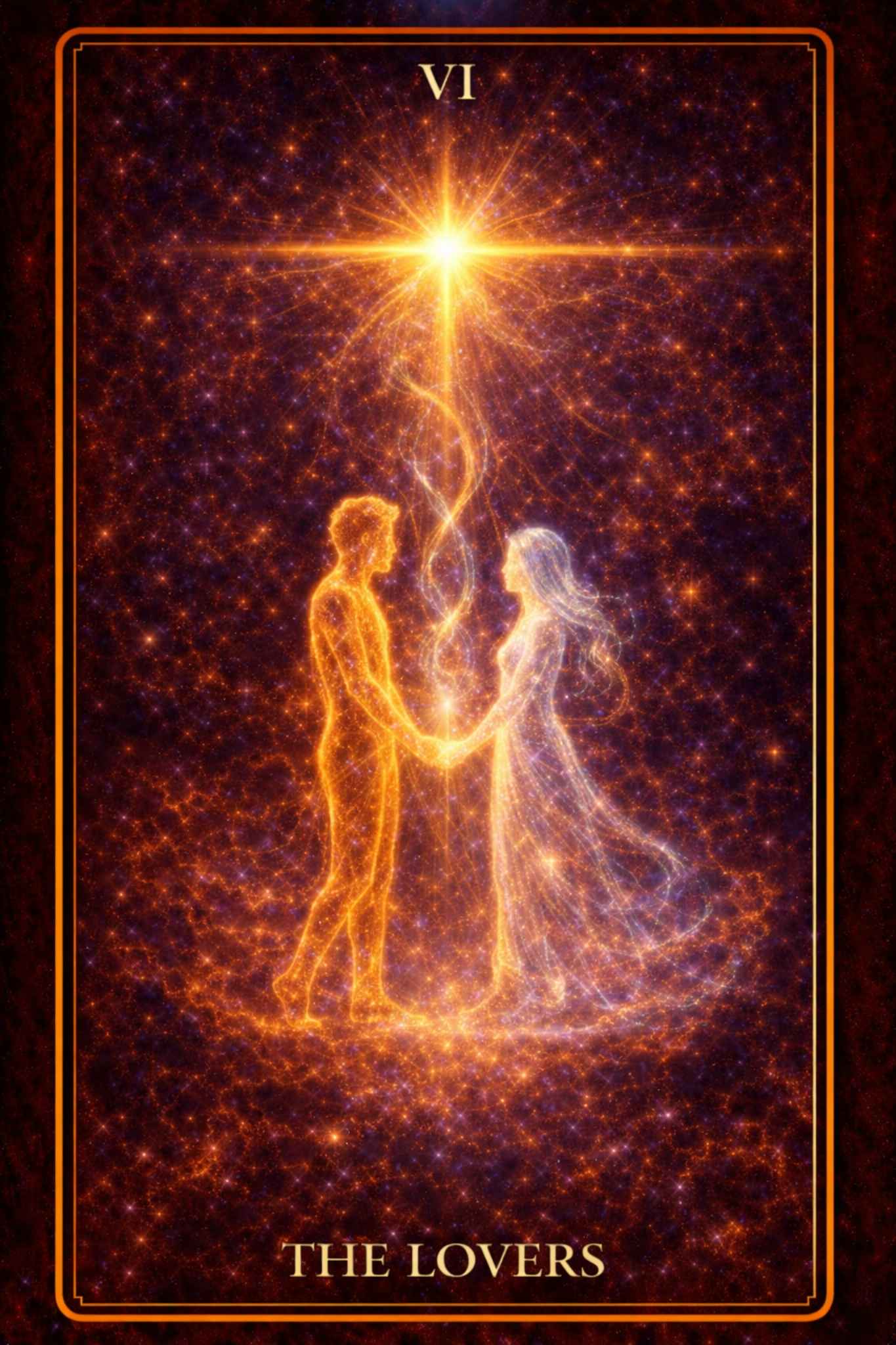
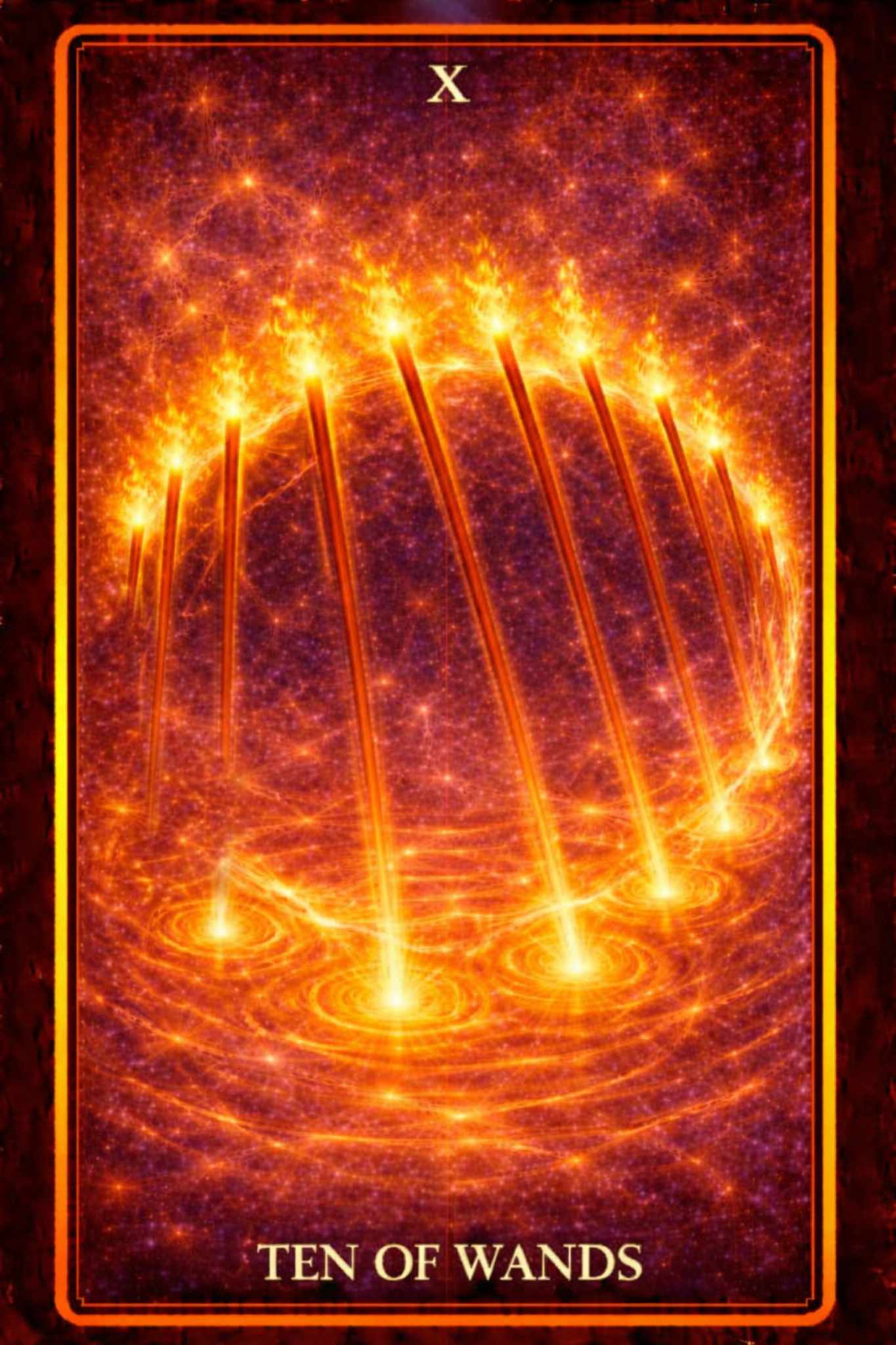
The Lovers and Ten of Wands Tarot Combination Meaning
The Lovers and Ten of Wands form a combination about connection under weight. This is not merely attraction, nor simply the question of whether a bond is meaningful. It is what happens when meaningful connection exists inside pressure, over-responsibility, fatigue, or the gradual accumulation of burdens that make even genuine closeness harder to inhabit. The Lovers brings intimacy, reciprocity, values, emotional truth, mutual recognition, and the call toward a choice that can be lived without inner division. The Ten of Wands brings heaviness, carrying too much, strain, obligation, emotional load, and the sense that life has become difficult to hold in its current form. Together, these cards suggest that connection may still matter deeply, but the field around it is no longer light. Something is being asked to carry more than it comfortably can, and that burden is shaping the quality of the bond in ways that cannot be ignored for long.
This is why the pairing should not be reduced to a vague message about hard work in love. It is more exacting than that. The Ten of Wands asks what happens when the weight of responsibility begins to affect how people relate, how they choose, how they communicate, and how much room remains for joy, softness, or true mutuality. The Lovers asks whether the relationship or choice still reflects a real yes beneath all that weight, or whether the bond is slowly becoming organized more around duty, exhaustion, or emotional labor than around living connection. In Arvethis terms, this is a pair about burden meeting intimacy. It asks whether responsibility is strengthening the relationship through shared commitment, or slowly crushing it by leaving too little room for breath, reciprocity, and human tenderness. The issue is not whether effort exists, but whether effort has begun to replace aliveness.
The core dynamic of this pair
The Ten of Wands changes the emotional climate of The Lovers by adding density. Where The Lovers alone may emphasize recognition, attraction, or aligned choice, the Ten of Wands asks what happens when that choice becomes difficult to carry. There may be too many obligations, too much pressure from work or family, too much unspoken emotional labor, too much need to keep things functioning, or a pattern in which one or both people are carrying more than is sustainable. The relationship may still be real. The choice may still matter. But the experience of it is heavy, and that heaviness can subtly reshape everything. Intimacy may become logistical. Desire may become secondary to tasks. Emotional availability may be reduced not because feeling is absent, but because energy is spent elsewhere and the nervous system has little room left for softness.
This pairing is compassionate, but it is not sentimental. It acknowledges that meaningful connection does not happen only in ideal conditions. People fall in love, make choices, build bonds, and try to remain aligned while also living inside demanding lives. But the cards also refuse to romanticize chronic strain. Carrying a lot is not always proof of devotion. Sometimes it is a signal that the structure around the relationship is no longer healthy or balanced. The Lovers asks whether the current arrangement still honors mutuality. The Ten of Wands asks whether the load is being shared wisely, named honestly, and carried in a way that allows the bond to remain alive rather than merely functional. The distinction between commitment and overburden matters enormously here, because a bond can survive pressure for a long time while quietly losing its capacity for warmth.
Love and relationship meaning
In love readings, The Lovers and Ten of Wands often suggest a relationship with real feeling but significant weight around it. There may be sincere care, attraction, and even deep values-based connection, yet the bond is being pressured by stress, circumstances, responsibilities, or the emotional labor of carrying too much for too long. One partner may feel responsible for holding the relationship together. Both may be exhausted by life outside the bond. There may be practical burdens that keep intimacy in survival mode. This combination can appear when the connection itself is not the only issue. The issue is everything that has been piled onto the connection and everything the people involved are trying to carry while still hoping love will stay warm and available.
Sometimes the Ten of Wands shows a relationship in which love has started to feel like one more obligation. That can be painful because The Lovers suggests that the bond is not empty. It matters. But what matters may have become entangled with duty, emotional caretaking, imbalance, or the sense that someone must keep bearing more than their fair share in order for the relationship to continue functioning. The deeper question is not simply whether the relationship survives pressure. It is whether the pressure is allowing the relationship to remain mutual, breathable, and emotionally honest. A bond may endure for a long time under burden, but endurance alone is not the same as health, and quiet loyalty is not always enough to protect closeness when exhaustion becomes the dominant atmosphere.
This pairing can also reveal the quieter tragedy of connections that are real but undernourished. People may love each other and still have very little spaciousness left to actually feel or enjoy that love. Time may be scarce. Energy may be low. Every conversation may be shaped by practical concerns. Resentment may grow not because the bond lacks meaning, but because the conditions around it are unrelenting. In those cases, the cards encourage a more compassionate diagnosis. The problem is not always the feeling. Sometimes the problem is the load. Yet compassion does not mean denial. If the burden is chronic, unnamed, or unfairly distributed, then the relationship may slowly lose its sense of choice and start to feel like a structure of obligation. The Lovers cannot fully breathe in that atmosphere unless the weight is addressed with honesty rather than merely endured in silence.
How the fire of Wands works here
The fire of the Ten of Wands is effort at the point of overload. It still moves, but not easily. It still carries energy, but that energy is compressed beneath accumulation. When paired with The Lovers, the fire does not accelerate or dramatize the connection. It burdens it. There may be passion underneath, but it is competing with strain. There may be desire, but it is tired. There may be love, but it is being asked to coexist with too many demands. This gives the combination a very human tone. It does not describe idealized romance. It describes what happens when meaningful connection exists inside real life at a level that may be becoming unsustainable, especially if the people involved are still trying to carry everything through willpower alone.
At a higher level, this fire can reflect devotion, perseverance, and the willingness to keep showing up even when things are difficult. That should not be dismissed. Sometimes love is expressed through carrying with and for each other. But the Ten of Wands always asks when carrying becomes too much. When the load is no longer shared, when burden turns into silent resentment, or when the effort required to maintain everything leaves no room for pleasure, spontaneity, or honest emotion, then the fire begins consuming more than it warms. The Lovers keeps asking whether the connection is still chosen in a living way, or merely sustained because everyone is too tired to reimagine the structure. The burden is not automatically proof of depth. Sometimes it is evidence that change is overdue, and that real care now requires redistribution rather than more endurance.
Responsibility, reciprocity, and hidden imbalance
One of the most important themes in this combination is the relationship between responsibility and reciprocity. The Lovers asks for mutuality, but the Ten of Wands often reveals uneven load-bearing. One person may be doing more of the emotional holding, the logistical organizing, the peacekeeping, the practical support, or the invisible maintenance of the bond. In some cases, both are burdened, but in different ways that are not being clearly named. The problem is not responsibility itself. Mature love includes responsibility. The problem is when responsibility becomes so heavy that choice fades into compulsion. Then the bond can begin to lose its sweetness, not because the people have become indifferent, but because the structure around the love has become too dense for tenderness to move easily inside it.
Want to explore this combination in a more personal way?
If this pairing feels important right now, a simple tarot spread can help you reflect on it with more context.
This is where honest conversation becomes essential. What exactly is being carried, by whom, and for how long? Which burdens are temporary and shared in good faith, and which have become chronic, unequal, or normalized beyond what the relationship can healthily sustain? The Lovers does not ask for a fantasy of effortless balance. It asks for truth. The Ten of Wands does not say no one should ever struggle. It says struggle that remains unnamed becomes part of the relationship’s emotional architecture whether anyone admits it or not. A grounded reading of this pair therefore encourages practical clarity as much as emotional insight. Love may still be present, but if the load is distorting the bond, then part of loving well is learning how to set something down before the burden itself becomes the central form of relating.
Personal and creative meaning
Outside romance, The Lovers and Ten of Wands can describe an aligned path, collaboration, or vocation that once felt deeply meaningful but is now at risk of being buried beneath excess responsibility. You may care about the work, the project, the direction, or the partnership, yet feel overwhelmed by everything required to sustain it. The Lovers says the yes is real. The Ten of Wands says the yes may currently be carrying too much. This can happen when devotion becomes overextension, when identity gets tied to being the one who can handle everything, or when meaningful work becomes difficult to inhabit because it is surrounded by endless pressure.
In these readings, the cards do not ask you to abandon what matters lightly. They ask whether your way of carrying what matters still reflects the values that led you there in the first place. Are you honoring the path, or only surviving it? Is your sense of duty allowing the work to remain alive, or stripping it of the very qualities that made it worth loving? The combination supports structural honesty. Not every burden is noble simply because it is borne. Sometimes what protects alignment most is not more effort, but redistribution, simplification, support, or the courage to stop carrying what is no longer truly yours.
Spiritual meaning
Spiritually, The Lovers and Ten of Wands can indicate a stage where the soul must examine how much weight it associates with devotion. The Lovers symbolizes meaningful union, inner coherence, and choices that reflect what the heart can truly stand behind. The Ten of Wands symbolizes burden, accumulated pressure, and the cost of carrying too much for too long. Together, they can reveal a spiritual pattern in which love, duty, care, and sacrifice have become too tightly fused. A person may believe that the more difficult it is to carry, the more meaningful it must be. These cards gently challenge that assumption, not by dismissing responsibility, but by asking whether responsibility has stopped serving life and started consuming it.
Arvethis Insight: not every heavy thing is sacred, and not every act of self-overextension proves love. That is one of the spiritual truths inside this pair. It invites questions such as: What am I carrying that love never actually asked me to carry? Where has commitment become indistinguishable from exhaustion? What would it mean to let mutuality include support, redistribution, and relief rather than only endurance? These questions do not minimize devotion. They refine it. They help separate genuine responsibility from patterns of martyrdom, over-functioning, or silent burden that slowly erode connection from within.
What this combination is really asking
The Lovers and Ten of Wands ask a clear and crucial question: is the weight being carried in this connection or choice serving love, or is it slowly suffocating the conditions that love needs in order to stay alive? That is the center of the pair. The cards do not accuse. They illuminate. They show where burden has become part of the relational story and ask whether that burden is named, shared, and workable. They also show where people may confuse enduring a load with proving depth. The deeper wisdom is that real connection needs breath as much as commitment.
When the combination is operating well, it can reflect mature responsibility, deep care, and the willingness to carry difficult seasons together without losing mutual respect. When it is strained, it warns of overload, unequal labor, emotional fatigue, or a bond becoming more about maintenance than meaningful meeting. Either way, the reading points toward one necessary act of truth: identifying what is too much and admitting it before the burden becomes the relationship’s defining atmosphere.
Ready to see how this applies to your situation?
A focused tarot reading can help you explore how The Lovers + Ten of Wands may reflect your current situation, not just the general meaning of the cards.
Closing reflection
The Lovers and Ten of Wands describe a connection that may still be real, still caring, still deeply important, but increasingly shaped by strain. Something is being carried, perhaps for too long, perhaps too silently, perhaps without enough redistribution or relief. The cards do not deny the sincerity in that effort. But they ask whether sincerity alone can carry what structure, support, or balance has failed to hold.
When love becomes all burden and no breathing room, the answer is not always to carry better. Sometimes it is to tell the truth about the weight. That is the deeper gift of this combination. It reminds you that devotion is strongest not when it silently accepts every load, but when it remains honest enough to protect the conditions under which connection can stay human, mutual, and alive.
More combinations with The Lovers
More combinations with Ten of Wands
Continue with The Lovers
Explore Related Guides by Topic
If you want to explore this combination through a more specific emotional lens, these tarot guides can help you follow the broader pattern behind the reading.