
The Hierophant + Six of Cups
Explore how these two tarot cards interact in a reading through symbolic overlap, contrast, and shared narrative. Tarot combinations often reveal meaning that neither card fully expresses on its own.

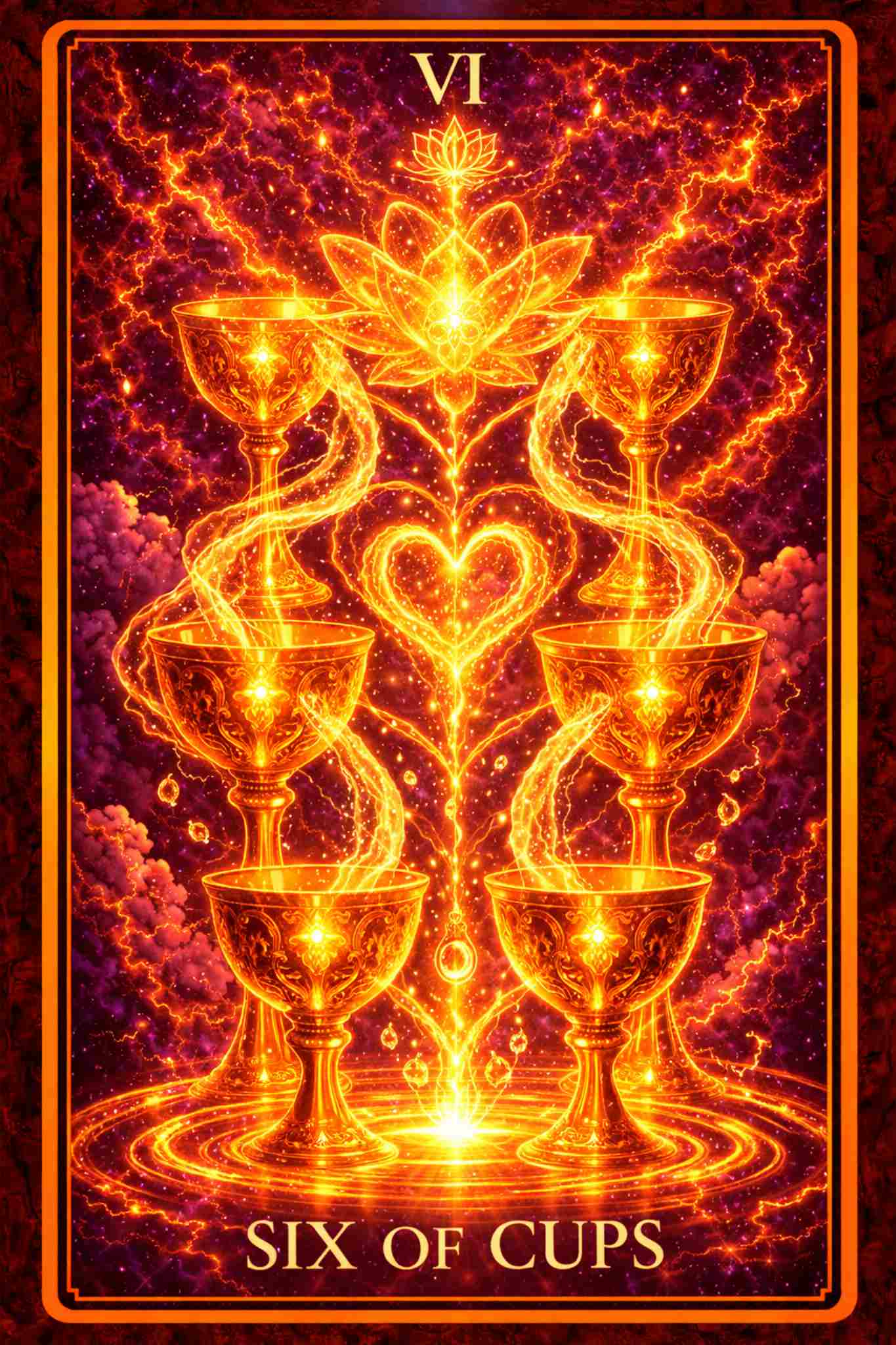
The Hierophant and Six of Cups Tarot Combination Meaning
Some memories return as comfort. A face, a season, a tone of voice, or a certain gentleness rises again and reminds the heart that tenderness once had a place to live. Other memories return with greater seriousness. They ask what was learned there, what pattern of love or belonging first took root there, and whether the past is returning because it still holds emotional truth that wants to shape the present in a wiser way. The Hierophant and Six of Cups belongs to that second kind of remembering. This pair speaks of memory meeting moral and spiritual interpretation, old tenderness being measured against present values, and the quiet realization that what feels familiar is powerful partly because it formed the inner rules by which the heart still understands care, trust, and connection. The Six of Cups brings sweetness, emotional continuity, reunion, innocence, nostalgia, and the pull of what once felt safe or meaningful. The Hierophant brings structure, inherited values, conscience, interpretation, and the deeper question of what from the past deserves to remain a living part of who you are. Together, these cards describe remembrance as a formative force. The past is not simply echoing. It is teaching.
This is what gives the combination its particular depth. The Six of Cups can seem soft, gentle, and immediately comforting. It opens the emotional field through familiarity, through recognition, through the sense that some part of the self is being called back into contact with what once mattered deeply. Yet memory alone is rarely simple. People remember through longing, through innocence, through pain, and through the emotional patterns that were first shaped in earlier bonds and earlier chapters of life. The Hierophant enters there as the interpreter of what was formed. He asks what this memory taught you about love, loyalty, goodness, safety, or belonging. He asks what value or expectation first began there and whether it still deserves its place in your inner world. In his presence, the past becomes more than atmosphere. It becomes part of the architecture of the heart. A broader life-cycle perspective on values and completion can also be seen in The Hierophant and The World.
That distinction matters because emotional familiarity can easily be mistaken for guidance all by itself. A person feels the sweetness of recognition and may want to trust it immediately, as though what is known inwardly must also be right in the present. The Hierophant slows that movement. He suggests that what shaped you deserves respect, though respect is different from automatic return. Some memories carry values worth reclaiming. Some carry expectations that need revision. Some preserve innocence that should be protected. Others preserve emotional habits that once helped the self survive yet no longer fit the life being lived now. This pair therefore asks for a mature form of remembering. It allows tenderness, though it also asks what kind of inner law was written there and whether that law still serves the deeper self. In more complex attachments, similar tension appears in The Hierophant and The Devil, where values meet entanglement.
When the past reveals the emotional rules you still live by
The Six of Cups often appears when the heart is touched by what came before. There may be childhood feeling, reunion, old affection, a remembered kindness, or the return of someone or something that awakens a familiar emotional tone. Beside The Hierophant, the reading becomes less interested in the surface event alone and more interested in what this return reveals about the emotional principles living underneath it. Why does this memory matter so much? What early version of care, trust, or belonging does it awaken? What inner promise was formed there?
This is where The Hierophant becomes especially useful. He does not take away the sweetness of memory. He helps name its influence. Much of adult emotional life is built upon lessons first learned long before a person knew how to speak about them clearly. The heart learns what closeness feels like, what safety feels like, what love requires, what acceptance sounds like, and what kind of tenderness seems trustworthy. Later in life, those early impressions continue shaping attraction, loyalty, grief, and longing. The Hierophant and Six of Cups often appears when one of those early teachings is coming back into view so it can be honored, examined, healed, or carried forward more consciously. This reflective pattern also connects to Hierophant love meaning, where values shape emotional bonds.
There is a quiet dignity in that process. The past is not only a collection of events. It is also the place where many values became emotionally real for the first time. People often reason about ideals later, though they first encounter them through feeling. Reverence may begin in how someone cared for them. Trust may begin in a tone of safety. The hope for a good bond may begin in one early experience of being sincerely received. The Six of Cups reconnects the person with that layer. The Hierophant asks what of it remains true, what of it remains unfinished, and what of it deserves a more conscious place in present life.
Memory can guide the present when it is carried with maturity
One of the deepest teachings in this combination is that innocence has wisdom when it is joined to understanding. The Six of Cups brings emotional purity, old affection, and the kind of feeling that seems untouched by cynicism. The Hierophant brings maturity, ethical awareness, spiritual depth, and the ability to see that innocence becomes strongest when it is integrated rather than merely revisited. This pair asks whether the self can remain tender without becoming captive to old emotional forms. Can the heart honor what it learned early without letting the past dictate every present choice? Can memory become guidance instead of gravity?
This matters especially when nostalgia appears during uncertain times. A person may feel drawn toward what is familiar because it seems gentler than the present, more trustworthy than complexity, more human than what life currently offers. The Hierophant does not dismiss that instinct. He refines it. He asks what exactly the person is longing for. Is it the person, the time, the emotional atmosphere, the sense of innocence, the experience of being cherished, or the values that once felt simple and clear? Once that deeper object of longing becomes visible, the heart can respond with greater wisdom. It can reclaim the value without becoming trapped inside the old form.
The combination also shows that some memories return because they are tied to conscience and identity. A person may remember not only what happened, but who they were within it. They may feel called back toward an earlier sincerity, a gentler truth, or a version of themselves that lived closer to the heart's original standards. The Hierophant helps make sense of that return. He shows that remembrance can become a kind of moral restoration, reconnecting the person with values that life may have covered over without ever erasing them fully. This reflective depth is echoed in Six of Cups spirituality, where memory becomes inner guidance.
Love and relationship meaning
In love readings, The Hierophant and Six of Cups often points to a connection shaped by familiarity, emotional memory, and deeper values that have roots in the past. There may be reunion here, old feelings here, or a bond that awakens tenderness with unusual immediacy. The Six of Cups shows the softness itself. The Hierophant shows that this softness is asking to be understood through a deeper lens. The connection may feel powerful partly because it reaches into early patterns of trust, care, and what love is supposed to feel like.
You may also want to go one step deeper.
The Hierophant + Six of Cups can open up differently inside a focused personal reading.
This can be a beautiful combination in relationship readings because it suggests sincerity, warmth, gentleness, and emotional continuity. Yet it also asks for discernment. Familiarity can heal, and familiarity can also project. A person may be responding to who stands before them now, while also responding to what that person represents inwardly. The Hierophant helps separate those layers. He asks whether the bond truly aligns with present values or whether it mainly echoes an older longing the heart still wants fulfilled. That question matters because relationships become healthier when tenderness and truth move together. A related relational dynamic appears in The Emperor and Six of Cups, where structure meets memory.
At its strongest, this pair supports a connection where the past enriches the present rather than overtaking it. Two people may feel known by one another in a way that carries sweetness and depth. The bond may awaken innocence, trust, or a more natural rhythm of affection. The Hierophant blesses that possibility when the connection also stands inside integrity, shared values, and a form of love that can be consciously lived. Then the Six of Cups becomes more than nostalgia. It becomes the return of something real that still has life now.
Healing old patterns and restoring the softer self
Outside romance, this combination can speak strongly to childhood material, family values, early teachings, and the slow work of restoring parts of the self that became buried under harsher seasons of life. The Six of Cups may bring old memories, emotional innocence, forgotten gentleness, or the return of a desire for simpler and more honest forms of connection. The Hierophant gives this movement seriousness. He helps the person see that healing may involve recovering not only feelings, but values that were first learned through those feelings.
Psychologically, the pair often appears when someone is beginning to understand how early emotional experience still shapes present choices. They may notice that their standards for closeness, care, and trust were formed long ago. They may begin to see where those early patterns were beautiful, where they were incomplete, and where deeper maturity is needed now. This is a profoundly restorative process. It allows a person to keep the tenderness that belongs to them while gradually releasing the distortions that no longer deserve authority over the present.
There is also something deeply humane in the pair's rhythm. It does not ask the person to become hard in order to become wise. It suggests the opposite. True wisdom may involve becoming soft in a clearer way, bringing early tenderness into adult life with stronger boundaries, clearer values, and deeper self-knowledge. The Hierophant lends structure. The Six of Cups lends warmth. Together they show healing as the union of innocence and maturity rather than the triumph of one over the other.
Timing and the wisdom of conscious remembrance
Timing matters strongly with this pair because it often appears when something from the past is returning to awareness and the next step is understanding what it carries. This may be a time to reflect on old bonds, revisit early patterns, reconnect with values formed long ago, or understand why a particular memory, person, or emotional tone has become active again. The Hierophant gives the timing a reflective quality. The Six of Cups supplies the emotional opening. Together they suggest that remembrance is meaningful now because it contains guidance for the life currently unfolding.
There is also wisdom here around pace. Familiarity can tempt the heart to move quickly, especially when the present feels uncertain and the remembered feeling seems deeply trustworthy. These cards suggest a slower response. Let the tenderness arrive. Let the memory speak. Then listen for what it is truly asking. Sometimes it asks for reconnection. Sometimes for healing. Sometimes for gratitude. Sometimes for a more conscious relationship with values that began long ago and still want a place in the present.
Want to place this combination into a wider reading?
If this pairing feels close to something you are experiencing, a simple spread can help you reflect on the surrounding energy with more clarity.
Closing reflection
There is something deeply moving in The Hierophant and Six of Cups because it suggests that the heart remembers more than events. It remembers the values that were first felt there, the emotional rules that were quietly learned there, and the forms of tenderness that helped shape what love and belonging still mean. The Six of Cups opens that remembered world with softness and familiarity. The Hierophant gives it depth, asking what from that earlier shaping still belongs to you in a living way. Together, these cards show memory becoming a teacher. They invite you to honor the sweetness of what returns while listening carefully for the truths it formed in you.
The deeper wisdom of this pair is to let the past offer guidance without giving it complete authority over the present. Some old tenderness deserves to be protected. Some early values deserve to be reclaimed. Some familiar longings deserve clearer understanding before they are followed. The Hierophant and Six of Cups often appears where remembrance is asking to become conscious, where innocence wants maturity beside it, and where the soul is learning how to carry forward what was genuinely beautiful without becoming confined to what once was.
More combinations with The Hierophant
More combinations with Six of Cups
Continue with The Hierophant
Explore Related Guides by Topic
If you want to explore this combination through a more specific emotional lens, these tarot guides can help you follow the broader pattern behind the reading.