
Wheel of Fortune + Six of Cups
Explore how these two tarot cards interact in a reading through symbolic overlap, contrast, and shared narrative. Tarot combinations often reveal meaning that neither card fully expresses on its own.
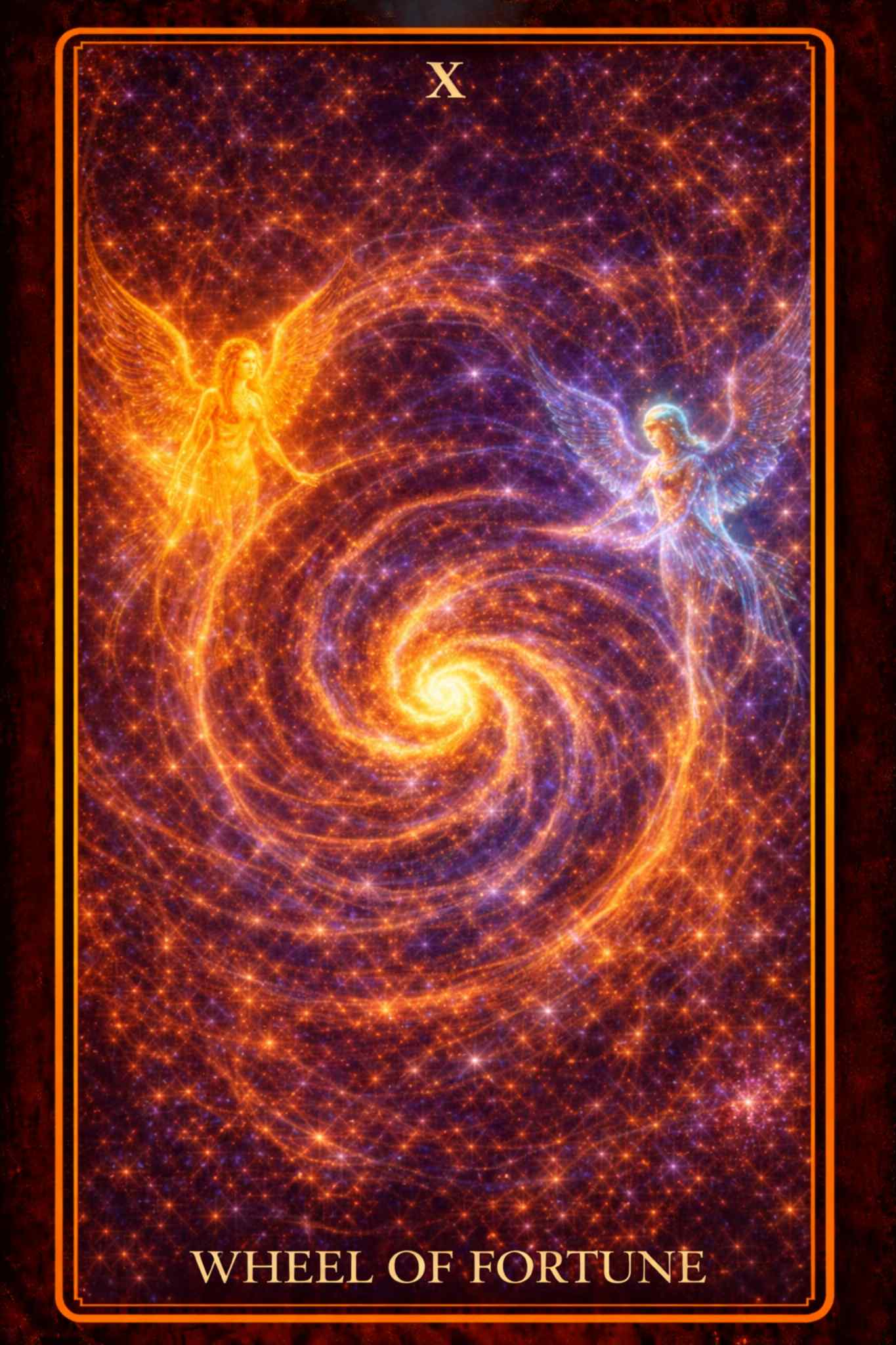
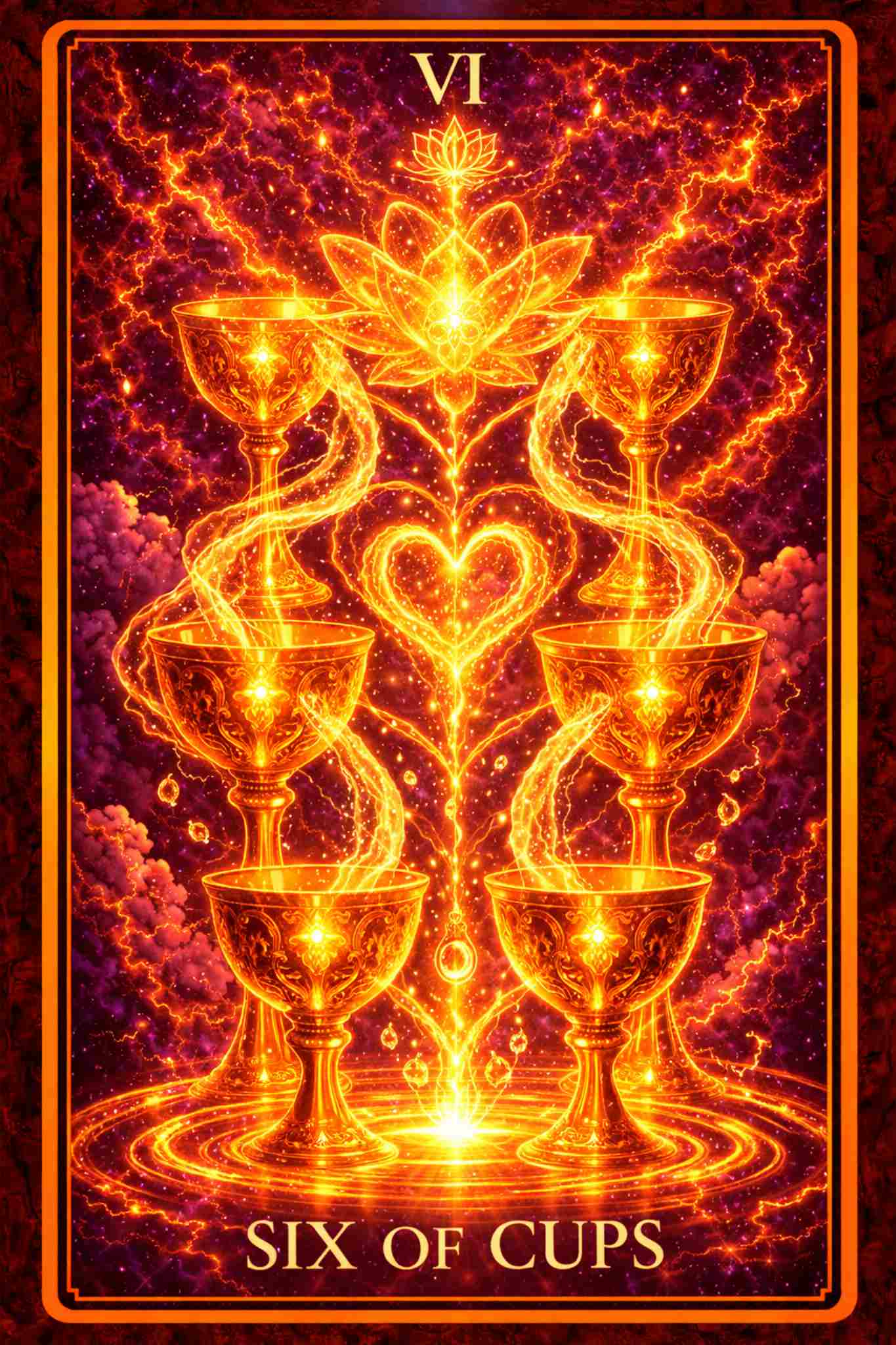
The Wheel of Fortune and Six of Cups Tarot Combination Meaning
Some emotional turns do not arrive through shock, conflict, or sudden desire. They arrive through recognition. A memory resurfaces, a person returns to mind, a familiar emotional tone enters the present, and something in the heart quietly realizes that the past is still alive in a way that needs to be understood differently now. The Wheel of Fortune and Six of Cups speaks to that kind of moment. This pairing is less about simple nostalgia and more about emotional calibration, about how the past returns to reveal the distance between who you were then and who you have become now. The Six of Cups brings sweetness, memory, tenderness, innocence, and the emotional traces of what once felt safe, meaningful, or deeply familiar. The Wheel of Fortune gives that tenderness movement and context, showing that what returns is part of a larger cycle and that the real question is rarely whether the memory matters, but what it is doing in the present season of your life.
This is why the pair can feel so subtle and so powerful at the same time. The Six of Cups may suggest old affection, familiar emotional patterns, childhood influences, earlier bonds, or the quiet longing for a form of love that once felt natural and unstained by complication. The Wheel of Fortune prevents that softness from staying sentimental. It asks whether the return is illuminating something unfinished, something maturing, or something that can now be seen without the blur of former innocence. In many readings, the emotional importance of this pair lies in contrast. What you feel now is connected to what you felt before, though the meaning is no longer identical. The memory remains tender, yet the soul standing inside that tenderness is different, and that difference is where the turning point begins.
Seen this way, The Wheel of Fortune and Six of Cups often appears when emotional life is asking for a more conscious relationship with familiarity itself. A person, memory, bond, or emotional atmosphere may feel immediately known, and that very familiarity can be moving. Yet the deeper work of the pair lies in distinguishing recognition from repetition, and comfort from truth. What returns to the heart may indeed be precious. It may also be arriving so the person can understand what they once received, what they once lacked, or what they still unconsciously seek when they move toward love, closeness, safety, and belonging. The wheel turns, and what rises from the past becomes a mirror rather than merely a memory.
When memory becomes a form of emotional measurement
One of the most revealing aspects of this combination is that it uses the past as a measuring instrument. The Six of Cups brings remembered sweetness, emotional imprint, and the quiet gravity of earlier attachments. The Wheel of Fortune then asks what changes when those impressions are brought into the present. The person may discover that what once felt ideal now feels incomplete, or that what once seemed small now reveals unexpected depth. This does not mean the memory was false before or truer now. It means memory is being re-read through a more mature emotional lens, and that lens is showing what the earlier self could not yet name.
This can happen through a direct return, such as hearing from someone after a long silence, thinking again about a first love, revisiting a family dynamic, or realizing that a present bond carries the emotional language of something older. It can also happen more quietly, when a person notices that their longings have a recognizable shape. They may keep responding to a certain tone of gentleness, a certain kind of warmth, a certain promise of being understood without struggle. The Six of Cups says that these preferences are emotionally rooted. The Wheel says they are active now because the cycle has reached a moment where those roots are ready to be examined more consciously.
This is one reason the pair is so useful in deeper emotional readings. It does not simply ask whether the past is returning. It asks how the past is functioning in the present. Is it offering a genuine source of emotional truth? Is it influencing perception in ways that remain unconscious? Is it softening the heart, or quietly bending present choices around old emotional needs? When the person begins to see that memory itself can guide, distort, soothe, and repeat, the combination becomes less about longing and more about discernment through tenderness.
That quieter, more reflective dimension is closely related to the inward dynamic explored in The Hermit and The High Priestess, where inner knowing emerges through patient attention rather than immediate action. Here, however, that inward knowledge is stirred by something remembered, returned, or emotionally familiar. The heart is not only listening within itself. It is listening to what memory awakens and to what that awakening reveals about the present phase of the cycle.
Love and relationship meaning
In love readings, The Wheel of Fortune and Six of Cups often points to emotional familiarity becoming active again in a meaningful way. Sometimes this happens through reconnection with a person from the past, though the pair is deeper than a simple reunion narrative. Just as often, it appears when a current relationship activates older feelings of safety, tenderness, yearning, innocence, or emotional recognition. The bond may feel uncannily known, as though the heart has entered a room it has visited before. That feeling can be beautiful, and it can also be instructive, because what feels familiar is often carrying emotional material that was formed long before the present connection began.
Want to explore this combination in a more personal way?
If this pairing feels important right now, a simple tarot spread can help you reflect on it with more context.
This is where the pair asks for maturity without asking the heart to harden. The Six of Cups is sincere. It can show genuine sweetness, mutual tenderness, remembered love, or the return of emotional warmth after distance. The Wheel of Fortune asks what role timing plays in that return. Has the connection reappeared because both people have changed enough to meet differently? Is a familiar emotional pattern becoming visible so it can be understood, rather than simply repeated? Is the heart softening toward something true, or gravitating toward what feels known because uncertainty in the present makes the old emotional language especially seductive? These questions matter because the combination does not flatten love into certainty. It reveals how love is shaped by memory, timing, and recurring emotional structure.
Sometimes this pair describes a relationship that is teaching the person how much of their romantic life has been organized around earlier emotional experiences. A current partner may bring out a longing to be cared for in a way that echoes childhood. A past person may remain powerful in the psyche because they represent a version of tenderness the heart has never fully integrated. A reunion may carry such emotional force because it is touching both the actual person and the remembered self who once loved them. The Six of Cups holds the emotional texture of these experiences. The Wheel reveals that they are occurring inside a moving pattern, where the same tenderness may now lead to a different outcome if seen with greater clarity.
When the emotional tone of a relationship is colored by remembered affection, emotional innocence, or a desire to return to what once felt simpler, Six of Cups love meaning can deepen the interpretation. And when the larger lesson of the reading concerns the seasonality of connection itself, including why certain people or patterns seem to reappear at specific moments of growth, Wheel of Fortune spirituality meaning adds a more spacious perspective on timing, recurrence, and the deeper intelligence of emotional cycles.
The present relationship may also be showing the person how their heart responds when care feels easy. This can be healing, especially for someone accustomed to emotional tension, inconsistency, or uncertainty. Yet the pair remains wise precisely because it does not confuse ease with finality. A familiar bond may be healthy, or it may only feel safe because it echoes earlier structures. The Wheel asks what the familiarity is doing. Is it creating room for maturity, reciprocity, and grounded affection, or is it inviting the person to fall back into a remembered emotional script? Love becomes clearer here when the person stops asking only whether the feeling is real and starts asking what the feeling is organized around.
In situations where the present emotional atmosphere feels deeply connected to older layers of the self, an Inner Self Tarot Spread can be especially useful. It helps reveal whether what is returning is a living bond, an unresolved emotional need, a forgotten strength, or a pattern the heart is finally ready to interpret with more honesty.
Emotional time and the difference between return and repetition
The Wheel of Fortune makes timing central to this pair, and timing is exactly what keeps the Six of Cups from collapsing into pure nostalgia. Memory can make something feel timeless, though lived experience is never outside time. The person remembering is older. The emotional context is different. The heart now knows things it did not know then, even if it still struggles to act on that knowledge consistently. This is why the combination becomes so revealing around questions of return. What comes back may feel emotionally continuous, though the cycle itself has moved. The real work lies in noticing how the present has changed the meaning of what once felt simple.
In some cases, the return exposes growth. A person may reconnect with someone and realize that what once would have overwhelmed them now feels tender but manageable. They may revisit a formative memory and understand that it shaped them, though it no longer defines them. In other cases, the return exposes unfinished patterning. The person may feel just as captivated, just as emotionally young, or just as eager to believe in the sweetness of what was before. The Wheel does not shame this. It simply reveals that the distinction between emotional continuity and emotional repetition matters greatly. One leads toward integration. The other can keep the person circling around the same unexamined longing.
This is where the pair gains its psychological sophistication. The Six of Cups tends to say, “This matters because it is familiar.” The Wheel of Fortune asks, “What kind of familiarity is this?” Is it rooted in genuine love, in remembered safety, in unresolved yearning, in emotional inheritance, or in a cycle that has never fully completed itself? The person becomes more emotionally mature when they can let familiarity be meaningful without allowing it to automatically decide the interpretation. What is returning may deserve closeness. It may deserve blessing and release. It may deserve to be understood as part of the architecture of the self rather than the blueprint for the future.
Inner-growth meaning
On an inner level, The Wheel of Fortune and Six of Cups often points to a meeting between present awareness and earlier emotional conditioning. The person may be re-encountering childhood impressions, remembered vulnerabilities, old longings, or a version of softness that was once natural and later buried under experience. The Six of Cups brings those earlier layers back into emotional circulation. The Wheel of Fortune suggests that this return is timely, because the person is now in a position to hold those layers with more consciousness than before. What once operated as unconscious emotional patterning can begin to move toward understanding.
This makes the pair deeply valuable for examining how emotional preference is formed. A person may discover that what they call chemistry is sometimes familiarity with an old emotional climate. They may realize that what they call safety is connected to being recognized in ways they first learned to crave very early in life. They may begin to see that tenderness, memory, and desire for emotional simplicity are all part of a larger internal ecosystem shaped by time. The Wheel becomes the turning point because it introduces awareness of sequence. Things did not arise from nowhere, and because they have history, they can also have development.
The combination can also mark the return of something precious that was lost through adaptation. A person who became overly guarded may find their emotional gentleness resurfacing. Someone who learned to mistrust ease may begin to rediscover the value of unforced affection. A part of the self that once knew how to receive love simply may be returning, though in a more mature form. This is one of the most beautiful possibilities in the pair. The past is not only a source of pain, longing, or repetition. It can also hold forgotten strengths, emotional talents, and ways of loving that deserve to be reclaimed rather than left behind.
That is where this combination begins to move beyond memory as recollection and toward memory as recovery. The Six of Cups says something valuable was once known. The Wheel asks whether the current phase of life is asking for that value to be consciously integrated. The person is not being asked to become younger, more naive, or emotionally unguarded in a careless way. They are being invited to identify what was true in earlier tenderness and to bring that truth forward without abandoning discernment. In that sense, the pair often signals maturation through retrieval rather than maturation through rejection.
Shadow expression and challenge
The shadow of this pair appears when familiarity is mistaken for guidance. The heart may become so moved by what feels known that it stops asking whether the pattern is healthy in the present. The Six of Cups can sweeten memory and soften judgment. The Wheel of Fortune can make recurrence feel important, and sometimes it is. Yet importance alone does not answer the deeper question of whether the cycle is returning to heal, to teach, to complete, or simply to show the person what still has emotional charge. Without discernment, the person may romanticize repetition and call it fate when it is actually unresolved emotional structure asking to be seen more honestly.
Another challenge emerges when the person becomes attached to an idealized version of the past self. The Six of Cups can carry innocence, ease, and emotional purity, though these qualities are often remembered more cleanly than they were lived. The Wheel of Fortune asks whether the longing is really for a person or moment, or whether it is for a way of being that the person associates with that past chapter. This can be a powerful distinction. Sometimes what is being missed is not the bond itself, but the version of self who still believed in effortless closeness, uncomplicated hope, or emotional safety without ambivalence.
At its most difficult, the pair can keep someone circling around the emotional image of something beautiful long after the living reality has changed. Yet even here, the cards remain potentially wise. If the person becomes willing to examine what the return is awakening, the cycle can turn productively. Memory can become insight. Tenderness can remain tenderness without becoming self-deception. The past can be honored without quietly taking authority over the present.
Want to place this combination into a wider reading?
If this pairing feels close to something you are experiencing, a simple spread can help you reflect on the surrounding energy with more clarity.
Where remembered tenderness becomes present wisdom
The Wheel of Fortune and Six of Cups ultimately describes the moment when emotional return becomes meaningful because the person meeting it has changed. A memory may resurface, a bond may reappear, or an old emotional pattern may come back into view, yet the deeper gift of the pair lies in the difference between then and now. Something familiar is active, though it is meeting a more conscious self. This is why the combination can feel both sweet and profound. It is not only asking whether the past still matters. It is asking what the present can understand about the past that once remained hidden inside feeling alone.
When lived well, this pair allows tenderness to survive without letting innocence govern the interpretation. The person can welcome what returns, feel it sincerely, and still remain attentive to what the cycle is actually revealing. A past person may be meaningful, though the greater revelation may lie in how the heart responds differently now. An old longing may still carry beauty, though it may now be pointing toward a deeper need for integration rather than repetition. Here, emotional wisdom does not come from turning away from what once mattered. It comes from meeting it fully, gently, and with enough maturity to see that the wheel has already turned.
More combinations with Wheel of Fortune
More combinations with Six of Cups
Continue with Wheel of Fortune
Explore Related Guides by Topic
If you want to explore this combination through a more specific emotional lens, these tarot guides can help you follow the broader pattern behind the reading.