
The Hierophant + Five of Wands
Explore how these two tarot cards interact in a reading through symbolic overlap, contrast, and shared narrative. Tarot combinations often reveal meaning that neither card fully expresses on its own.
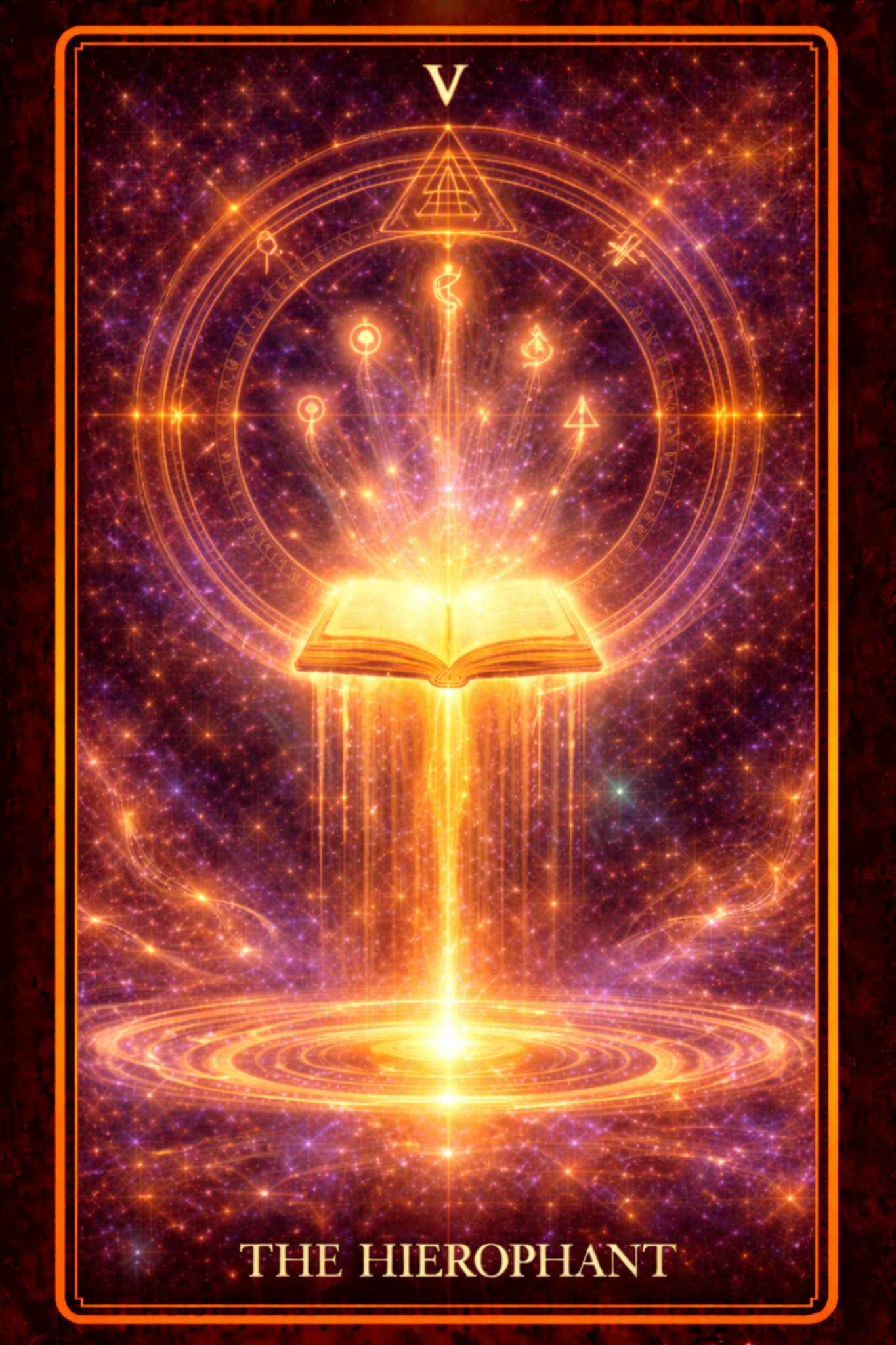
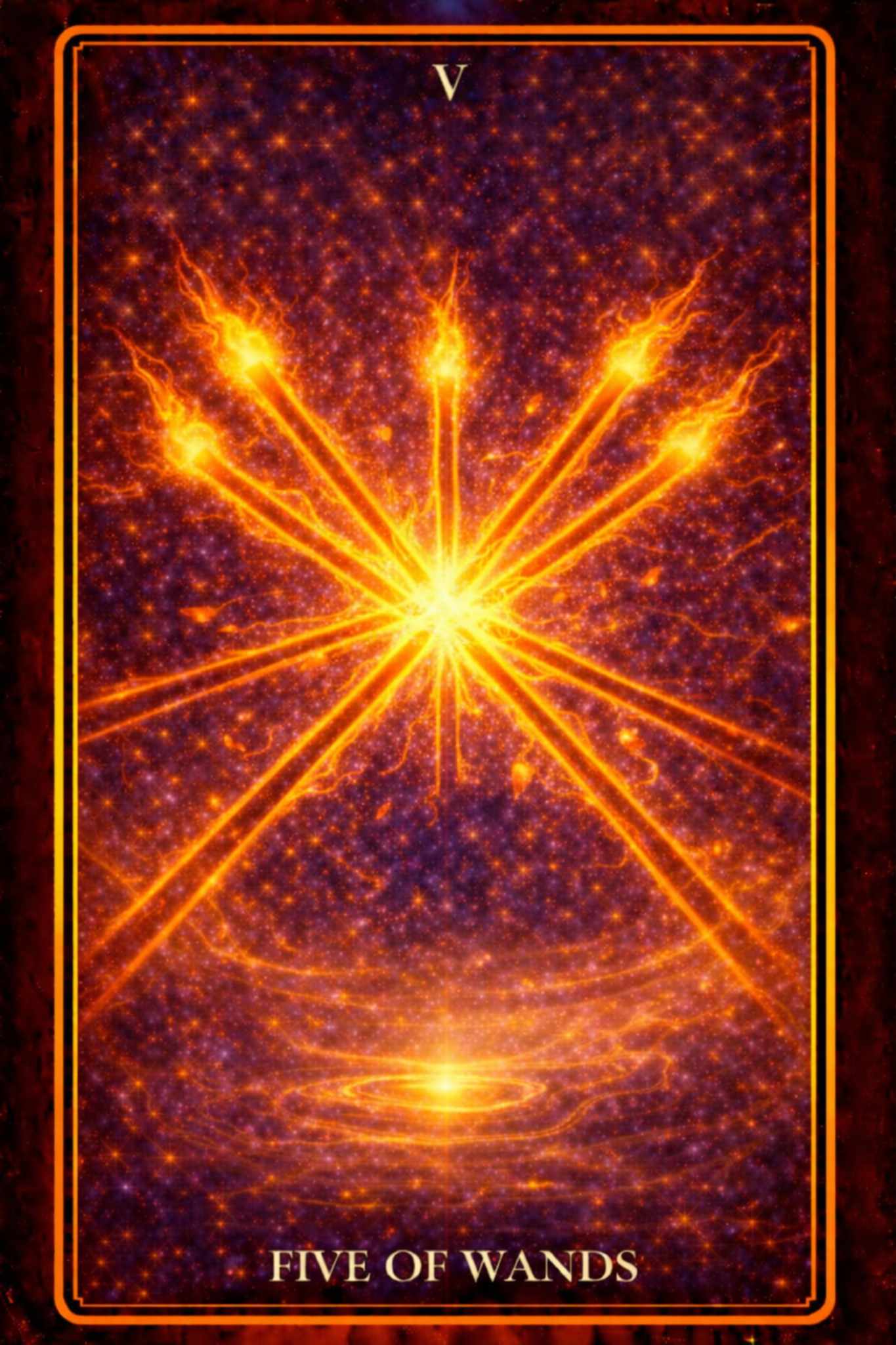
The Hierophant and Five of Wands Tarot Combination Meaning
The Hierophant and Five of Wands create a combination that brings tension directly into the realm of values, rules, teachings, and social order. The Five of Wands is not quiet conflict. It is friction in motion. It shows competing energies, clashing agendas, overlapping effort, disagreement, and the kind of struggle that may not yet be destructive, but is certainly disruptive. The Hierophant adds another layer to that tension. He brings belief systems, inherited standards, institutions, traditions, and the question of what should govern behavior when many people want different things. Together, these cards often describe conflict that is not merely personal. It may be cultural, relational, communal, or professional. Something is being tested not only at the level of preference, but at the level of principle.
This is what makes the pair more serious than a passing argument. The Five of Wands alone can point to noise, competition, or immature struggle. The Hierophant asks what deeper framework the struggle is happening inside. Are people fighting over interpretation, belonging, legitimacy, or whose standards define the whole field? This combination does not reduce itself to “trouble.” It asks whether the structure around you can hold disagreement without becoming rigid or oppressive, and whether the conflict itself is exposing something necessary. Sometimes tension reveals dysfunction. Sometimes it reveals growth trying to happen inside a system that can no longer contain it comfortably. The question is which kind of friction you are actually dealing with.
Core symbolic dynamic
At the symbolic level, this pairing brings institutional order into direct contact with restless fire. The Hierophant represents shared systems of meaning: teachings, customs, expectations, and the belief that life needs structure to remain coherent. The Five of Wands represents contested energy — movement without clear hierarchy, effort without alignment, and passion that has not yet found a shared direction. When these two meet, the result is often a question of authority. Whose interpretation counts? Which rules still deserve obedience? Which traditions still carry life, and which provoke resistance because they no longer feel fair or relevant?
This can show up in subtle ways. You may be in a situation where everyone uses the same language of values but means something different by it. You may be working within a system that appears structured but functions inconsistently. Or you may be trying to build something with others and discovering that shared ideals do not automatically translate into shared practice. The Hierophant asks for principle. The Five of Wands shows what happens when principle becomes contested or insufficiently embodied. The deeper question is not whether there is tension, but whether the tension is revealing something useful or simply generating noise.
Love and relationship meaning
In love readings, The Hierophant and Five of Wands often point toward conflict around expectations, roles, or the shared framework of the relationship. This does not necessarily mean the connection lacks feeling. In fact, there can be plenty of energy here. But it may be unstable or difficult energy: different values, different assumptions about commitment, or different timelines for how the relationship should develop. What is being argued may seem practical on the surface, but it often reflects a deeper question: what do each of you believe a relationship is supposed to be?
Need a little more context around this pairing?
A short reading can help you reflect on the tension, direction, or lesson this combination may be pointing toward.
This pairing frequently appears when a relationship is trying to mature but lacks clearly shared principles. One person may want structure, while the other resists what that structure implies. One may rely on inherited models; the other may feel constrained by them. In newer connections, this can show attraction mixed with friction around boundaries or expectations. In established relationships, it can point to recurring disagreements that never quite resolve because the underlying worldview has not been made explicit. The Hierophant asks for values that can be named. The Five of Wands shows the cost of avoiding that conversation.
Career, institutions, and contested direction
In work or vocation, this combination often appears when institutional expectations collide with competition, ego, or unclear leadership. The Hierophant represents systems, rules, and accepted standards. The Five of Wands introduces friction, rivalry, and the strain of many people pushing at once without coordination. Together, they can describe environments where people are technically aligned under one structure, but are struggling over voice, direction, or legitimacy.
Sometimes this reflects a necessary stage. Growth is rarely smooth, and disagreement can be part of refinement. But it still asks something of you. Are you participating in meaningful disagreement, or being pulled into noise? The Five of Wands invites engagement, but not all engagement is useful. The Hierophant represents order, but not all order deserves loyalty. The strongest expression of this pair is clarity inside contested space: knowing what you stand for without needing to dominate or withdraw.
Spiritual and psychological lesson
Spiritually, this pairing can reflect a crisis of interpretation. You may still care deeply about truth or meaning, yet find yourself in tension with inherited teachings or collective standards. This can create internal friction, especially when belonging is tied to agreement. The Five of Wands captures that well. Multiple voices may be active at once: old beliefs, lived experience, doubt, conviction, and the desire to move beyond what no longer feels honest.
Psychologically, this can appear as inner conflict around authority. One part of you may seek stability and approval. Another may resist, question, or push against that structure. The Hierophant asks which voice is treated as legitimate. The Five of Wands shows that this is not yet settled. The task is not to eliminate tension immediately, but to examine it more consciously. Which values hold under real experience? Which rules were maintained by fear or habit? Which challenges are helping you refine your integrity rather than abandon it?
Shadow expression and challenge
The shadow of this combination can become sharp. One form is conflict driven more by identity than by truth, where everyone claims authority but no one listens deeply enough to distinguish what is actually being said. Another is institutional instability disguised as debate, where rules exist but are applied unevenly, and people compete inside a structure that no longer holds clear direction.
There is also a quieter shadow: mistaking tension for depth. Not every disagreement is meaningful simply because it is intense. Some conflicts persist because they are fueled by reaction, performance, or the need to win. In those cases, the energy of the Five of Wands becomes self-sustaining, and The Hierophant becomes either rigid or irrelevant. The correction is not to avoid conflict, but to become more selective about where your energy goes. What is actually worth contending for, and what is only noise?
FAQ
Is The Hierophant and Five of Wands a negative combination?
Not necessarily. It often points to conflict, but that conflict can reveal necessary truths or highlight where a structure needs to evolve.
Does this combination mean arguments in relationships?
It can indicate tension or disagreement, especially around expectations or values, but the deeper message is about clarifying what both people actually believe and need.
Can this combination relate to workplace conflict?
Very often. It may reflect competition, unclear leadership, or disagreement about standards and direction within a structured environment.
Ready to see how this applies to your situation?
A focused tarot reading can help you explore how The Hierophant + Five of Wands may reflect your current situation, not just the general meaning of the cards.
Closing reflection
The Hierophant and Five of Wands describe tension around meaning. There is friction here, but it matters because it touches what people believe should guide life, work, and connection. The situation may involve disagreement, competition, or internal strain, but beneath that is a quieter invitation: to become clearer about what you stand for, and more discerning about which conflicts are worth your energy.
The most grounded response is to let conflict clarify your values instead of letting conflict replace them. You do not need to collapse into chaos, and you do not need to hide inside inherited order. You can stay engaged without becoming lost in noise. When approached consciously, this combination does not only point to struggle. It points to the possibility of a more honest structure emerging through it.
More combinations with The Hierophant
More combinations with Five of Wands
Continue with The Hierophant
Explore Related Guides by Topic
If you want to explore this combination through a more specific emotional lens, these tarot guides can help you follow the broader pattern behind the reading.