
The Hermit + Five of Wands
Explore how these two tarot cards interact in a reading through symbolic overlap, contrast, and shared narrative. Tarot combinations often reveal meaning that neither card fully expresses on its own.
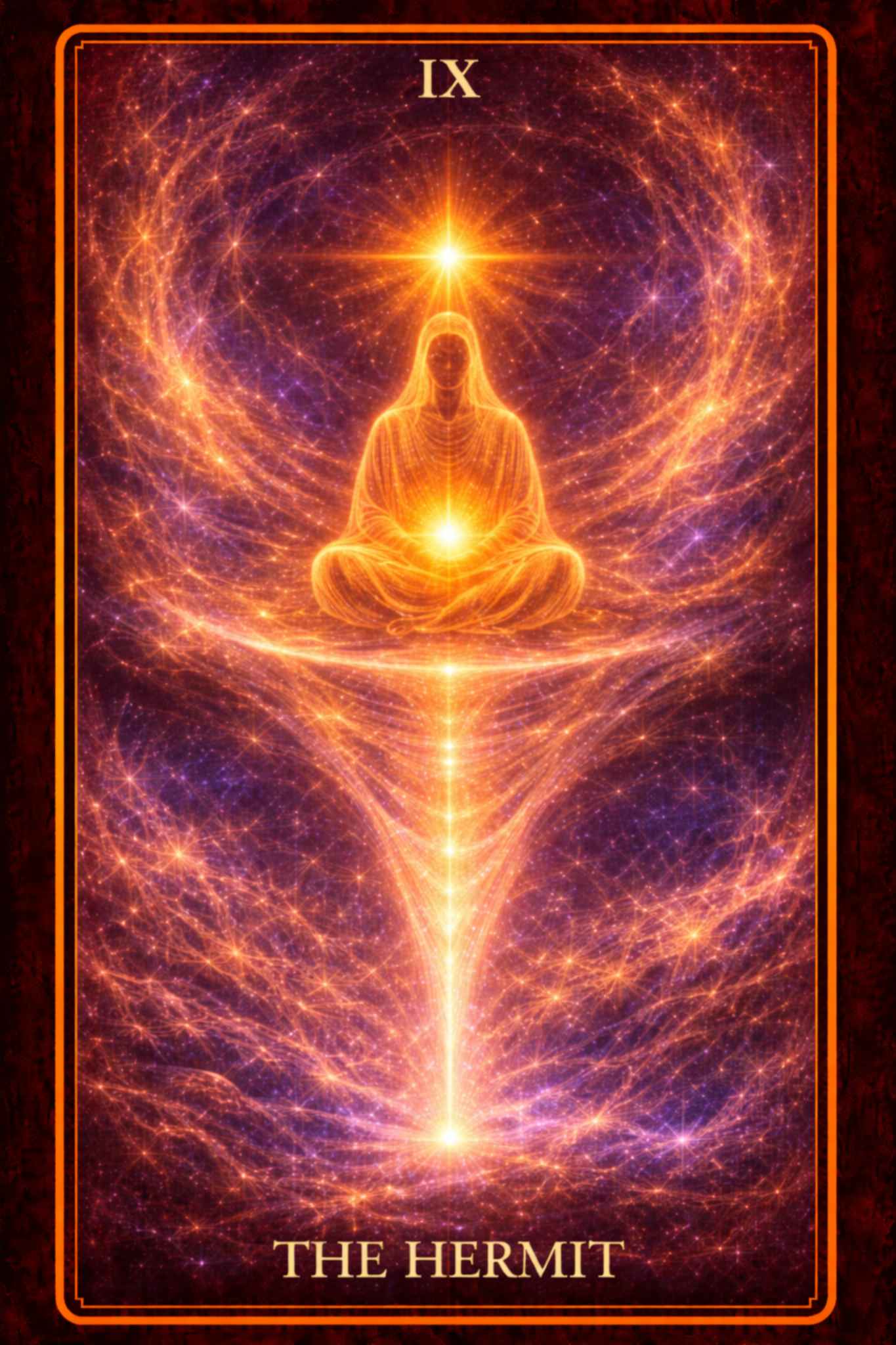
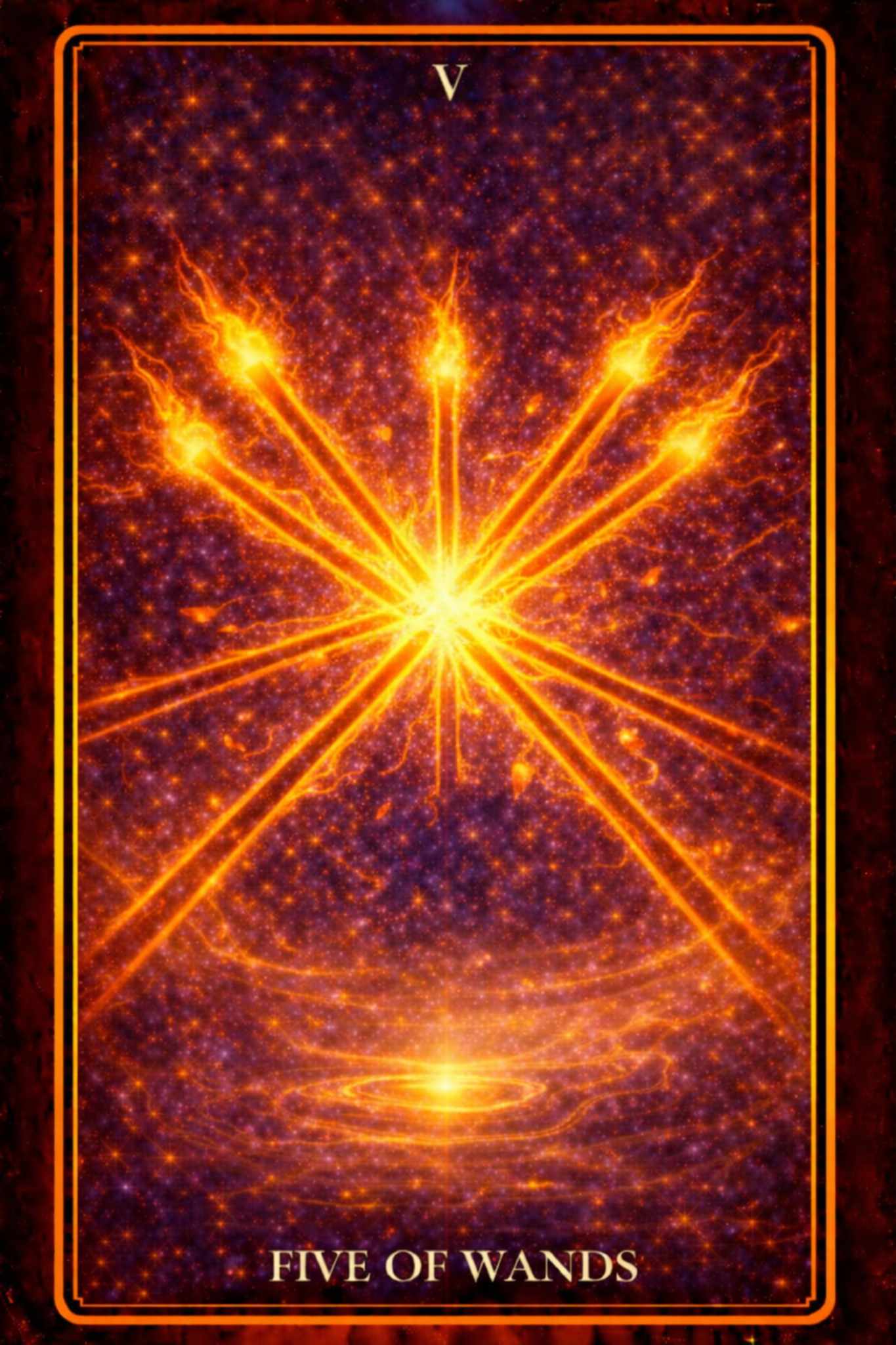
The Hermit and Five of Wands Tarot Combination Meaning
The Hermit and Five of Wands form a tense and revealing combination because they bring together two very different experiences of energy. The Hermit seeks quiet, distance, inward truth, and the kind of solitude that helps a person separate signal from noise. The Five of Wands does almost the opposite at first glance. It carries friction, competing impulses, restless fire, clashing perspectives, and the sense that too many forces are active at once. Together, these cards often describe what happens when an inward-looking state is interrupted, challenged, or sharpened by conflict. This conflict may come from the outside world, from other people, or from within the self. In all cases, the reading turns toward a deeper question: what does pressure reveal when silence can no longer remain untouched?
This pairing is not simply about peace versus chaos. It is more psychologically interesting than that. The Hermit does not withdraw because he fears all tension. He withdraws because truth is often difficult to hear when too many voices compete at once. The Five of Wands represents exactly that kind of competing field. Desire pulls in several directions. Opinions clash. Motivation fragments. Emotion becomes noisy. The result can feel irritating, destabilizing, or mentally exhausting. Yet the cards together suggest that conflict is not always meaningless disruption. Sometimes it reveals the places where inner clarity was not yet complete. Sometimes friction forces a person to identify what is truly theirs and what is only inherited pressure, social demand, egoic defensiveness, or scattered appetite. The Hermit wants understanding. The Five of Wands provides the raw material that understanding must now sort.
When stillness is tested by noise
The Hermit often appears when a person is trying to simplify life inwardly. They may be seeking honest perspective, emotional space, spiritual depth, or relief from environments that feel performative and overwhelming. Then the Five of Wands enters, and suddenly the inner landscape is full of sparks. There may be arguments, inner contradiction, competition, mixed motives, external demands, or simply a growing sense that the calm one hoped to maintain is being agitated by too many moving parts. This is the kind of pairing that can describe overstimulation not only in a practical sense, but in a deeper psychological one. Too many energies are active before meaning has had time to form.
Yet the cards do not advise panic. The Hermit does not respond best by joining every fight or reacting to every provocation. Instead, he asks what the friction is showing. Which part of this noise actually matters? Which tension is merely ego battle, insecurity, projection, or misplaced urgency? Which discomfort points toward a real issue that can no longer be ignored? The Five of Wands can be messy, but it can also expose. It reveals how fragmented the inner or outer field has become. The Hermit then tries to restore order not through domination, but through discernment. He does not need every voice to disappear. He needs to know which voice carries truth.
Conflict as a mirror of inner fragmentation
One of the deeper readings of this combination is that outer conflict may mirror inner conflict. A person may think they are only dealing with difficult people or unstable environments, but the Hermit asks whether some part of the real struggle lies within. Are your desires aligned? Are your priorities actually chosen? Or are several unintegrated impulses trying to live through you at once? The Five of Wands often appears where energy is available but not integrated. There is fire, but it has not yet become coherent. The Hermit does not extinguish that fire. He asks how it might be understood deeply enough to stop scattering itself.
This makes the pairing especially valuable during periods of inner recalibration. It can show a person who is becoming aware that not all of their ambitions belong together, not all of their reactions come from the same source, and not all of their conflicts are really about the stated problem. Some struggles are battles over identity, timing, emotional territory, or unacknowledged fear. The Hermit invites a step back. Not to avoid challenge forever, but to stop confusing noise with truth. The conflict itself may be real. The question is whether you can listen beneath its surface.
Love and relationship meaning
In love readings, The Hermit and Five of Wands can point to relational tension that requires more than reaction. There may be mixed signals, clashes in timing, misunderstandings, competing needs, or emotional defensiveness. One or both people may feel overstimulated by the connection, not necessarily because the bond is meaningless, but because it is activating unresolved material. The Hermit suggests someone who needs space, clarity, and emotional honesty. The Five of Wands suggests that the current dynamic may feel too crowded with friction or competing agendas.
Need a little more context around this pairing?
A short reading can help you reflect on the tension, direction, or lesson this combination may be pointing toward.
This can describe a connection where attraction exists, but so does confusion. Passion may be present, but it is not yet peaceful. The fire does not flow cleanly. Instead, it bumps against insecurity, pride, communication issues, or incompatible pacing. In some cases, one person may retreat inward while the other pushes for engagement, creating further tension. The Hermit is not necessarily pulling away because there is no feeling. Often, the retreat comes because there is too much unprocessed feeling and not enough clear ground to stand on.
Career, work, and practical life
In work readings, The Hermit and Five of Wands often indicate a difficult environment for focused effort. There may be competition, too many opinions, conflicting priorities, unstable teamwork, or a sense that everyone is exerting energy without enough alignment. The Hermit may describe the person who wants to do meaningful work with depth and concentration. The Five of Wands describes the reality of interruption, politics, noise, and scattered demands that keep that depth from stabilizing.
Yet this combination can also be productive if handled well. The Five of Wands does not only represent dysfunction. Sometimes it shows the early friction of development, the clash of perspectives that occurs before a stronger form emerges. The Hermit is valuable here because he does not become impressed by noise for its own sake. He asks what the real issue is. Which disagreement is substantive? Which challenge actually sharpens the work? Which conflict is merely vanity or pressure? In this sense, the pairing can help a person navigate environments where not all struggle is useless, but much of it requires filtering.
Spiritual meaning
Spiritually, The Hermit and Five of Wands can point to a stage in which the search for truth is disturbed by agitation or inner division. A person may be trying to hear their own inner voice while surrounded by competing inputs. The Hermit wants direct knowing. The Five of Wands reflects the difficulty of maintaining that directness when too many forces demand attention. This can feel like spiritual overstimulation, where discernment becomes more important than inspiration.
At a deeper level, the combination may reveal that growth now requires confronting inner contradiction. It is not enough to seek peace in principle. The unresolved conflicts within the self must be named. Which desires are fighting? Which fears disguise themselves as logic? The Hermit helps distinguish truth from noise. The Five of Wands reveals where integration has not yet happened.
Potential shadow expression
The shadow form of this pairing often looks like retreat turning into irritation. The Hermit may become overly withdrawn or judgmental of noise, while the Five of Wands becomes constant friction. In the opposite direction, the person may become reactive, pulled into every conflict, losing access to inner stillness. Both extremes disconnect energy from meaning.
What this combination is really asking
The Hermit and Five of Wands ask: what truth is hidden inside the friction? Not every argument matters, but repeated tension usually points somewhere real. The Hermit does not solve this by denying fire. He studies its pattern. The lesson is that peace is not the absence of tension, but the ability to remain clear within it.
FAQ
Is The Hermit and Five of Wands a negative combination?
Not necessarily. It often reflects tension that reveals something important. While it can feel uncomfortable, it may point toward clarity rather than simple conflict.
Does this combination mean conflict in relationships?
It can indicate friction, mixed signals, or competing needs. However, it often emphasizes the need for understanding the root of conflict rather than reacting to surface-level tension.
What does this mean for personal growth?
It suggests a phase where inner clarity is being tested. Growth may come from recognizing which pressures are meaningful and which are simply noise.
Is this a warning to step back?
Often yes. The Hermit encourages stepping back enough to regain perspective, especially when too many influences are active at once.
Ready to see how this applies to your situation?
A focused tarot reading can help you explore how The Hermit + Five of Wands may reflect your current situation, not just the general meaning of the cards.
Closing reflection
Not every fire deserves your energy. Not every voice deserves your response.
Sometimes clarity is not found by winning the conflict, but by stepping far enough away to see which parts of it were never truly yours to carry.
More combinations with The Hermit
More combinations with Five of Wands
Continue with The Hermit
Explore Related Guides by Topic
If you want to explore this combination through a more specific emotional lens, these tarot guides can help you follow the broader pattern behind the reading.