
The Hanged Man + Four of Wands
Explore how these two tarot cards interact in a reading through symbolic overlap, contrast, and shared narrative. Tarot combinations often reveal meaning that neither card fully expresses on its own.
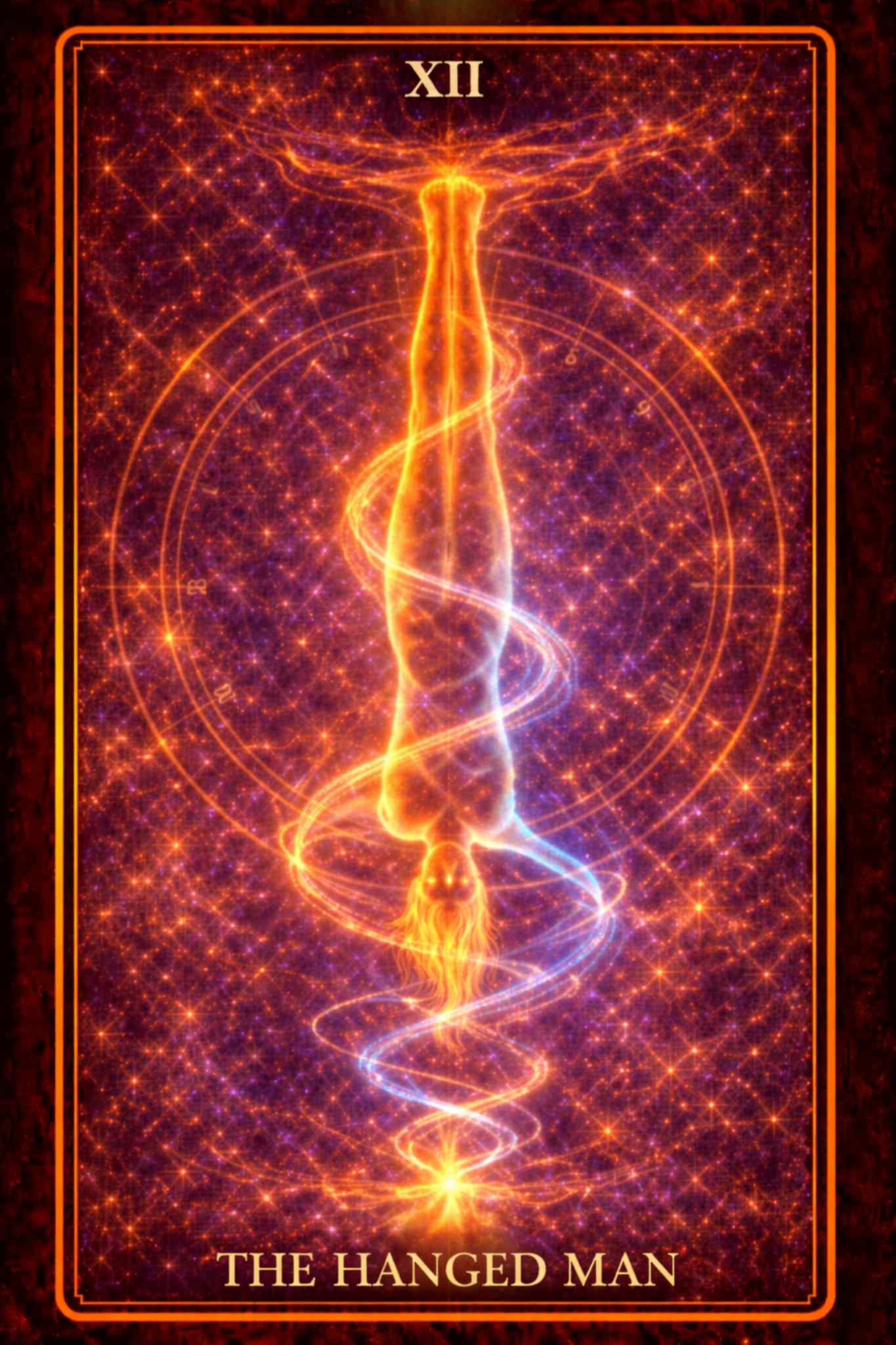
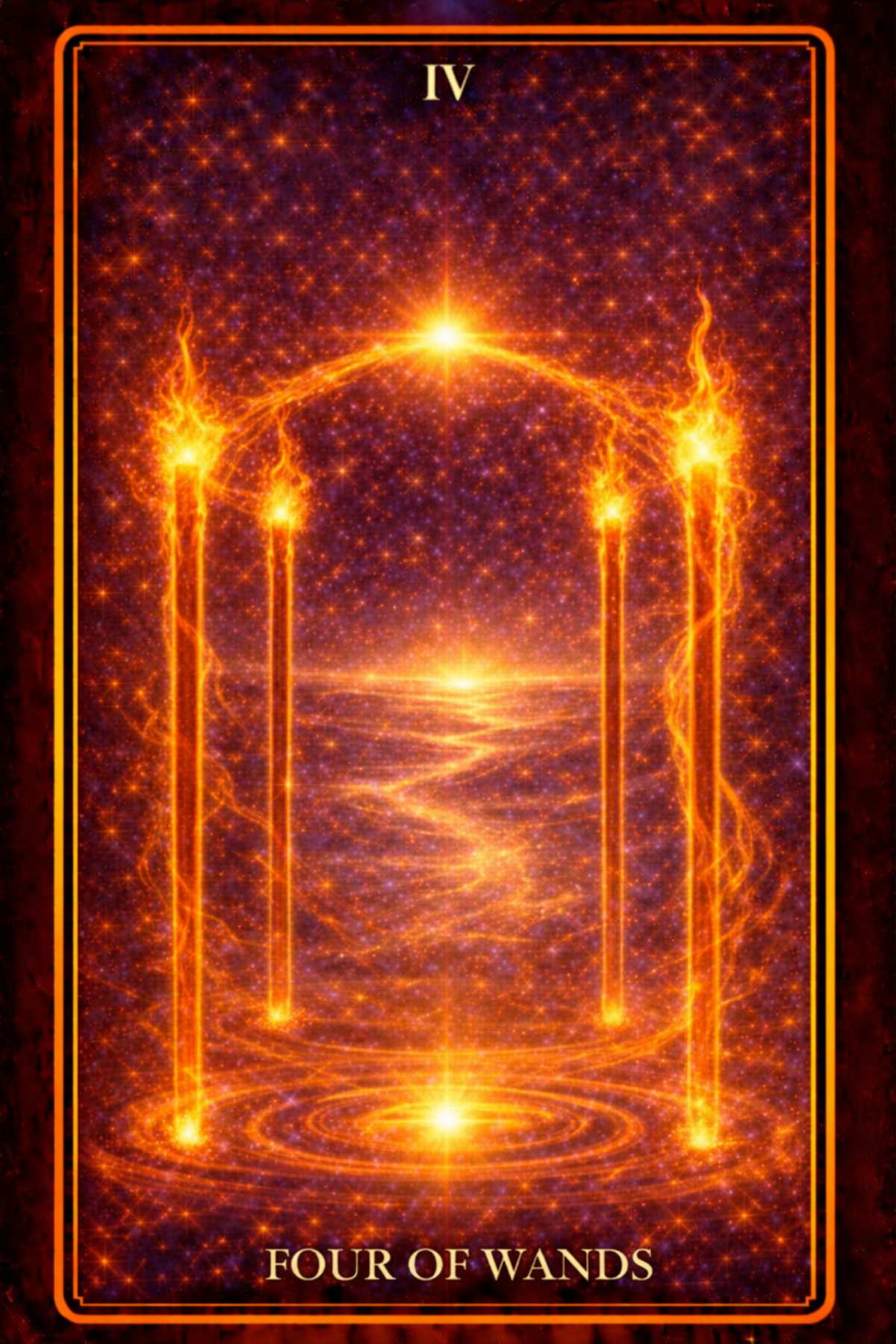
The Hanged Man and Four of Wands Tarot Combination Meaning
The Hanged Man and Four of Wands meet where joy, stability, or arrival must be seen differently before they can be lived fully. The Four of Wands is a card of grounding, shared celebration, temporary arrival, relational harmony, and the sense that something has become stable enough to be acknowledged, enjoyed, or entered more consciously. It often speaks of homecoming, union, community, and the creation of a threshold that feels supportive rather than chaotic. The Hanged Man enters that warm, structured field with a very different kind of power. He slows the moment. He interrupts the automatic movement toward closure, comfort, or outward confirmation. He asks whether the stability being sought is actually understood. He asks whether belonging is being approached from truth or from hunger. Together, these cards often appear when something genuinely good may be present, yet the person still needs a deeper shift before fully inhabiting it.
This gives the combination a quiet depth. The Four of Wands is often associated with visible harmony, shared happiness, or the establishment of a secure emotional or practical foundation. The Hanged Man arrives to deepen that possibility. He interrupts the older self that might rush in and use stability as a way to end inner tension too quickly. Many people do this without realizing it. They seek home, agreement, commitment, celebration, or relational arrival because these things matter, and also because they long for relief from uncertainty. The Hanged Man asks whether the person can receive the good without gripping it. He asks whether joy can be approached with enough awareness that it becomes real rather than merely reassuring.
Stability that asks for a new perspective
One of the deepest themes in this combination is that stability is rarely as simple as it first appears. The Four of Wands often suggests that something is becoming supportive, welcoming, and life-giving. There may be a real foundation here, whether in love, community, work, or inner life. Yet The Hanged Man asks the person to pause before treating that foundation as fully understood. What does home actually mean now? What does commitment mean now? What kind of belonging truly nourishes, and what kind only looks comforting because it resembles an old fantasy of safety? These questions bring unusual depth to the Four of Wands, which can otherwise be read too quickly as uncomplicated happiness.
The Hanged Man resists a shallow relationship to happiness. He knows that some of the most important thresholds in life require enthusiasm and surrender together. A person may need to release an earlier image of what arrival should look like. They may need to stop treating stability as something to possess and begin experiencing it as something to participate in consciously. They may even discover that the joy available now looks different from the joy they once imagined, yet carries more truth. In this way, The Hanged Man protects the Four of Wands from shrinking into appearance, social validation, or quick emotional closure.
The pause before inhabiting what is good
There is something deeply human in this pair because it speaks to a pattern many people rarely notice in themselves: the difficulty of receiving what is good without immediately trying to secure it. The Four of Wands brings a sense that there is something worth enjoying, honoring, building around, or entering more deeply. The Hanged Man reveals how hard it can be to remain open inside that goodness while the mind wants to define it too quickly. A person may want to name the relationship, finalize the home, lock in the stability, declare the meaning, or turn a beautiful moment into permanent certainty. The Hanged Man asks for a gentler kind of trust. He suggests that forcing the meaning of joy too soon can weaken one’s relationship to it.
This does not ask the person to remain forever outside the threshold. It points to an inner repositioning before the threshold becomes fully inhabitable. The Four of Wands says there is real support here. The Hanged Man says the old way you have approached support may no longer fit. Perhaps safety was once equated with guarantees, belonging with control, or commitment with escape from inner unease. If so, the good before you may need to be seen from another angle before it can be received clearly.
Love and relationship meaning
In love readings, The Hanged Man and Four of Wands often point toward a connection involving real potential for stability, mutual warmth, commitment, shared space, or relational joy, while still asking for patience and an altered perspective before that next stage can be entered fully. The Four of Wands may show a relationship capable of becoming more grounded, more public, more celebratory, or more securely held. The Hanged Man suggests that one or both people cannot simply step into that phase through desire alone. Something in the way they understand union, emotional safety, or closeness is still changing.
Need a little more context around this pairing?
A short reading can help you reflect on the tension, direction, or lesson this combination may be pointing toward.
This can be a very encouraging combination, though never in a simplistic way. It often shows that the relationship contains real goodness, yet asks the person to hold back from forcing a definition or progression before the deeper shift has happened. Someone may be learning how to receive closeness without trying to control it, or how to trust happiness without immediately testing whether it can be guaranteed. In other cases, a bond may be moving toward celebration or stability, but only after a period of suspended timing in which both people release old assumptions about what togetherness should feel like.
In more difficult expressions, the cards can reflect frustration around delayed union or delayed confirmation. The Four of Wands makes the possibility of togetherness feel tangible. The Hanged Man slows that movement, sometimes uncomfortably. The lesson is often that relational arrival grows stronger when it is inhabited from surrendered clarity rather than from the need to quiet insecurity. The Four of Wands brings the warmth of recognition. The Hanged Man asks whether that warmth can be trusted without being forced into instant certainty.
Career, work, and shared foundations
In work readings, The Hanged Man and Four of Wands can indicate a stage in which a person is approaching a more supportive structure, stronger team environment, stable milestone, or meaningful point of acknowledgment, while still needing to see their place within it from a changed perspective. The Four of Wands may suggest a successful phase, a collaborative foundation, a workplace transition toward greater stability, or a project ready to be marked as established. The Hanged Man asks whether the person knows how to inhabit this foundation without unconsciously repeating the old identity carried through less secure seasons.
This matters because many people are more practiced at striving than at receiving stability. They know how to work toward a goal, survive uncertainty, and keep moving under pressure. Far fewer are practiced at standing inside a good structure and letting it remain good. The Hanged Man can therefore appear when someone is learning how to relate differently to success, belonging, or support. They may need to release the belief that value comes only through struggle, or the belief that safety must be controlled constantly to remain real. Beside him, the Four of Wands becomes much deeper. It shifts from outward success into an invitation to inner adaptation.
At times, this pair can also point toward delayed completion or a milestone that feels near but not yet ready to crystallize. Even then, the message carries depth rather than simple frustration. It suggests that the foundation itself is being clarified so that what is eventually built, recognized, or celebrated becomes stable outwardly and inwardly congruent as well.
Psychological and spiritual meaning
Psychologically, The Hanged Man and Four of Wands often speak to the challenge of receiving support, happiness, or belonging while older anxiety is still active. A person may consciously long for stability while unconsciously mistrusting it. They may want home and still feel unsure how to rest in it. They may want celebration and immediately look for what could interrupt it. The Four of Wands reveals that some form of supportive field is available or emerging. The Hanged Man reveals that the self entering that field is still changing. An inner suspension is required so that joy does not become another place where fear tries to take over.
Spiritually, this combination can be surprisingly profound because it suggests that arrival is more than an outer event. It is also a state of surrender. The Four of Wands may show a threshold of blessing, relational harmony, or grounded coherence. The Hanged Man asks whether the soul can actually yield enough to stand inside that blessing without trying to own it. This is a demanding teaching, because many people associate surrender with uncertainty or suffering. Here, surrender is also required in relation to goodness. Can you let yourself be met? Can a stable moment remain alive without being turned into permanent proof? Can belonging become a living relationship rather than something to clutch?
Shadow expression and challenge
The shadow side of this combination appears when the Four of Wands is used as an escape from inner work or when The Hanged Man turns into hesitation that has outlived its insight. In the first case, a person may be so eager for stability, union, or celebration that they project completion onto something not yet ready to hold it. Temporary harmony can be mistaken for final arrival, or visible milestones can be used as substitutes for deeper emotional truth. The Hanged Man interrupts this by refusing to let external form alone define reality. In the second case, a person may continue postponing entry into joy, belonging, or commitment because receiving goodness feels more vulnerable than striving for it. The threshold itself becomes exposing.
The healthier expression holds both truths together. Yes, something good may be here. Yes, it still deserves to be entered with awareness rather than grasping. The Four of Wands should still feel warm, stabilizing, and emotionally or socially coherent. The Hanged Man should still be doing meaningful work, loosening the old ways a person tries to secure joy through control. With that balance, the combination becomes a lesson in conscious arrival.
Timing and the threshold before arrival
This pair often carries a timing message about the stage just before something can be enjoyed more fully. The Four of Wands suggests that the foundation, invitation, or shared field is present or near. The Hanged Man suggests that the person is not meant to cross that threshold in the usual way. Sometimes a pause is needed so the experience can be inhabited from a different center. A relationship may move toward commitment after a necessary shift in perception. A home may become meaningful after old insecurity stops being projected into it. A celebration may feel more real after the person releases the demand that it solve everything at once.
That is why the delay here is rarely meaningless. It often purifies expectation. A person may be learning that arrival does not erase all ambiguity, that belonging does not equal total control, and that real support can exist without becoming a rigid guarantee. Once that understanding deepens, the Four of Wands can be received with much more maturity. Some thresholds become beautiful precisely because they were entered with awareness rather than haste.
What this combination is really asking
The Hanged Man and Four of Wands ask whether you can receive stability, belonging, or joy without forcing it into instant certainty. That is the heart of the pair. Something supportive may already be forming. Something worth celebrating may already be present. The relationship, home, or foundation may indeed be real. Yet the cards ask for a subtler maturity than simple enthusiasm. They ask whether the good can be entered from surrender rather than possession, from perspective rather than urgency, and from living participation rather than from the need to resolve all ambiguity at once.
The deeper lesson is that home is more than a place or a status. It is also a state of consciousness capable of inhabiting support without distorting it. The Four of Wands brings warmth, shared ground, acknowledgment, stability, and the possibility of meaningful arrival. The Hanged Man brings pause, altered perception, surrender, and the wisdom of letting good things be received with reverence. Together, they create a beautiful message: what is good becomes even truer when you are willing to meet it slowly enough to really see it.
Explore the next layer of this reading.
This combination can mean different things depending on context. A short tarot reading can help you reflect on the question behind the cards.
Closing reflection
There are moments when life offers challenge, and there are moments when it offers shelter. Even shelter asks something of us. It asks us to stop living entirely from tension. It asks us to loosen the reflex to control every outcome. It asks us to trust a threshold enough to cross it without demanding that it erase the whole mystery of life. The Hanged Man keeps that threshold sacred, and the Four of Wands lights it warmly. Somewhere between them, happiness becomes more than relief: it becomes something consciously received, carefully inhabited, and strong enough to hold both joy and depth at once.
More combinations with The Hanged Man
More combinations with Four of Wands
Continue with The Hanged Man
Explore Related Guides by Topic
If you want to explore this combination through a more specific emotional lens, these tarot guides can help you follow the broader pattern behind the reading.