
The Hanged Man + Eight of Cups
Explore how these two tarot cards interact in a reading through symbolic overlap, contrast, and shared narrative. Tarot combinations often reveal meaning that neither card fully expresses on its own.
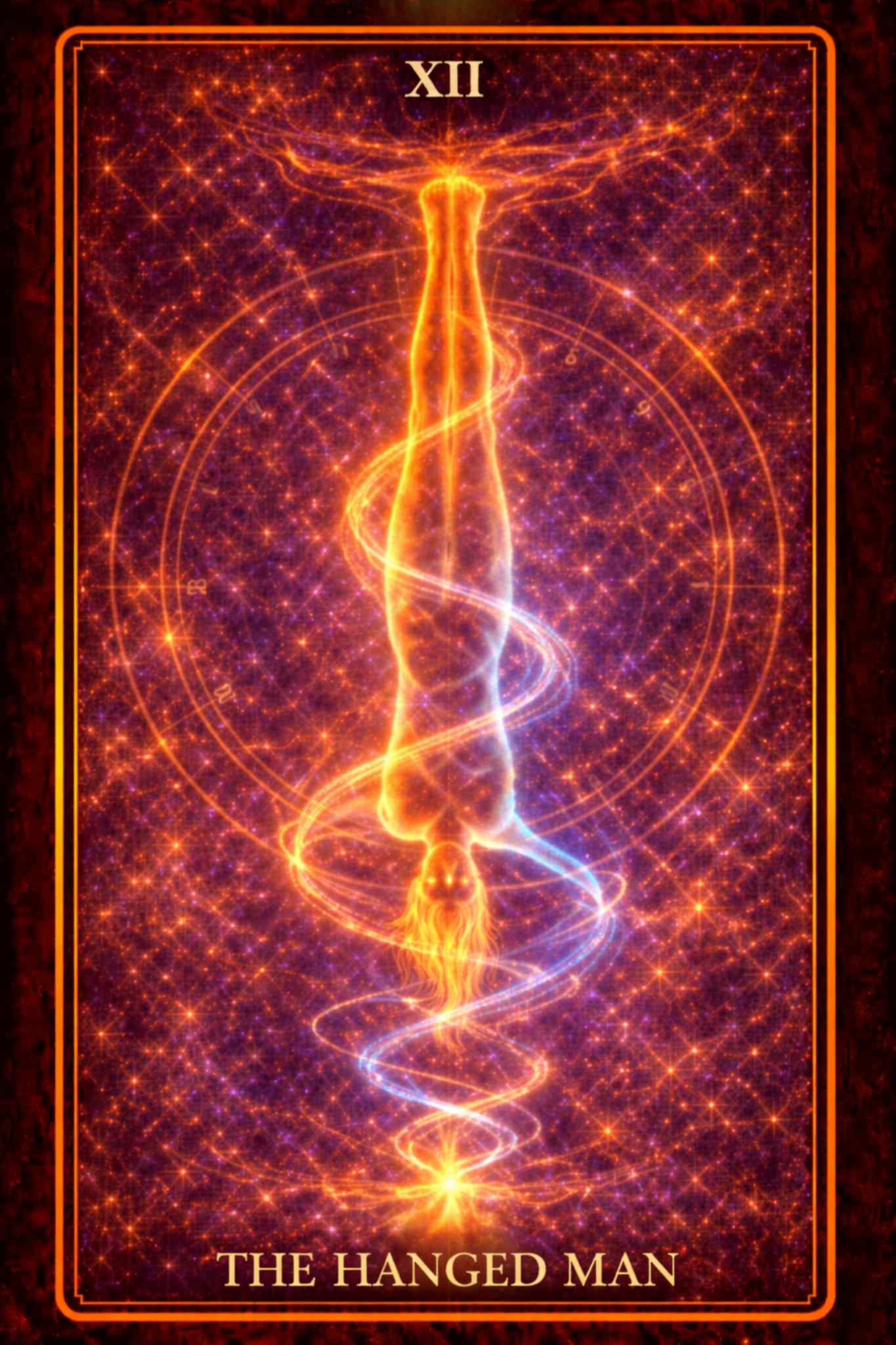
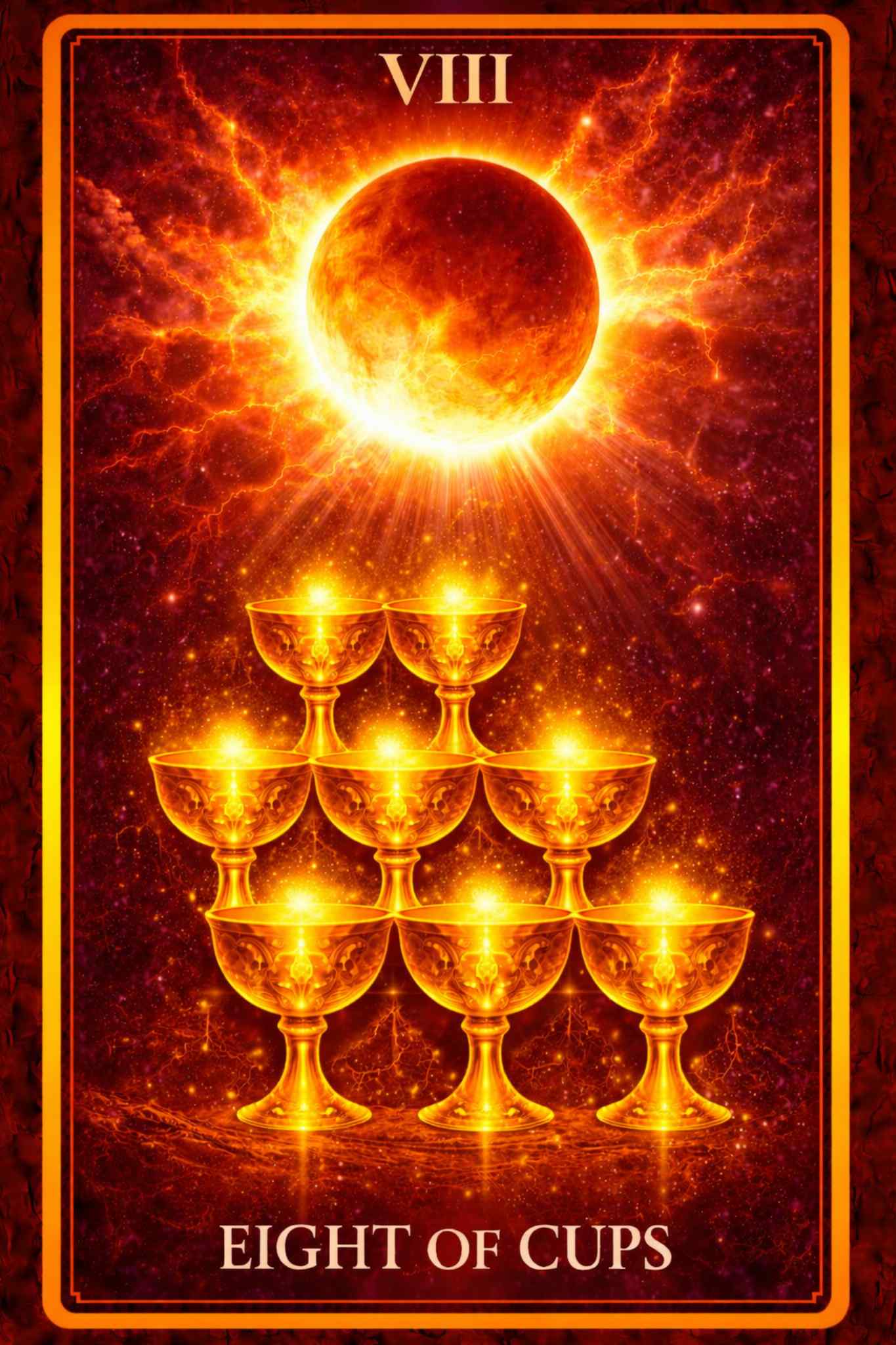
The Hanged Man and Eight of Cups tarot combination meaning
The Hanged Man and Eight of Cups speaks of a moment when emotional movement changes direction long before the outside world fully notices. The Eight of Cups is often read as departure, yet in this pairing the deeper axis is not escape, disappointment, or rejection alone. It is the slow recognition that inner truth has moved beyond a form that once seemed necessary, familiar, or worth preserving. The Hanged Man deepens that recognition by suspending reaction and making the turning point inward before it becomes visible, much like love in suspension reveals feeling through stillness. This creates a pairing about release through consciousness, where the heart is not simply leaving something behind, but learning why staying inside the old structure has become too costly for the deeper self. That is why the combination feels so solemn and so clean at the same time. Its power comes from the way surrender matures into direction.
There is a very particular dignity to this pair because it rarely moves in emotional noise. The Eight of Cups may look like walking away, but with The Hanged Man beside it, the withdrawal usually begins as inner seeing rather than outer drama. A person starts to sense that what once held meaning still has history, still has emotional weight, and may still deserve care, yet no longer carries the same living truth. That realization is not always immediate or easy to explain. The Hanged Man makes space for that uncertainty without turning it into confusion. It allows the soul to stop forcing attachment, to stop rehearsing the same emotional argument, and to witness what becomes visible when the pressure to preserve the old form begins to loosen.
This is what makes the pairing different from simple restlessness. The person is not merely tired, bored, or hungry for change. Something deeper has already shifted in the emotional center, and the older pattern can no longer be inhabited with the same sincerity. Sometimes that pattern is a relationship. Sometimes it is a hope, a role, a private promise, or the inner demand to keep trying because trying once meant loyalty. The Hanged Man alters the meaning of loyalty here. It asks whether loyalty to the old emotional shape has started to conflict with loyalty to what is becoming more truthful inside. The Eight of Cups then stops being a card of loss alone. It becomes a card of spiritual honesty that eventually has to move.
When inner departure begins first
One of the deepest truths in this combination is that leaving often begins before a person has the language to describe it. The Eight of Cups reflects the movement away from something that can still contain value, memory, or partial meaning, yet no longer nourishes the deeper life in the same way. The Hanged Man reveals that this movement usually begins as a shift in perception. A person stops asking how to revive the old arrangement and starts noticing how much energy has been spent trying to make it remain what it no longer is. This is not coldness. It is a subtle form of awakening. The heart is beginning to understand that continuation and alignment are no longer the same thing.
That inner departure can feel very quiet. Outwardly, nothing dramatic may have happened yet. The person may still be present, responsive, caring, or engaged on the surface. Yet their relationship to the situation is changing underneath. The Hanged Man protects that interior phase because it knows that clear release often requires a season of suspended perception before action becomes clean. Without that pause, the Eight of Cups can look reactive. With it, the departure becomes more truthful, less tangled, and more faithful to what has actually matured inside. The difference is crucial. This pairing is not usually about running from discomfort. It is about allowing a deeper seeing to complete itself.
- Release begins in perception before it becomes visible in action.
- Emotional loyalty can outlast inner truth for a while.
- Stillness reveals what the heart no longer wants to force.
- Departure can be honest without becoming dramatic.
- Clarity grows when attachment stops arguing with itself.
The presence of this list within the reading matters because the pairing often feels simple from far away and very intricate from within. People watching from outside may only see distance or disengagement. The inner reality is often more exact. The person is learning that emotional sincerity sometimes asks for release rather than repetition. The Hanged Man creates the spaciousness in which that difficult lesson becomes possible. The Eight of Cups carries it forward once the lesson has ripened enough to be lived.
Love and relationship meaning
In love readings, The Hanged Man and Eight of Cups often describes a connection that has reached a point where emotional truth can no longer be measured by endurance alone. There may still be care. There may still be tenderness, memory, and even real affection. Yet something essential has shifted, and the older way of holding the relationship no longer feels congruent with what the heart knows. The Hanged Man slows the instinct to define that shift too quickly, which is why the pairing can correspond to a period where the relationship still exists outwardly while inwardly a deeper evaluation is taking place. This is one of the most important features of the combination. It shows that emotional departure often begins as a change in vision, long before it becomes a change in status.
Sometimes this shift points toward an actual ending. At other times it points toward the release of a fantasy, a repeated hope, or a version of the relationship that no longer has life in it. That distinction matters. The Eight of Cups does not always require leaving a person in literal terms. It can require leaving behind the insistence that a bond must become something it is not becoming. The Hanged Man helps make that possible by loosening emotional compulsion. Instead of clinging to momentum, the person begins to ask whether staying devoted to the old form has become a quiet betrayal of what feels true now. The pairing often grows more painful before it grows clearer, because it asks for honesty with emotional grief that has not yet turned into movement.
This is also where a page like reconciliation guide can become meaningful, especially when the question is whether distance is final, transitional, or part of a more complex emotional process. In this pairing, reconciliation is rarely a matter of surface desire alone. It depends on whether what has been left behind is merely the conflict, or the deeper structure that created the distance in the first place. The Hanged Man asks for perspective before return. The Eight of Cups asks whether the soul has already traveled too far inwardly to inhabit the old pattern with integrity. Together, they create a reading where reconciliation has to be spiritually and emotionally real to matter.
The courage to stop forcing
One of the strongest teachings in this combination is that emotional maturity is not always proven through persistence. Sometimes it is proven through the willingness to stop forcing what has already begun to fade in its old form. The Eight of Cups understands that there are moments when more effort would only create more distance from the truth. The Hanged Man shows how a person arrives at that recognition. They do not simply wake up one day and abandon what mattered. They spend time in suspension. They see the pattern from new angles. They notice how much life is being drained by holding something that no longer answers in the same way. That is why the eventual movement can feel both sad and deeply clean.
There is real compassion in this. The pairing does not shame attachment. It does not mock devotion, hope, or the desire to keep believing in a bond that once carried meaning. It simply shows that emotional honesty sometimes asks for a different form of love than maintenance. That love may mean releasing a role, a promise, a familiar expectation, or a repeated cycle of trying to reawaken what no longer lives in the same way. The Hanged Man makes the person stay with that realization long enough that it becomes unmistakable. The Eight of Cups then becomes less about walking out and more about walking true.
In a different but related threshold energy, suspended beginnings explores the point where a new path wants to emerge but first requires surrender of old control. That pairing leans toward initiation. The current one leans toward completion through release. The contrast is useful because it shows that The Hanged Man can stand at very different gates. Here, it stands at the gate where the soul has already begun loosening its grip on what cannot keep carrying its deeper truth.
What this pair is really leaving
A subtle but vital aspect of this combination is that it is often leaving more than the obvious situation. A person may believe they are leaving a relationship, a dynamic, or a role, when in fact they are also leaving a way of interpreting themselves inside it. The Eight of Cups can therefore mark the end of emotional narratives that once seemed inseparable from identity. “I am the one who waits.” “I am the one who keeps this together.” “I am the one who proves love by staying longer.” The Hanged Man interrupts these identities by suspending them in awareness. It asks whether they are still true in any living sense, or whether they have become devotional habits that now conceal a deeper need for release.
Need a little more context around this pairing?
A short reading can help you reflect on the tension, direction, or lesson this combination may be pointing toward.
This is why the combination can feel spiritually larger than the immediate circumstances. The person is not simply walking away from what failed to satisfy. They may be walking away from an older contract with themselves, one built on sacrifice, endurance, or emotional over-responsibility. The Hanged Man turns that contract sideways so it can be seen clearly. The Eight of Cups honors the moment when the person realizes they no longer want to keep feeding it. This can be painful because the old identity may have contained dignity, love, and genuine effort. Yet the pairing suggests that a deeper dignity becomes possible when the person allows the old role to end.
That deeper dimension can also be illuminated by career suspension, especially where the theme of paused movement reveals that inner alignment matters more than outer continuation. In work questions, The Hanged Man often asks whether progress has been confused with faithfulness to the wrong form. In this emotional pairing, the principle is similar. The soul may have stopped advancing inside the existing structure long before the person admits it aloud. The Eight of Cups simply becomes the card that responds once this truth can no longer remain abstract.
Spiritual emptiness versus spiritual guidance
Another major distinction in this pair is the difference between walking away because something is dead inside, and walking away because the soul is being guided toward a wider truth. These can look similar from the outside. The Hanged Man helps differentiate them by slowing the process. If the movement is premature, reactive, or rooted in avoidance, the stillness often exposes that. If the movement remains true after deep reflection, it gains depth and legitimacy. The Eight of Cups is not afraid of emptiness, yet it does not romanticize it either. It asks whether the inner distance is a void to be escaped or a sacred signal that the old emotional nourishment has run its course.
This is where spiritual withdrawal becomes especially relevant. That page helps frame the deeper pattern behind the card: leaving what still functions outwardly because the soul can no longer remain alive inside it in the same way. When The Hanged Man is added, the spiritual tone becomes even more contemplative. The departure is no longer just a decision. It becomes the outer expression of an inner suspension that has already transformed the meaning of staying. This does not make the path easy. It makes it real.
Structures that can no longer hold
At times, The Hanged Man and Eight of Cups reveals that the situation is not merely emotionally unsatisfying. It has become structurally incapable of holding the truth that is emerging. This is where a combination like shifting foundations offers a useful comparison. The Tower breaks what cannot remain standing. The Eight of Cups leaves what can still stand outwardly but no longer carries inner life. The Hanged Man in both pairings shows the moment when perspective changes so thoroughly that continuation becomes impossible to inhabit in the old way. In the current pair, however, the movement is quieter and more emotionally solemn. The structure may remain externally intact, yet the heart has already stepped out of it in essential ways.
This is part of what makes the combination so moving. It often concerns situations that are still recognizable, still workable by surface standards, and still capable of continuing if judged only by habit or appearance. Yet the cards suggest that deeper truth is no longer measured by external viability alone. Something inside has already crossed a threshold. The Hanged Man allows the person to feel the full weight of that truth before any outer step is taken. The Eight of Cups follows when the soul can no longer pretend that staying in the same form would honor what it has learned.
Want to place this combination into a wider reading?
If this pairing feels close to something you are experiencing, a simple spread can help you reflect on the surrounding energy with more clarity.
FAQ
Does The Hanged Man and Eight of Cups always mean a breakup or leaving?
It often points toward release, yet the release may be inward before it becomes outward. Sometimes the person is leaving a pattern, an expectation, or an old emotional role rather than a relationship in literal terms.
Can this combination still involve care or love?
Yes. One of the reasons this pair feels so poignant is that care may still be present. The deeper issue is whether care and continuation still belong together in the same form.
What is the main lesson of this pairing?
To recognize when inner clarity has already begun loosening attachment, and to let movement arise from that truth rather than from panic, resentment, or emotional exhaustion.
More combinations with The Hanged Man
More combinations with Eight of Cups
Continue with The Hanged Man
Explore Related Guides by Topic
If you want to explore this combination through a more specific emotional lens, these tarot guides can help you follow the broader pattern behind the reading.