
Death + Knight of Wands
Explore how these two tarot cards interact in a reading through symbolic overlap, contrast, and shared narrative. Tarot combinations often reveal meaning that neither card fully expresses on its own.
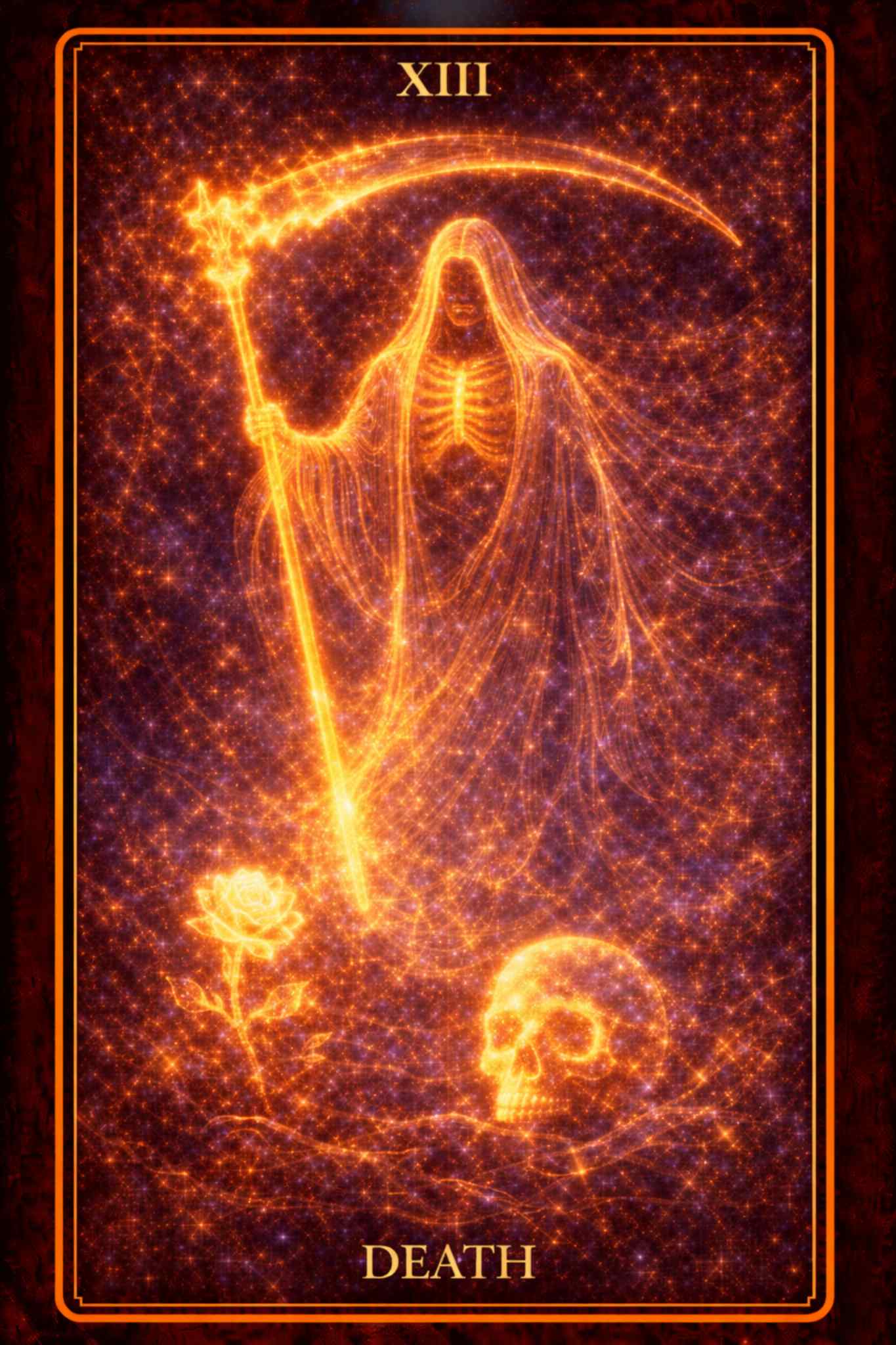
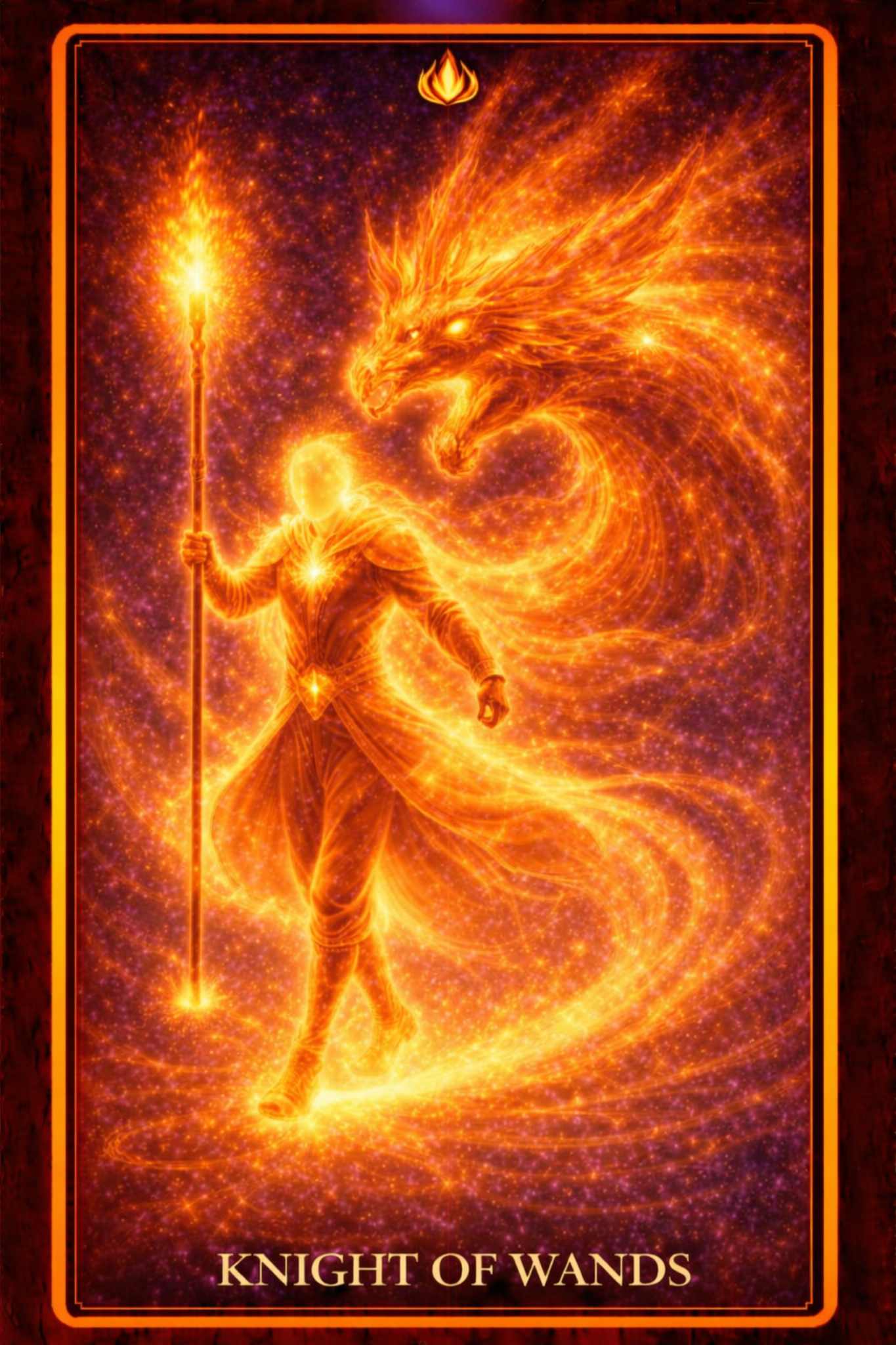
Death and Knight of Wands Tarot Combination Meaning
Death and Knight of Wands meet where transformation breaks containment and released life-force surges into motion. In this pairing, Death is not only an ending. It is a severing force. It cuts loose what has already reached completion and releases the energy trapped inside a finished chapter. An identity, attachment, ambition, relationship pattern, or life-direction may have reached the point where it can no longer hold together as before. The Knight of Wands arrives as heat in motion: bold desire, appetite for action, urgency, pursuit, departure, risk, and the fierce instinct to move while the opening is still alive. Together, these cards often appear when a person feels the full charge of change and wants to act before the fire cools.
That is what makes the pair so volatile and so useful. The Knight can become the brave force that finally carries someone out of a dead structure. He can also turn transformation into speed before the psyche has fully absorbed what has ended. Death therefore asks a sharper question than the Knight would usually ask on his own: is this motion coming from release, or from the wish to escape the rawness of release? The answer matters. These cards can describe magnificent forward movement, or a dramatic flight path built over grief that still needs room.
When the ending turns into momentum
The Knight of Wands dislikes stagnant thresholds. He wants movement, direction, heat, and the clean sensation of action after too much suspended tension. Beside Death, that urge can become intense because real endings release enormous pressure. A person may suddenly want to leave, confront, pursue, confess, travel, launch, change everything, or throw themselves toward the next horizon. Sometimes that urgency is honest and timely. The old chapter may truly be finished, and delay may only preserve dead air.
Yet Death asks for more than action. It asks for inner change as well. A person can leave the scene before they leave the pattern. They can change the landscape while carrying the same wound, the same ego rhythm, or the same survival script into the next chapter. This is why the pairing feels so exacting. The energy is real. The opening may be real. The question is whether the fire is carrying transformation forward, or simply giving pain a faster vehicle.
Fire as liberation, fire as evasion
One of the deepest lessons in this pair is that fire becomes meaningful through what it serves. The Knight of Wands brings boldness, appetite, confidence, and the willingness to act. After a Death process, those qualities can be life-giving. They can help a person stop resuscitating what is over and step into a more vital future. In that expression, the Knight is liberating. He translates recognition into movement.
The same fire can also become evasive. A person may rush toward sex, travel, reinvention, conquest, new attraction, creative intensity, or dramatic change because speed makes them feel alive again. Some of that movement may be genuine. Some of it may be charged with real possibility. Still, if the fire is mainly working against grief, the old pattern may survive inside the new motion. Death asks whether desire is clearing the path or merely covering the wound with acceleration.
Love and relationship meaning
In relationship readings, Death and Knight of Wands often point toward intense movement around an ending, a major shift, or a relational turning point. This can show someone finally leaving a dead dynamic, acting on fierce desire after emotional stagnation, or bringing rapid heat into a bond that has already been altered by closure or deep change. Chemistry can be strong here. So can the urge to do something dramatic rather than remain in uncertainty.
Want to explore this combination in a more personal way?
If this pairing feels important right now, a simple tarot spread can help you reflect on it with more context.
At its healthiest, this pair represents courage in love. A person may finally stop prolonging a bond whose life has gone out of it. They may choose vitality over habit, speak plainly, or allow truth to become action. Within an existing relationship, the pair can also show a dead pattern burning off so that something more honest and alive can emerge. The Knight then becomes the force that turns recognition into real change.
In its more difficult expression, the pairing can describe rebound energy, dramatic exits, volatile pursuit, or using new passion to avoid the emotional reality of what has ended. A person may feel intensely certain while still being inwardly governed by the old chapter. Death keeps the focus clear: passion alone is not proof of integration. The deeper question is whether desire is leading toward transformed life or simply away from the underworld as fast as possible.
Career, work, and decisive movement
In practical and career contexts, Death and Knight of Wands often describe a forceful push out of an old structure and into a new direction. A person may suddenly feel compelled to leave a role, challenge a stagnant system, launch a risky project, relocate, or cut themselves loose from a professional identity that has run its course. The Knight can be an excellent ally here because he refuses to linger forever where life has already thinned out. He gives daring, momentum, and willingness to accept risk in service of movement.
This can be one of the healthiest expressions of the pair when the old chapter is truly complete. The Knight helps prevent years of unnecessary hesitation. He takes what Death has already made clear and carries it into action. That can be deeply restorative for people who otherwise circle endings long after they already know what is true.
The caution is equally clear. A person may burn down one structure and immediately recreate its central pattern somewhere else. They may change jobs, projects, audiences, or goals while staying inwardly organized by the same dead ambitions, fear loops, or performance pressure. Death asks whether the old identity itself is changing, or only its scenery.
Psychological and spiritual meaning
Psychologically, Death and Knight of Wands often describe a psyche flooded with energy because an old structure has broken open. This can feel exhilarating, frightening, or both at once. A person may suddenly crave movement, freedom, action, or pursuit. Part of that surge can be regenerative. The ending of an old form often frees energy that was trapped inside maintenance and suppression. Still, released energy is not the same thing as integrated meaning. The Knight wants motion. Death wants transformation. When these are aligned, a person moves with striking vitality. When they are split, the rush of aliveness can be mistaken for full healing.
Spiritually, the pair marks the difference between liberation and reaction. Liberation happens when fire serves a completed ending and carries the person toward a life that could only begin after the old one was cut away. Reaction happens when fire is used to outrun vulnerability, void, or grief. The spiritual work here is not to dim the fire, but to clarify it. Passion becomes clean when it grows out of truth rather than out of panic.
Shadow expression and challenge
The shadow side appears when the Knight turns transformation into an adventure before it has become an honest inner passage. A person may romanticize the leaving, the bold move, the confrontation, the reinvention, or the new passion. Momentum feels vivid, and vividness can easily be mistaken for healing. Death exposes the parts of the self that still want to survive unchanged beneath all the movement.
There is also an opposite distortion in which a person mistrusts all urgency and suppresses the very fire that could help them leave what is truly over. Some endings need courage to become real in action. The challenge is not to remove intensity, but to make sure intensity belongs to truth rather than fear of stillness.
Timing and the speed of action
Timing is crucial with this pair because the Knight of Wands often creates the sensation that action must happen now. Sometimes that instinct is exactly right. The old chapter may indeed be finished, and delay may only waste life-force on preserving what has already emptied out. In such cases, the cards support bold movement, direct speech, or decisive departure. The urgency feels clean rather than frantic.
At other times, the Knight’s speed outruns Death’s depth. The person may be outwardly ready to move before they are inwardly ready to let the old structure die inside them. Then timing needs nuance. Action may still be appropriate, yet emotional completion may continue unfolding afterward. Death asks for honesty about that difference. Speed can be true. Speed can also flatter the ego into thinking the whole process is finished because the body is already in motion.
FAQ — Death and Knight of Wands
Is this combination about sudden change? Very often, yes. It commonly points to decisive movement around an ending or deep transformation, with strong urgency and pressure to act.
Can it be positive? Yes. It can be powerfully positive when the fire is helping the person leave what is already over and move toward a more vital life with courage and honesty.
Can it warn against rushing? Absolutely. One of its main cautions is that intense movement can become a way to outrun grief, emptiness, or the inner shifts that the ending actually requires.
What does it mean in relationships? It often shows passionate change, sudden action, or intense forward movement after or during a major relational shift. The key issue is whether desire is aligned with healing or masking unresolved endings.
What is the core lesson here? Courage and escape can look similar from the outside. Real transformation asks whether your fire is carrying you into truth or simply away from pain.
What this combination is really asking
Death and Knight of Wands ask: are you moving because the chapter is truly over, or because you cannot bear to feel how over it is? That is the heart of the pair. The urgency may be real. The desire may be fierce. The road may indeed be opening. Yet the cards want to know whether motion is the expression of transformation or a defense against it.
The deeper lesson is that endings often release tremendous energy. Death cuts the old form loose. The Knight of Wands seizes that liberated force and wants to ride it forward. Together, they form a potent image of change in motion: one that can produce authentic courage and vivid new direction, but only when the person allows the ending to transform them rather than merely propel them.
Ready to see how this applies to your situation?
A focused tarot reading can help you explore how Death + Knight of Wands may reflect your current situation, not just the general meaning of the cards.
Closing reflection
There are moments when life changes through heat, speed, and the unmistakable feeling that staying still is no longer possible. This pairing belongs to those moments. It honors the fact that movement can be necessary, not because grief is absent, but because the old road has truly ended behind you.
Death brings the severing truth. The Knight of Wands brings the fire to move with it. Between them is a sharp and demanding freedom: the freedom to act, leave, choose, and pursue from transformation rather than from panic. When that distinction is honored, the result is more than dramatic change. It is brave forward motion rooted in what has genuinely been released.
More combinations with Death
More combinations with Knight of Wands
Continue with Death
Explore Related Guides by Topic
If you want to explore this combination through a more specific emotional lens, these tarot guides can help you follow the broader pattern behind the reading.