
Death + King of Wands
Explore how these two tarot cards interact in a reading through symbolic overlap, contrast, and shared narrative. Tarot combinations often reveal meaning that neither card fully expresses on its own.
Death and King of Wands Tarot Combination Meaning
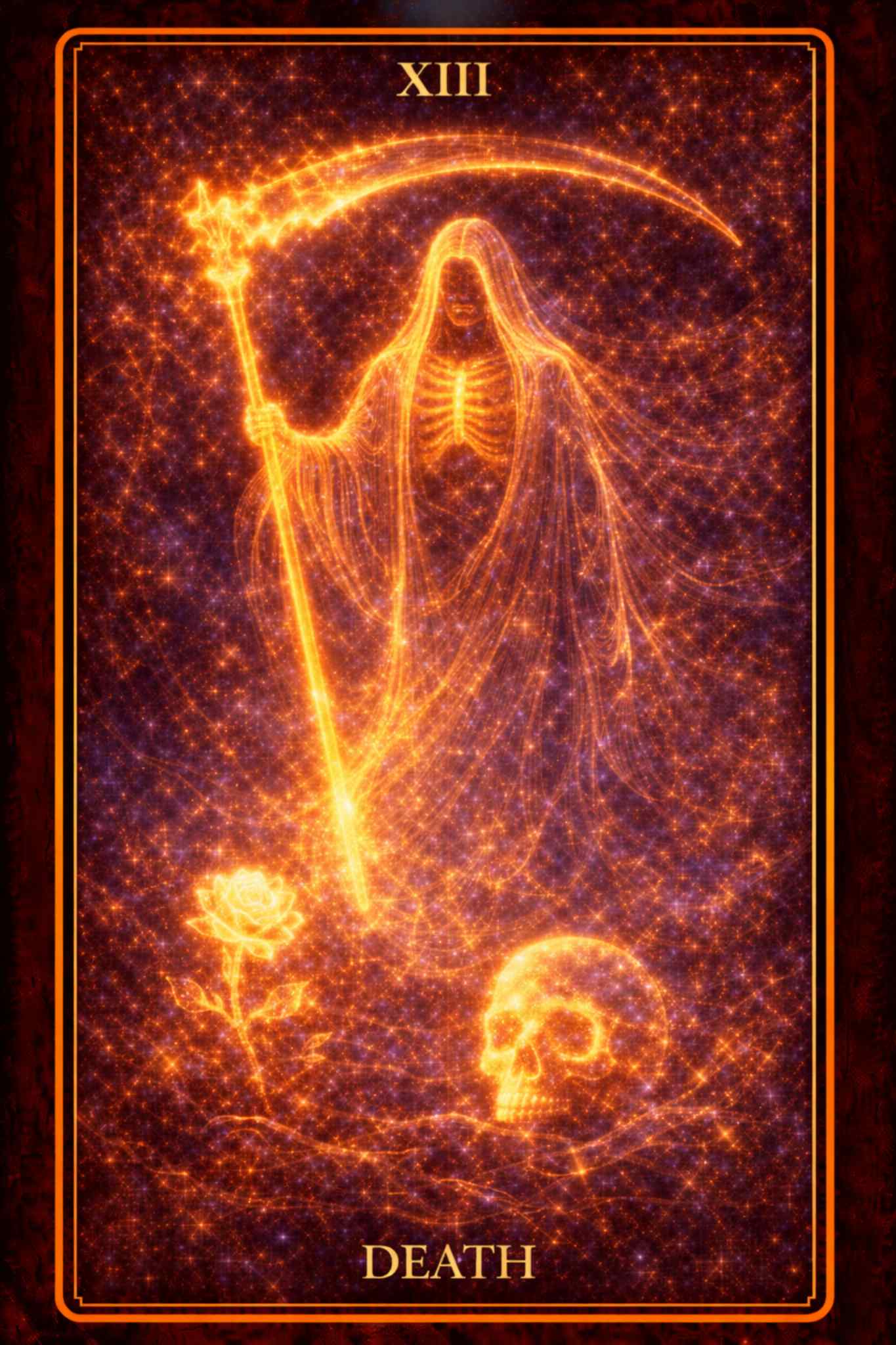
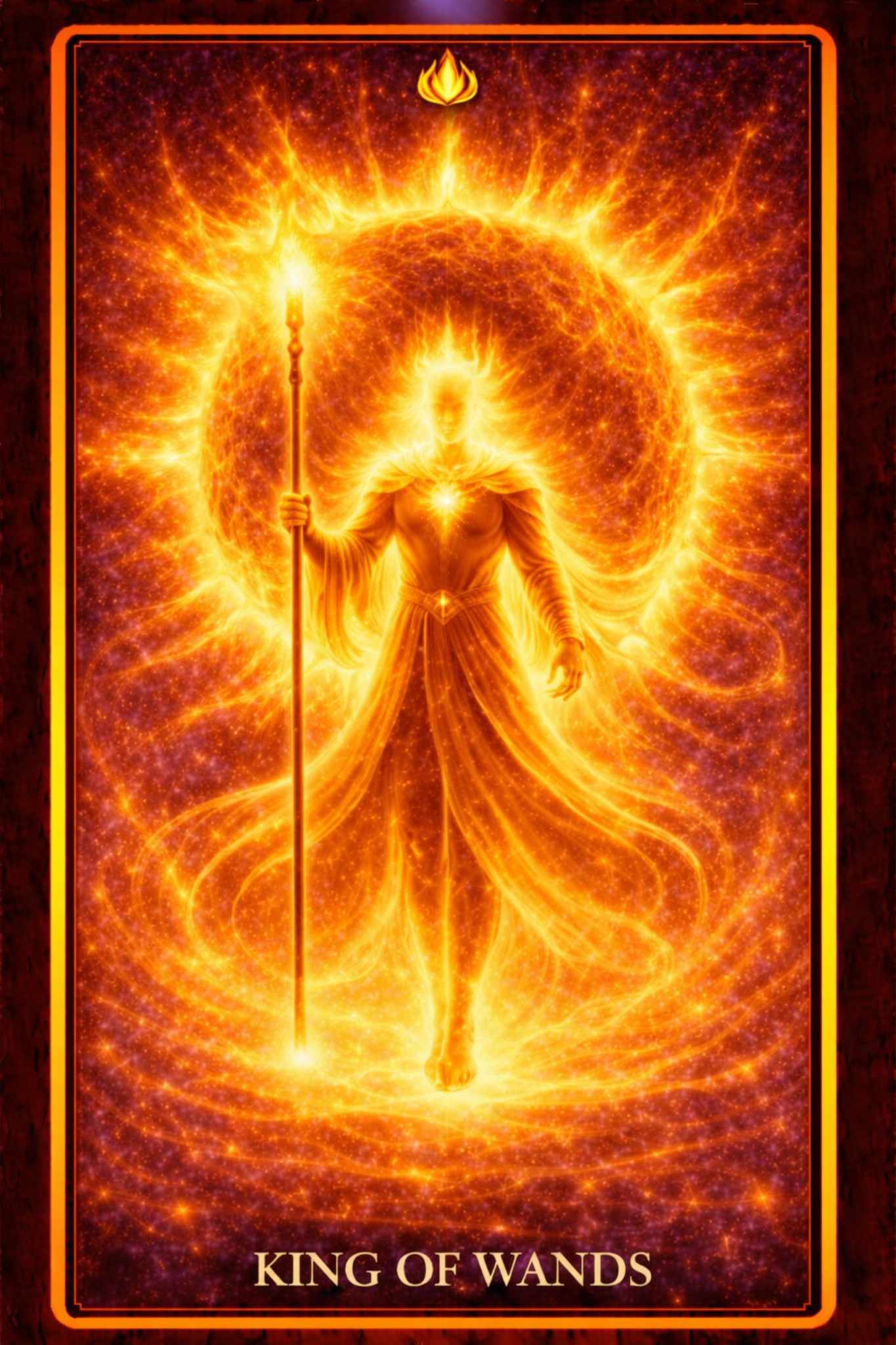
Death and King of Wands meet where transformation reaches the throne itself — where an old way of directing life is being removed so that a truer form of command can take its place. In this pairing, Death is less about simple ending and more about dethronement. A former ambition, authority structure, leadership identity, or organizing vision has reached the point where it can no longer rule the inner kingdom in the same way. The King of Wands enters as mature fire: bold vision, deliberate authorship, warm command, and the ability to move life toward a chosen future. Together, these cards often appear when the issue is larger than what is ending. The deeper issue is what kind of power remains once an old source of command has been stripped away.
This gives the pair unusual gravity. The King of Wands is developed fire. He knows how to turn will into direction and vision into action. Beside Death, however, even mature strength is subject to change. A person may still be capable, influential, respected, and effective, yet inwardly know that the form through which they have been leading has run its course. That can be difficult to admit precisely because it still works on the surface. Death asks a humbling question: does this vision still belong to living truth, or is it being sustained by force of habit, pride, and old momentum? The answer can alter everything.
When an old authority loses its crown
One of the strongest themes in this combination is the ending of a former authority pattern. This may involve ambition, leadership style, public identity, creative authorship, or the inner role through which a person has long understood themselves as powerful. The King of Wands often gives life strong shape. He thrives through purpose, coherence, and decisive movement. Death enters when that established line of command has reached completion. The person may sense that the mission is changing, the role is changing, or the very reasons they once wanted what they wanted are changing at the root.
This does not automatically mean less power. Quite often it means that power is being asked to mature beyond a former allegiance. The old ambition may have been real, meaningful, and fruitful for a long time. Yet a chapter can be successful and still be finished. Death reveals that truth with unusual clarity. Something that once organized the self may still function externally while inwardly losing its authority. The cards then ask whether the person is willing to let command evolve instead of forcing it to keep wearing an old crown.
Leadership after shedding
The King of Wands becomes especially compelling beside Death because he suggests that the ending is not meant to leave the person directionless forever. Quite the opposite. Once the obsolete authority structure falls away, a more integrated leadership can emerge. The person may become less performative, less driven by ego-confirmation, less tied to old narratives of dominance, visibility, or relentless self-assertion. What remains can be quieter and far stronger: a leadership rooted in what is actually alive rather than in what once secured recognition.
In this sense, Death does not diminish the King. It tempers and clarifies him. It removes stale ambition, expired command structures, and objectives that no longer belong to the future. The King of Wands then returns as mature fire freed from old agendas. He can still decide, create, initiate, and lead, though from a different center. His power becomes less about maintaining a reign and more about stewarding what has real life in it now.
- Death removes an authority pattern that has reached completion.
- King of Wands brings mature vision, leadership, and directed fire.
- Ambition can complete itself just as identities do.
- Power grows cleaner when it leaves outdated agendas behind.
- Renewed authority comes from alignment, not mere continuity.
Love and relationship meaning
In relationship readings, Death and King of Wands often point toward a deep shift in how direction, leadership, desire, and personal authority operate inside the bond. A former relational role may be ending: the pursuer, the decider, the protector, the dominant partner, the one who always defined the future, or the one whose will set the emotional climate. Death reveals that the old configuration has reached its limit. The King of Wands then asks what kind of mature direction remains once that former identity is no longer ruling the relationship in the same way.
You may also want to go one step deeper.
Death + King of Wands can open up differently inside a focused personal reading.
At its healthiest, this can be a profoundly constructive pair. A person may stop leading from ego, fear, or sheer force of will and begin relating from a more conscious authority. A relationship may shed a dead dynamic and become stronger because direction is no longer confused with control. The King of Wands can then represent warm, stable, courageous leadership in love — the ability to set a course, hold a future, and stay fully present without dominating the field. Death makes that possible by removing what had become rigid or performative.
In more difficult expressions, the pair can show someone clinging to an old role because it props up identity. They may resist change because it threatens their sense of being the one who knows, decides, directs, or carries the power. Or they may keep trying to revive a shared future that has already lost its deeper life because letting it die would mean surrendering the self they became inside it. Death challenges that directly. The relationship may need a different kind of direction — one that belongs to what the bond is now, rather than to what an earlier self wanted it to remain.
Career, work, and public direction
In practical and professional life, Death and King of Wands can be one of the most potent combinations for transformation of leadership, vision, public identity, or high-level direction. A role, enterprise, creative mission, or ambition structure may have reached completion. The person may still be fully capable of driving it forward, yet inwardly know that the current form no longer belongs to them. Death forces the recognition that power cannot be measured only by the ability to sustain momentum. Sometimes true power lies in ending what one is perfectly capable of continuing because it no longer carries living purpose.
This is especially important for founders, leaders, teachers, creators, executives, and anyone whose identity has become strongly organized around direction-setting. The King of Wands often carries real competence. But competence can keep dead chapters functioning long after their soul has gone quiet. Death becomes deeply ethical here. It asks whether power is serving the living future or merely prolonging an outdated reign. If the old vision is complete, transformation may require retiring it, rewriting it, or stepping into a new stage of authority altogether.
At its best, this combination can signal renewed and far more truthful leadership after major change. The person may emerge with cleaner priorities, less ego-identification, and greater capacity to direct energy wisely. The fire remains. Its allegiance changes. That shift can alter everything from career trajectory to public influence to creative voice.
Psychological and spiritual meaning
Psychologically, Death and King of Wands often describe the transformation of will itself. A person may be learning that strong willpower is not the same thing as alignment. They may have built a life through discipline, determination, and force of character, only to discover that part of what drove them has reached completion. This can feel disorienting, especially for someone who has long trusted direction as a source of identity. Yet the deeper fire is not disappearing. It is being separated from an older object of devotion.
Spiritually, this pair can mark the death of egoic rulership and the emergence of truer stewardship. The person may be asked to release the need to dominate outcomes, define themselves through visible command, or remain central in the exact old way. What emerges is not weakness. It is authority aligned with deeper life. The King of Wands becomes spiritually cleaner when his fire serves what transformation has made real rather than what self-image wants to preserve.
Shadow expression and challenge
The shadow side of this combination appears when the King of Wands resists Death by intensifying control. A person may try to out-lead the ending, outwork it, rebrand it, or build around it so they never have to admit that the old structure is complete. Because they are strong, they may succeed for a while. Yet the success can become hollow. The more they force, the clearer it becomes that the fire is serving continuation rather than truth. Death reveals the limit of command. Even powerful people cannot keep every kingdom alive forever.
There is also an opposite distortion in which the person, confronted by major change, loses trust in authority altogether. They may assume that because one vision has ended, they no longer know how to lead anything. The King of Wands corrects that. The deeper issue is not loss of power, but transformation of it. The task is to let old power forms fall where they must so that truer authority can take shape.
Timing and the turning of direction
Timing matters profoundly with this pair because it often appears where the person is deciding whether to continue leading from an old structure or to allow a major directional change. Sometimes the cards indicate that the ending is already inwardly complete and that the next act of leadership is to acknowledge it openly. In those moments, delay may only preserve image. At other times, the transformation is underway and the newer vision is still forming. The person may need to tolerate a period between forms of authority, where the old crown has fallen and the next mode of command is still clarifying itself.
The key timing question is simple and demanding: does action now serve the living future or the dead past? The King of Wands naturally wants movement, but Death insists on truthful sequence. Let the old command structure release. Then the next direction, if it is real, will carry a very different force. It will be more than another push. It will be transformed authority in motion.
FAQ — Death and King of Wands
Is this combination about leadership change? Very often, yes. It can point to transformation of leadership, direction, ambition, or public identity, especially where an old way of holding power has reached completion.
Can it be positive? Yes. It can be highly positive because it suggests that after a major ending, stronger and more truthful authority can emerge — less tied to ego, more aligned with living purpose.
Does Death weaken the King of Wands? No. It refines him. Death removes outdated ambition or expired authority structures so the King’s fire can serve what is genuinely alive rather than what is merely established.
What does it mean in relationships? It often concerns transformation in who leads, how direction is set, or how personal authority operates inside the bond. Old roles may need to end so a more mature and truthful dynamic can emerge.
What is the main lesson here? Real authority includes the ability to let old power forms end. Mature fire becomes strongest when it no longer needs to preserve a dead chapter in order to feel powerful.
What this combination is really asking
Death and King of Wands ask: what kind of authority remains when the old vision has lost its crown? That is the heart of the pair. The ambition may have been real. The leadership may have been effective. The role may have shaped much of your life. Yet the cards want to know whether you can let that former structure end if it no longer carries living purpose. They ask whether your fire can become loyal to transformation rather than to continuity for its own sake.
The deeper lesson is that power does not disappear when a chapter ends. It changes allegiance. Death removes what has completed its life. The King of Wands gathers the remaining fire and directs it toward what can now be built more truthfully. Together, they form a remarkable image of post-transformation leadership: bold, visible, decisive, and no longer organized around preserving an expired identity. That is a rarer and more mature authority than ordinary success can produce.
Want to place this combination into a wider reading?
If this pairing feels close to something you are experiencing, a simple spread can help you reflect on the surrounding energy with more clarity.
Closing reflection
Some endings take away comfort. Others take away the very role through which a person has long known themselves as powerful. This pairing speaks to that threshold with unusual gravity. It suggests that transformed authority may be more real than uninterrupted authority ever was.
Death clears the old throne when it no longer belongs to life. The King of Wands brings back the fire that can still lead, though from a different truth. Between them is a demanding invitation: let power evolve, let ambition die where it must, and discover that the deepest command may begin with release rather than preservation.
More combinations with Death
More combinations with King of Wands
Continue with Death
Explore Related Guides by Topic
If you want to explore this combination through a more specific emotional lens, these tarot guides can help you follow the broader pattern behind the reading.