
The Hierophant + King of Wands
Explore how these two tarot cards interact in a reading through symbolic overlap, contrast, and shared narrative. Tarot combinations often reveal meaning that neither card fully expresses on its own.
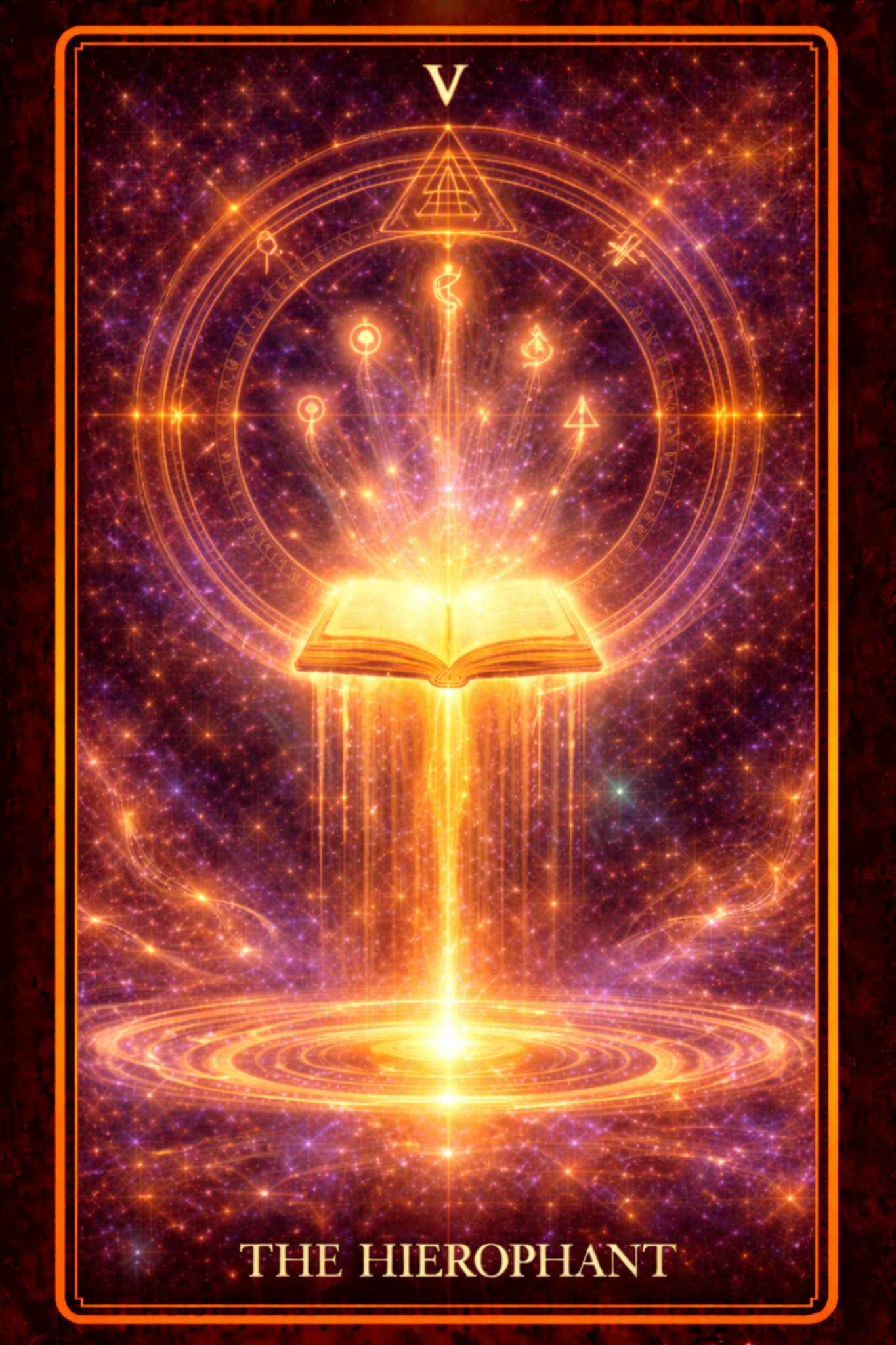
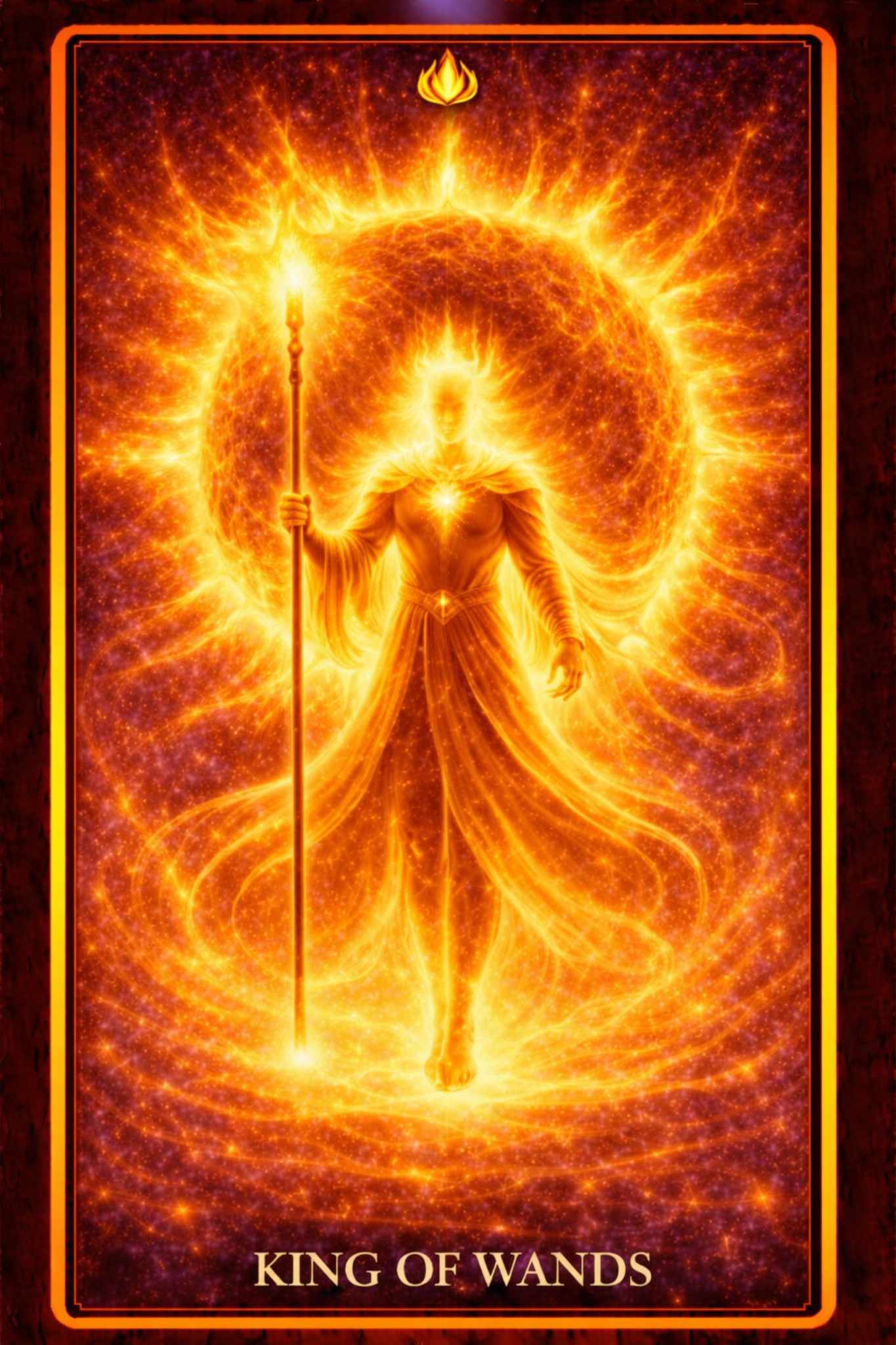
The Hierophant and King of Wands Tarot Combination Meaning
The Hierophant and King of Wands create a combination about authority with direction. This is not only the presence of values, and not only the presence of leadership. It is the meeting point between vision and framework, command and conscience, influence and accountability. The King of Wands represents mature fire expressed as leadership: not merely impulse, but steadied will, strategic confidence, creative sovereignty, and the capacity to set direction in a way that others recognize and often follow. The Hierophant brings a different register of authority. He speaks through tradition, moral architecture, spiritual or social order, institutional continuity, and the question of what makes a leader trustworthy beyond personality alone. Together, these cards often point toward a role, relationship, or life phase in which leadership cannot remain purely personal. It must answer to deeper standards. Something in the reading is no longer satisfied with charisma on its own. It wants structure, meaning, and a clearer sense of what power is serving.
This pairing is strong because both cards carry legitimacy, but from different sources. The King of Wands is legitimate because of presence, capability, directional force, and the ability to act decisively without falling apart under pressure. The Hierophant is legitimate because of continuity, interpretation, principle, and the systems that define what a community can responsibly endorse. When the two appear together, the reading often concerns the kind of authority that becomes possible when these sources meet rather than compete. Vision needs ethics. Conviction needs accountability. Structure needs living direction. In that sense, this is not a card pair that merely flatters ambition or celebrates command. It asks a more demanding question: what kind of authority are you building, and what larger good is it willing to remain answerable to when your influence grows too strong to be treated casually?
Core symbolic dynamic
At the symbolic level, The Hierophant and King of Wands unite guiding framework with guiding will. The Hierophant represents the systems through which values are preserved, interpreted, and transmitted across time: tradition, doctrine, teaching, communal meaning, professional ethics, institutional order, and the shared codes that help human life remain more coherent than instinct alone. The King of Wands represents directed fire: the ability to take creativity, courage, ambition, and perspective and turn them into organized movement. Together, these cards often point toward principled leadership, mission-driven action, or the responsibility of becoming a figure whose judgment shapes more than personal outcomes. What is chosen here may influence others. What is modeled here may be repeated. The cards therefore carry weight even before anything dramatic happens.
Want to explore this combination in a more personal way?
If this pairing feels important right now, a simple tarot spread can help you reflect on it with more context.
The tension inside the pair is significant, and that tension is part of what makes the combination so useful. The King of Wands can lead boldly, but left to himself he may trust his own vision too absolutely. He can become so persuaded by his own directional clarity that he stops noticing where certainty is replacing reflection. The Hierophant can provide continuity and ethical grounding, but left to himself he may become overly formal, attached to precedent, or too invested in preserving legitimacy to respond to living reality. Together, they ask whether leadership can be both inspired and disciplined, commanding and accountable, future-oriented and ethically coherent. Sometimes the answer is yes, and the result can be extremely strong: a person capable of holding power without drifting entirely into ego or improvisation. Other times, the pair exposes imbalance. The leader may be using values to justify authority rather than submit to them, or the institution may be using authority language to resist needed vision. Either way, the deeper theme is unmistakable: power and principle are now in conversation, and the conversation matters.
Love and relationship meaning
In relationship readings, The Hierophant and King of Wands often indicate a bond in which seriousness and direction matter. The King of Wands brings strong presence, initiative, confidence, sexual and relational magnetism, and a tendency to move a connection toward clearer form rather than leaving it indefinitely passive. The Hierophant adds the deeper framework of commitment, values, expectations, ethical tone, and the question of what kind of relationship is actually being built. Together, the cards can suggest a relationship that is not merely warm or passionate, but intentional. Someone may be ready to lead more clearly, define the bond more explicitly, or take responsibility for its direction. Yet the cards also insist that direction alone is not enough. Leadership in relationship must still answer to mutual values, honesty, and respect. Otherwise the structure may look solid while the emotional truth inside it quietly narrows.
This combination can be highly constructive when a connection needs both clarity and moral seriousness. It may reflect a partner who is capable of vision and action, but who must also show that their leadership is not self-serving. The Hierophant asks whether the relationship structure is genuinely shared, whether the standards guiding the bond are trustworthy, and whether the influence one person holds is being exercised with accountability rather than entitlement. In healthy form, this can be a pair of committed momentum: a relationship moving toward stability, shared purpose, stronger vows, or a more explicit long-range shape. In shadow, it can point toward authority imbalance, moralized control, or a person who wants to lead while assuming that their own conviction is enough to justify the direction. The deeper issue is not who is stronger. It is how power is being held inside love. Does direction serve the bond, or merely the one most comfortable steering it?
Career, vision, and institutional leadership
In work and vocation, this combination can be one of the clearest indicators of leadership with real consequence. The King of Wands brings command, entrepreneurial drive, strategic imagination, initiative, and the ability to see beyond the immediate moment into a broader future. The Hierophant brings ethics, legitimacy, standards, governance, field knowledge, institutional memory, and the responsibility attached to representing something larger than yourself. Together, these cards often appear when someone is stepping into a role where influence is becoming more formal, more visible, or more accountable. This may involve founding, directing, teaching, managing, guiding, or shaping a system that others depend on. It can be a very strong sign for those whose work combines inspiration with stewardship, because it suggests not only the ability to move people, but the obligation to consider what kind of structure your movement is creating around them.
The crucial issue is whether the vision is disciplined enough to remain trustworthy. The King of Wands often knows where he wants to go. The Hierophant asks what rules, principles, or communal responsibilities must shape how he gets there. In some situations, this means a gifted leader learning to respect process, ethics, and the limits of personal charisma. In others, it means an established institution needing the kind of living directional force that prevents structure from becoming hollow. This is a potent pair for mission-led growth, but only when the mission is more than a slogan. If you are in a leadership context, these cards ask whether your authority could withstand scrutiny not only of results but of method. They ask whether what you are building teaches people something healthy about power, or whether it merely rewards certainty and force. That distinction tends to become clearer over time, but this pair suggests it should be examined before time makes the answer more expensive.
Spiritual and psychological lesson
Spiritually, The Hierophant and King of Wands often point toward the maturation of conviction into leadership. A person may feel called not only to believe something, but to organize around it, build from it, teach from it, or guide others in relation to it. This can be deeply meaningful. Not all leadership is egoic, and not all ambition is shallow. Sometimes a genuine moral or spiritual center does want embodiment at scale. Yet these cards also warn that once belief gains power, it must become even more accountable. The King of Wands can inspire, energize, and direct. The Hierophant asks whether he will remain humble enough to stay inside ethical relationship to what he claims to serve. This is the difference between principled leadership and sanctified ego. Both can look impressive from the outside. Only one can be trusted for long.
Psychologically, the pair often describes the integration of will with law. Not external law only, but inner law: the principles you choose to let govern your strength. Many people either mistrust their own power or use it without enough reflection. The Hierophant and King of Wands suggest another possibility. You can inhabit power without worshipping it. You can direct others without assuming infallibility. You can claim a strong role and still remain in dialogue with conscience, tradition, and the larger human consequences of your choices. This is a significant developmental movement because it transforms ambition. Ambition becomes less about self-expansion and more about stewardship. The question shifts from what can I make happen to what am I responsible for once I have the power to shape outcomes? That shift tends to mark the difference between raw authority and mature authority.
Shadow expression and challenge
The shadow of this combination can be formidable. One form is authoritative dogmatism: a person with strong vision, charisma, and certainty aligns themselves with moral, spiritual, or institutional language in a way that shields them from critique. The King of Wands in shadow can become domineering, overly identified with his own direction, impatient with dissent, and attached to decisive posture for its own sake. The Hierophant in shadow can become rigid, superior, legitimacy-obsessed, and too willing to sanctify established power. Together, they can create the impression of noble leadership while actually producing control, hierarchy, and unquestioned influence. In relationships, this may look like one partner defining the values of the bond and expecting alignment as proof of love. In work, it may look like charismatic leadership protected by institutional status. In spiritual spaces, it can become zeal with formal authority attached, which is often more difficult to question precisely because it appears so certain of its own virtue.
Another shadow lies in the opposite tension: vision constrained by dead structure. The King may see clearly what needs to change, but The Hierophant’s framework may be too rigid, too bureaucratic, or too invested in continuity to allow living leadership. In that form, frustration grows. Authority exists, but it cannot move. People may talk about values while quietly avoiding the decisions those values require. The correction depends on which side is distorted. Sometimes the leader must become more accountable. Sometimes the structure must become more alive. In all cases, the cards ask for humility about power. Fire without ethics is dangerous. Ethics without living direction become sterile. The real work is not choosing one over the other, but bringing them into a relationship that can support responsible action without collapsing into domination or paralysis.
What this combination is really asking
This pairing asks a demanding question: how can you lead, direct, or influence strongly without allowing your certainty, status, or vision to outrun the principles that should govern it? The Hierophant and King of Wands often appear when authority is becoming central. A decision may carry broader consequences. A role may be expanding. A relationship may be looking for clearer direction. A vocation may be becoming more public and more weight-bearing. The cards do not tell you to avoid power. They tell you to examine what power serves. They ask whether your leadership remains in conversation with ethics, community, tradition, and truth — not because those things should suffocate direction, but because direction without them can become dangerously self-validating.
The strongest leadership is not only visionary. It is accountable enough to remain trustworthy when nobody is compelled to agree.
Ready to see how this applies to your situation?
A focused tarot reading can help you explore how The Hierophant + King of Wands may reflect your current situation, not just the general meaning of the cards.
Closing reflection
The Hierophant and King of Wands describe principled command. There is force here, and often substantial force. There may be the ability to build, influence, organize, teach, decide, and hold a longer-range vision than others around you currently see. But there is also a deep responsibility. These cards ask what gives that force its legitimacy. Is it merely confidence and position, or is it a genuine willingness to let values discipline power? In love, work, community, or spiritual life, that distinction becomes decisive because the effects of leadership do not stop with the leader.
The most grounded response is to let your authority become more answerable as it becomes stronger. Hold the vision, yes. Set direction where direction is needed. But remain teachable, ethically clear, and conscious of the structures your choices create for others. When these two cards work well together, the result is not domination and not dead order. It is principled leadership — the kind of fire that can guide because it knows what it serves.
More combinations with The Hierophant
More combinations with King of Wands
Continue with The Hierophant
Explore Related Guides by Topic
If you want to explore this combination through a more specific emotional lens, these tarot guides can help you follow the broader pattern behind the reading.