
The Tower + Six of Wands
Explore how these two tarot cards interact in a reading through symbolic overlap, contrast, and shared narrative. Tarot combinations often reveal meaning that neither card fully expresses on its own.
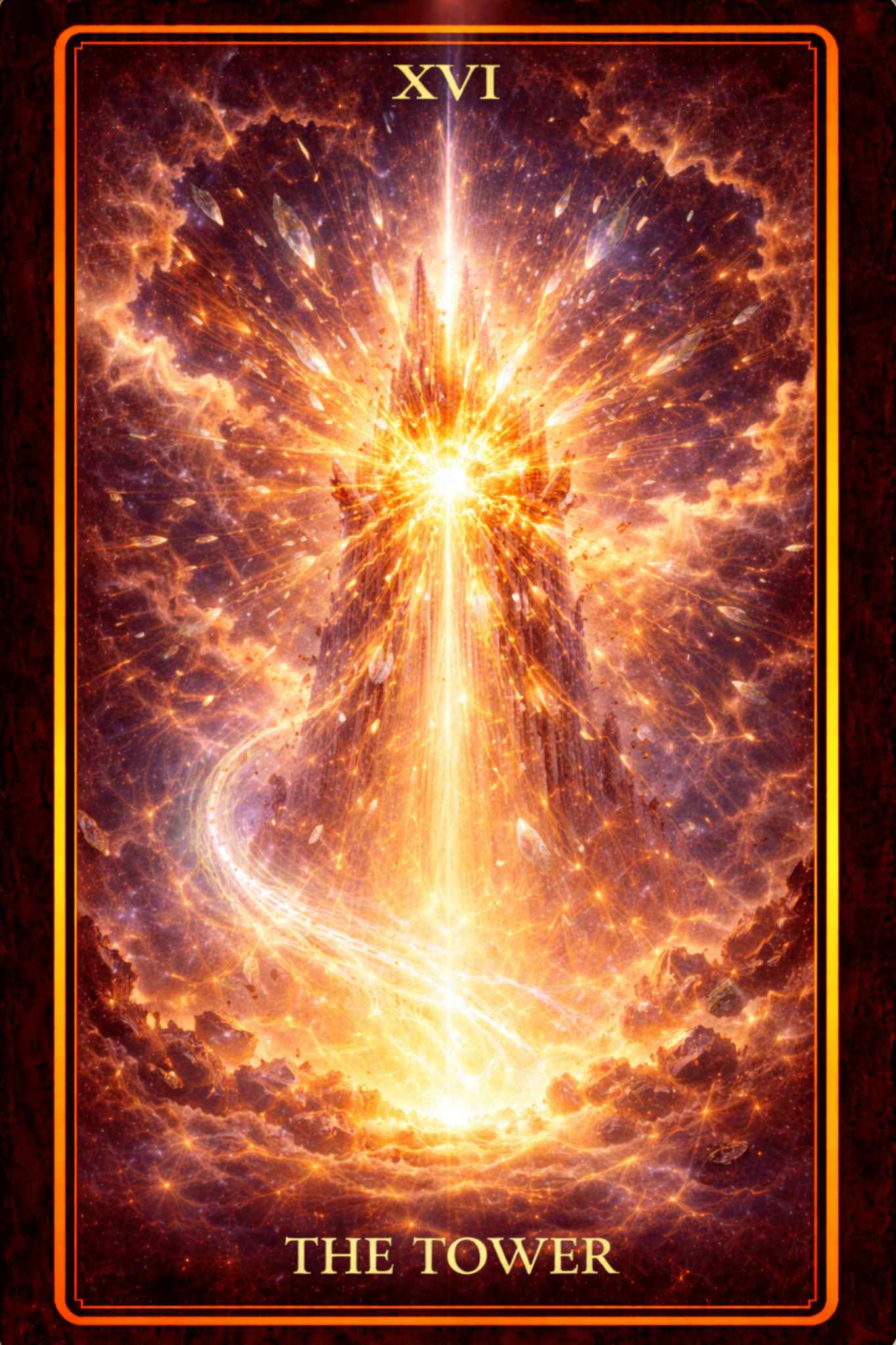
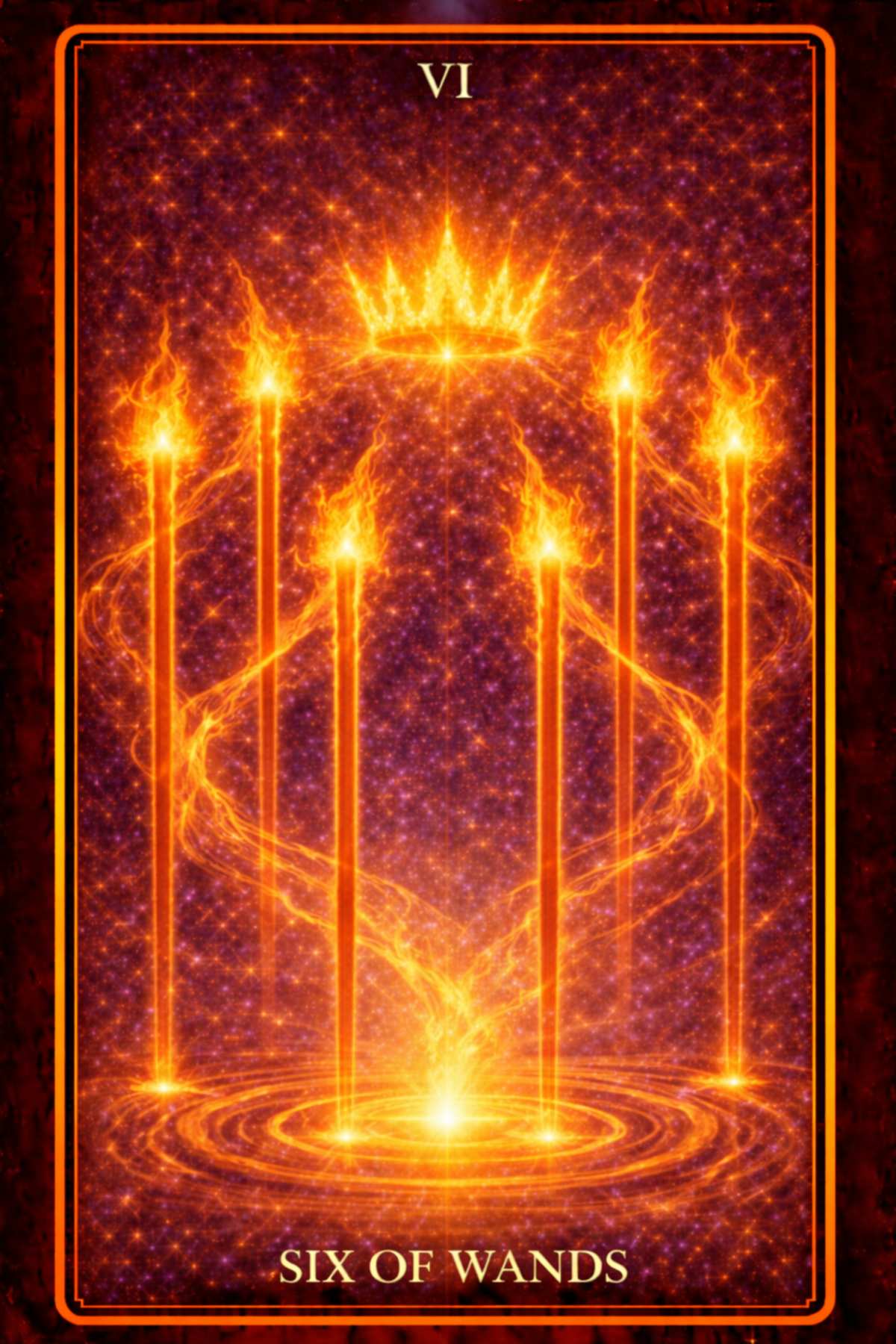
Tower and Six of Wands Tarot Combination Meaning
Some victories start to tremble at the exact moment they become too dependent on being seen as victories. Tower and Six of Wands speak to that delicate and revealing threshold. The Six of Wands carries recognition, affirmation, momentum, earned visibility, and the bright feeling of having come through difficulty into a more public kind of confidence. It is a card of being received well, of being noticed, of feeling that effort has translated into proof. The Tower, approached from a different angle here, does not only represent collapse. It can also act as correction through exposure, the moment when image, praise, certainty, or pride is asked to answer to a deeper structural truth. Together, these cards reveal what happens when visible success grows heavier than the frame supporting it. The win may be real. The recognition may be deserved. Yet something inside the success story can no longer remain hidden simply because applause is still loud.
This is what gives the pair its strange power. The Six of Wands is not hollow by nature. There may be genuine accomplishment, honest progress, and a real reason the person or situation has become more visible. The problem begins when success is expected to do more than success can truly do. It may be asked to prove worth, secure identity, erase vulnerability, or protect a fragile structure from deeper scrutiny. That is where the Tower enters, less as blunt destruction and more as uncompromising revelation. The central issue is not whether something has been won, but whether the image built around that win has become heavier, prouder, or more protected than the truth can continue to support. Under these cards, recognition stops being simple uplift. It becomes a test of whether what has risen into view can survive reality without depending on performance alone.
When success starts covering more than it can hold
The Six of Wands often arrives with momentum. There is movement, morale, and the sense that the person has reached a point where others can finally see the result of what they have been carrying, building, or pushing through. Confidence grows naturally here. The person may feel stronger because they have evidence that their effort mattered. Beside the Tower, however, the emphasis shifts. The question becomes whether success has started functioning as a cover. Public affirmation may be buffering private strain. Momentum may be making course correction harder. The praise itself may be innocent, though the way the person relates to it may have become structurally costly.
This is one of the most useful truths in the pair. Recognition can delay honesty when it becomes a shield against examination. A person may assume that because the outcome looks strong, the foundation must also be strong. The Tower interrupts that assumption. It reveals where the frame beneath the image has been carrying strain, pride, exhaustion, inflation, or a subtle refusal to admit what is no longer sound. The Six of Wands raises the banner. The Tower asks what kind of beam is holding the banner up. The problem is rarely that light exists around the achievement. The problem is that light can make it harder to see the crack unless someone is willing to look directly at what the brightness has been flattering.
The pressure of being seen
One of the deeper dimensions of this combination is that visibility itself can become pressure. The Six of Wands is a public card in many readings. Even when the success is modest or personal, it still carries the feeling of being confirmed, being looked at, or being cast in the role of the one who has made it through. That role can become heavier than it first appears. Once others begin to see someone as successful, stable, winning, right, or triumphant, the person may begin protecting that image with more force than they realize. The Tower then acts as the point where image can no longer outrun truth. Something shows through. A weakness becomes undeniable. A stress line appears in the story. The person may still be accomplished after this moment, though they can no longer rely on visibility itself as proof of deeper solidity.
You may also want to go one step deeper.
The Tower + Six of Wands can open up differently inside a focused personal reading.
That is why this pairing often feels humbling without necessarily being annihilating. It does not always say, “Everything was false.” More often it says, “Something real was burdened by a layer of image that had grown too defended to stay healthy.” The Six of Wands can bring pride, and pride is not always wrong. Sometimes it is simply the pleasure of having endured and arrived. Yet when pride hardens into identity armor, the Tower begins its work. It exposes where the success story was being used as insulation from vulnerability, limitation, or structural review. What breaks under these cards is often not the entire achievement, but the illusion that achievement alone could secure the whole self against truth.
Love and relationship meaning
In relationship readings, Tower and Six of Wands often point to a bond that appears strong, admired, enviable, or externally affirmed while carrying tension that has not been honestly integrated. The couple may look settled, appealing, accomplished together, or emotionally “successful” in ways that others recognize. In some cases, one person may feel validated through the relationship, as though the connection itself confirms attractiveness, worth, maturity, or emotional arrival. The Six of Wands brings that visible confidence. The Tower asks what happens when the image of the relationship must answer to its inner structure rather than to the response it receives from the outside.
This can become especially significant when the relationship has learned to thrive in image more easily than in vulnerability. Two people may know how to present unity, celebrate milestones, move forward with visible confidence, or reassure themselves through the appearance of progress. Yet something essential may have been weakening beneath that polish. A truth emerges. A pressure point returns with more force. A deeper imbalance becomes harder to dress in the language of success. The pairing can feel sobering because it reveals that admiration never guaranteed structural health. It may also show that one or both people began protecting the relationship’s image more fiercely than the actual emotional honesty required to keep it alive.
At its healthiest, this pair can save a bond from vanity. Once the crack is seen, the people involved can stop defending how things look and begin asking whether the relationship itself remains vital, honest, and strong enough to carry what it claims to represent. This is difficult work, though deeply useful work. Real intimacy can survive truth more readily than it can survive prolonged performance. Under these cards, love becomes more durable when it stops relying on visible success as proof that everything underneath is equally sound.
Career, leadership, and public life
In work readings, Tower and Six of Wands can be especially exact around recognition under pressure. A person may be receiving praise, visibility, momentum, leadership attention, or a strong sense of advancement when a structural truth begins to show through the success story. Here again, the Tower does not need to mean immediate ruin. It may instead indicate that the brighter the spotlight becomes, the harder it is to ignore what the spotlight has been falling across. A leadership style may be more fragile than it looked. A public win may rest on exhausted infrastructure. A growing reputation may depend on rhythms, support systems, or internal coherence that are no longer keeping pace with the image of continued ascent.
This pairing is especially relevant in fields where being seen matters: entrepreneurship, leadership, teaching, branding, performance, influence, spiritual authority, media, and any role in which the person’s image becomes part of the structure itself. The Six of Wands can feel invigorating here. It confirms progress and can genuinely reflect earned momentum. The Tower asks what success has begun covering, inflating, or protecting. Has praise made self-correction more difficult. Has the public version of the story become easier to maintain than the deeper system beneath it. Has the person become so identified with being the one who is succeeding that they have lost contact with where the structure needs humility, reinforcement, or change.
At its best, this combination acts as a sober refinement of authority. It does not necessarily strip away what is real. It strips away what is overbuilt around what is real. That difference matters. A person may lose illusion without losing substance. In fact, this can be the moment that keeps a real accomplishment from collapsing later under the weight of image inflation. The Six of Wands brings brightness. The Tower asks whether the brightness is resting on something capable of lasting once admiration no longer does all the emotional lifting.
Psychological and spiritual meaning
Psychologically, Tower and Six of Wands often describe the correction of a self-image built too heavily around winning, being admired, being vindicated, or being visibly ahead. A person may have achieved something meaningful, though they may also have come to rely on that achievement as proof of inner stability. The Six of Wands naturally feeds confidence. It says, “You made it through, and others can see it.” The Tower asks whether this confidence has remained alive and flexible, or whether it has hardened into a defended identity that cannot easily admit weakness, fatigue, insecurity, or the need for re-evaluation. When identity becomes entangled with validation, even a small crack can feel disproportionately threatening because more than the circumstance is at stake.
Spiritually, this pair can mark a necessary stripping-away of success as armor. Not because success is wrong, but because it becomes spiritually distortive when it is used to avoid deeper examination. The Six of Wands wants affirmation and may enjoy being witnessed in strength. The Tower wants reality more than display. Together, they ask whether a person can remain aligned when praise thins, when applause no longer protects the image, or when a truth emerges that public confidence cannot smooth over. This is humbling work, though often sacred in precisely that way. Real strength becomes cleaner once it no longer depends on continual confirmation from the outside. The soul matures when recognition stops being the place where truth goes to hide.
FAQ
Does Tower and Six of Wands always mean a fall from success?
Not always. It often points less to total collapse and more to exposure, correction, or a truth that success can no longer shield from view. The achievement itself may still be genuine, though the image around it may require revision.
Is the Six of Wands “bad” when paired with the Tower?
No. The Six of Wands still carries recognition, movement, and earned progress. The pairing becomes difficult only when success, praise, or pride starts doing the work that honesty and structure should have been doing all along.
What does this combination suggest in career readings?
It often suggests visible momentum or recognition meeting a deeper structural issue. That may involve leadership style, public image, hidden strain, weak support systems, or the emotional cost of holding success together through appearance alone.
What does this combination suggest in love readings?
It can indicate a relationship that looks strong or validated from the outside while privately carrying unresolved tension. The cards ask whether the bond is being protected through image, admiration, or momentum more than through truth.
Can this pair still be constructive?
Yes, very much so. It can refine success into something more durable by removing the inflated layer around it. What remains may be less theatrical, though often more honest and more capable of lasting.
Shadow expression and challenge
The shadow side of this combination appears when a person keeps defending the image of victory after the deeper structure has already begun splitting from it. They may double down on presentation, insist on continued confidence, or use praise to drown out warning signs that deserve real attention. The Six of Wands makes this tempting because it reinforces the identity of being the one who succeeded, arrived, or overcame. The Tower keeps interrupting that fantasy by showing what the image itself cannot repair. In this expression, the person becomes more loyal to appearance than to substance, and the longer that continues, the harsher reality may need to become in order to get through.
An opposite shadow can also appear when every crack is interpreted as proof that the success meant nothing. That too misses the deeper teaching. The pairing does not always say that the win was empty. More often it says the win was being asked to hold too much, prove too much, or protect too much. The challenge, then, is to separate what is genuinely earned from what was inflated around it. The real task is not self-erasure. It is honest reduction, allowing the theatrical layer to fall away without discarding the courage, skill, or progress that still belongs to the person underneath it.
Want to place this combination into a wider reading?
If this pairing feels close to something you are experiencing, a simple spread can help you reflect on the surrounding energy with more clarity.
Closing reflection
There are moments when the cheering is still present, the banner is still raised, and yet something inside the structure has already shifted enough that it can no longer be ignored. Tower and Six of Wands know that moment. They know the strange dizziness of visible success meeting an inward correction, of standing in brightness while realizing that image and integrity have drifted too far apart to keep borrowing each other’s names. It is not always a public disaster. Sometimes it is simply the end of confusion about what applause could never guarantee.
The wisdom here is to let recognition become lighter than truth, not heavier. Let the exposed crack show you what praise was never designed to carry. Let the image split if it has grown too proud, too defended, or too useful as protection from deeper reality. Then keep what is real. Keep the earned progress, the actual courage, the living strength that remains when performance steps aside. What survives that process may shine less loudly, though it often stands more honestly, breathes more freely, and lasts far longer than the version that needed to be admired in order to feel secure.
More combinations with The Tower
More combinations with Six of Wands
Continue with The Tower
Explore Related Guides by Topic
If you want to explore this combination through a more specific emotional lens, these tarot guides can help you follow the broader pattern behind the reading.