
Temperance + King of Wands
Explore how these two tarot cards interact in a reading through symbolic overlap, contrast, and shared narrative. Tarot combinations often reveal meaning that neither card fully expresses on its own.
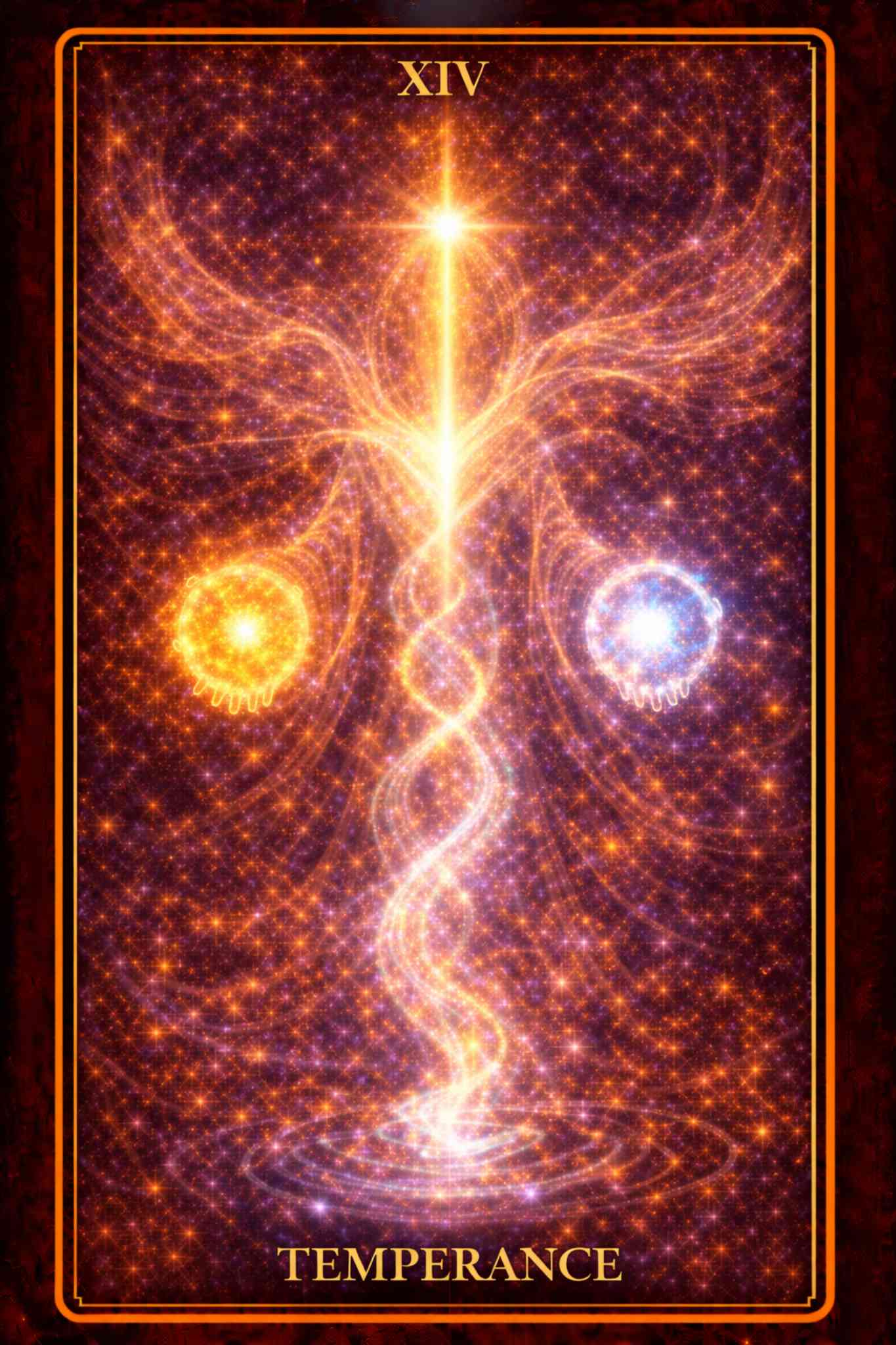
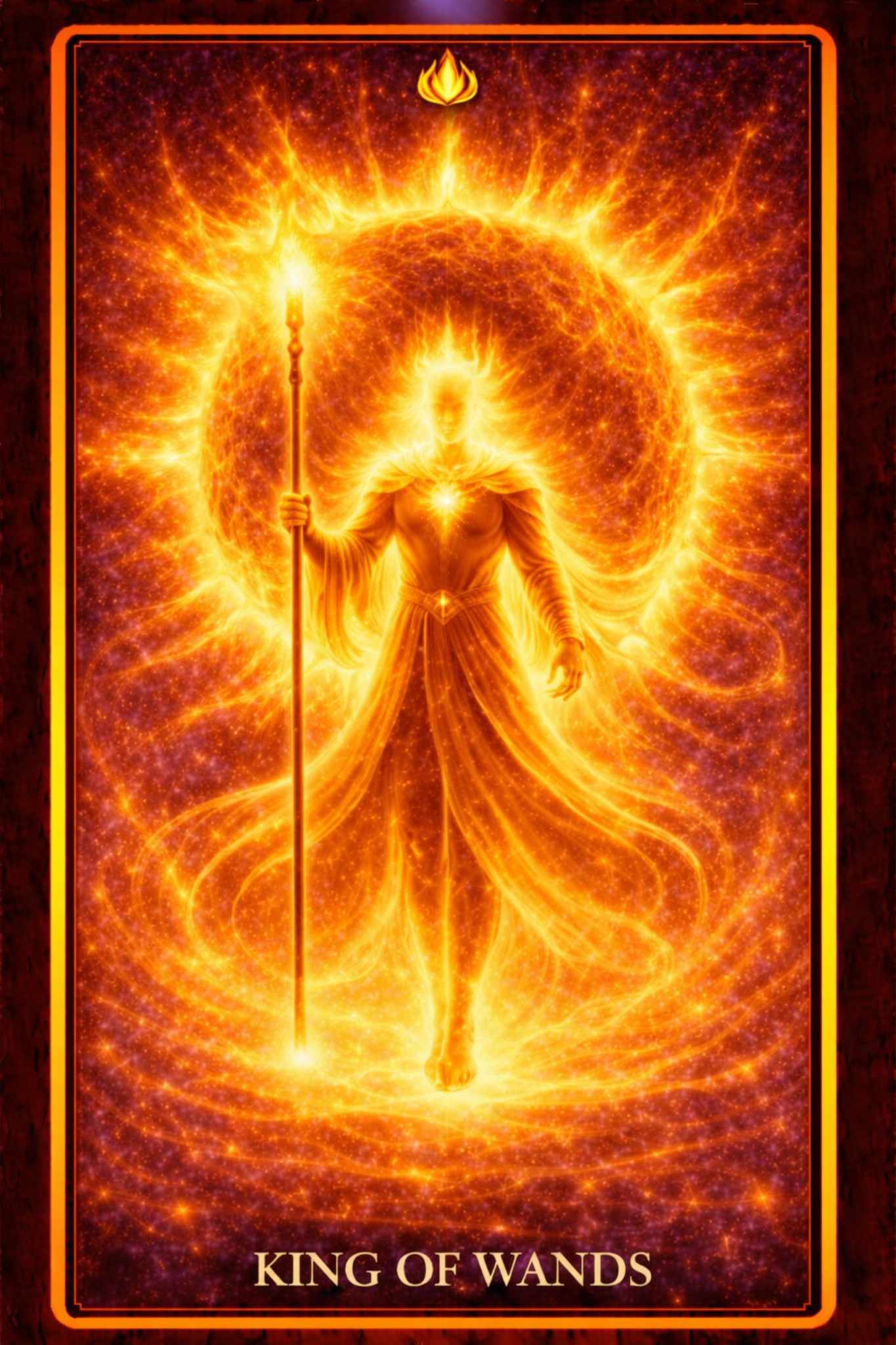
Temperance and King of Wands Tarot Combination Meaning
Temperance and King of Wands meet where vision stops being a private fire and becomes something that must be directed, held, and carried in a way other people can actually live inside. This is a mature and weighty pairing. Temperance brings integration, balance, healing, and the quiet intelligence of proportion — the ability to sense how much is needed, when to advance, when to pause, and how to bring several forces into one workable rhythm. The King of Wands brings authority, direction, ambition, creative command, and the willingness to take responsibility for what he sets in motion. Together, these cards often appear when a person is stepping into a role that asks for both fire and stewardship, both strong will and the ability to regulate that will in service of something larger than ego alone.
That is what makes this combination more interesting than a simple “leader” message. The King of Wands is already capable of movement. He already knows how to claim space, make decisions, and energize a field. Temperance asks a more demanding question: can that force remain connected to the whole? Can ambition stay in relationship with timing, consequence, and sustainability? Can power be expressed without becoming isolated from the people, systems, and inner realities it affects? This is a pair about disciplined authority — the kind that shapes direction without losing proportion.
Leadership that can hold complexity
The King of Wands often represents a stage where fire has matured into direction. There is no longer only instinct, appetite, or enthusiasm. There is vision. There is authorship. The person knows where they want to go and has enough presence to move others in that direction. Beside Temperance, this leadership becomes more refined and more demanding. It is not about force for its own sake. It is about coherence under responsibility. The leader must account for timing, resources, emotional impact, and long-range stability while still retaining the courage to move decisively.
This creates a form of authority that is both strong and adaptable. The King of Wands brings clarity, conviction, and the willingness to set direction. Temperance brings adjustment, listening, and the ability to respond to changing conditions without losing the thread of the larger purpose. Together, they suggest a person who can lead while staying in contact with complexity. That can be especially important where several competing forces are active at once, where decisions shape more than a single outcome, and where the true test of leadership lies in whether the whole remains workable after the vision starts becoming real.
Vision grounded in reality
One of the strongest themes in this pairing is the integration of vision with lived reality. The King of Wands sees what could be. He is future-oriented, driven, and capable of inspiring motion toward a larger goal. Temperance ensures that this vision remains connected to present conditions rather than floating above them. It asks how the vision fits inside current structures, what must be adjusted for it to land cleanly, and how to move in a way that builds rather than destabilizes. This is not lesser ambition. It is ambition that has learned to survive contact with reality.
This can be especially relevant in creative, entrepreneurial, or strategic contexts. A person may have a powerful idea, a strong sense of direction, or the charisma to gather others around a larger mission. Temperance asks whether the method is worthy of the vision. What must happen in stages? What systems need strengthening? What kinds of pacing will allow the fire to last long enough to become form? The King of Wands provides drive. Temperance provides structure through proportion. Together, they support a path where vision is not only imagined beautifully, but realized in a way that can endure.
- Temperance brings balance, integration, healing, and the wisdom of right proportion.
- King of Wands brings vision, leadership, ambition, and directed fire.
- Together they suggest leadership that is powerful precisely because it is measured.
- The caution is against overreach, rigidity, or acting as though force alone can carry the whole.
- The gift is a form of authority that can inspire, build, and endure.
Love and relationship meaning
In love readings, Temperance and King of Wands often point toward a dynamic where passion, direction, and emotional maturity all matter at once. One or both people may carry a strong presence. There may be attraction, initiative, confidence, and a clear sense that the relationship wants movement rather than drift. The King of Wands brings direction and warmth. Temperance ensures that this presence does not become overwhelming, inflexible, or overly centered on one person’s tempo. The result can be a bond that feels strong without becoming domineering, and alive without becoming unstable.
At its healthiest, this pairing reflects a relationship where leadership is expressed through care rather than control. There may be a shared purpose, a strong sense of direction, and a willingness to move life forward together. The King of Wands can bring decisive energy, which can feel reassuring when it remains connected to generosity and respect. Temperance helps that happen. It softens excess, supports mutual regulation, and reminds both people that real strength in love includes adaptation, listening, and room for two inner worlds rather than one dominant force shaping everything.
In more difficult expressions, the King of Wands may become too fixed in his own direction, too attached to being the one who decides, or too quick to assume that conviction alone equals correctness. Temperance then becomes essential. It asks whether the relationship can return to a more balanced exchange in which passion and leadership remain present, though no one has to shrink in order for the connection to function. When this adjustment is possible, the pairing can become deeply stabilizing. When it is absent, the heat may remain strong while the balance quietly erodes beneath it.
Career, work, and strategic direction
In professional life, Temperance and King of Wands often point to leadership, strategic planning, authorship, and the challenge of carrying a larger vision responsibly. A person may be in a role where they are asked to guide others, make consequential decisions, set direction, or create something that extends beyond their own private effort. The King of Wands supplies vision and command. Temperance supplies the ability to implement that vision without losing proportion. This is rarely a small task. It asks the person to think in systems, to consider timing carefully, and to remain aware that strong leadership is tested not only by speed, but by what remains stable after the movement it creates.
You may also want to go one step deeper.
Temperance + King of Wands can open up differently inside a focused personal reading.
This can be a powerful combination for long-term success. It suggests the person is capable of leading through more than charisma or momentum. They can see the bigger picture and also respect the details that determine whether the bigger picture can survive contact with daily reality. This is especially important in roles requiring innovation and continuity at the same time. The King of Wands wants to move. Temperance ensures that movement does not leave wreckage in places the vision forgot to consider.
At its best, this pairing supports a leadership style that is both inspiring and grounded. The person can move forward confidently while still staying attentive to capacity, structure, and human consequence. That often creates a very durable kind of authority — the kind people trust because it does not ask everyone else to absorb the cost of one person’s fire.
Psychological and spiritual meaning
Psychologically, Temperance and King of Wands often reflect the integration of will and awareness. The person is not only driven, but self-aware. They understand their impulses and can regulate them in service of a larger aim. That creates internal stability strong enough to support effective action. Fire is still present in full measure, though it is being shaped by deeper intelligence. This can mark a major step in development for someone who once swung between hesitation and force, or between insight and impatience. The pairing suggests a more mature arrangement in which strength no longer needs to overwhelm in order to feel real.
Spiritually, this pairing can represent the alignment of personal power with higher purpose. The King of Wands brings creative authority, solar force, and the capacity to stand as a source of direction. Temperance aligns that force with harmony, proportion, and a wider understanding of what power is for. The result is a form of authority that feels meaningful rather than merely impressive. Power here becomes sacred when it is used to order life well, to guide rather than dominate, and to create forms that can hold both vitality and balance at the same time.
Shadow expression and challenge
The shadow side of this combination appears when the King of Wands becomes overly driven, controlling, or attached to his own momentum. Then vision can harden into certainty, and certainty can become isolation. A person may push too fast, act too decisively, or prioritize results in ways that strain the larger system. Temperance reveals the cost of that style. What looks like leadership may begin producing imbalance, exhaustion, or quiet resistance in the surrounding field. In those moments, the deeper issue is rarely lack of power. It is lack of proportion.
There is also an opposite distortion in which Temperance becomes too cautious, too managerial, or too devoted to adjustment, and the King’s fire begins to lose its edge. A person may keep refining and harmonizing until the original spark of direction becomes diluted. Then leadership turns overly careful, and vision never fully takes visible form. The challenge is to avoid both extremes: force that outruns wisdom, and balance that weakens the necessary heat of command. This pairing becomes strongest where power and proportion sharpen one another rather than cancel each other out.
Timing and aligned action
Timing in this pair often concerns the moment when vision is ready to become action, though the action must unfold with enough intelligence to remain sustainable. The King of Wands may feel ready now. Temperance asks whether the conditions can support decisive movement in a way that the larger structure can carry. Sometimes this means acting boldly, though in stages. Sometimes it means moving on the main direction while staying flexible around method. Sometimes it means waiting just long enough for the system to become ready, so that the eventual motion lands with force and stability rather than force alone.
The right timing here often feels confident and measured at once. There is clear direction, yet little desperation. There is leadership, though no need to prove authority through unnecessary speed. Temperance helps the person sense when the timing supports real embodiment of the vision rather than a premature assertion of it. The King of Wands then becomes far more effective, because his fire is entering a field ready to receive it instead of a field that will simply be scorched by it.
What this combination is really asking
Temperance and King of Wands ask: can you lead with enough strength to move life forward and enough balance to keep that movement human? That is the core question of the pair. The vision is present. The drive is strong. The capacity to guide, build, or direct is available. Yet the cards ask whether this action can remain aligned with the whole. They ask whether your fire can serve more than your own momentum.
The deeper lesson is that leadership is not only about direction. It is about integration. Temperance brings the wisdom to harmonize different forces, to sense when the mixture is off, and to adjust without losing the larger aim. The King of Wands brings the will to move those forces toward a future that does not yet exist. Together, they create a form of power that is both commanding and sustainable: authority with rhythm, ambition with conscience, and vision strong enough to organize reality rather than simply collide with it.
Explore the next layer of this reading.
This combination can mean different things depending on context. A short tarot reading can help you reflect on the question behind the cards.
Closing reflection
There is a kind of leader who enters a room like weather. Everything shifts around them, sometimes because people admire them, sometimes because people brace. And then there is another kind — rarer, steadier — whose presence changes the room by giving it shape. The air clarifies. People straighten a little. Noise starts arranging itself into direction. This pairing belongs to that second kind.
Temperance and King of Wands do not describe power as a bonfire no one can approach. They describe power as a hearth built by someone who understands both flame and architecture. Vision matters here, yes. So does command. Yet what lingers after the reading is something quieter and more demanding: the realization that true leadership may have less to do with how brightly one person burns, and more to do with whether others can gather near that fire without losing themselves in it.
More combinations with Temperance
More combinations with King of Wands
Continue with Temperance
Explore Related Guides by Topic
If you want to explore this combination through a more specific emotional lens, these tarot guides can help you follow the broader pattern behind the reading.