
Judgement + Ten of Wands
Explore how these two tarot cards interact in a reading through symbolic overlap, contrast, and shared narrative. Tarot combinations often reveal meaning that neither card fully expresses on its own.
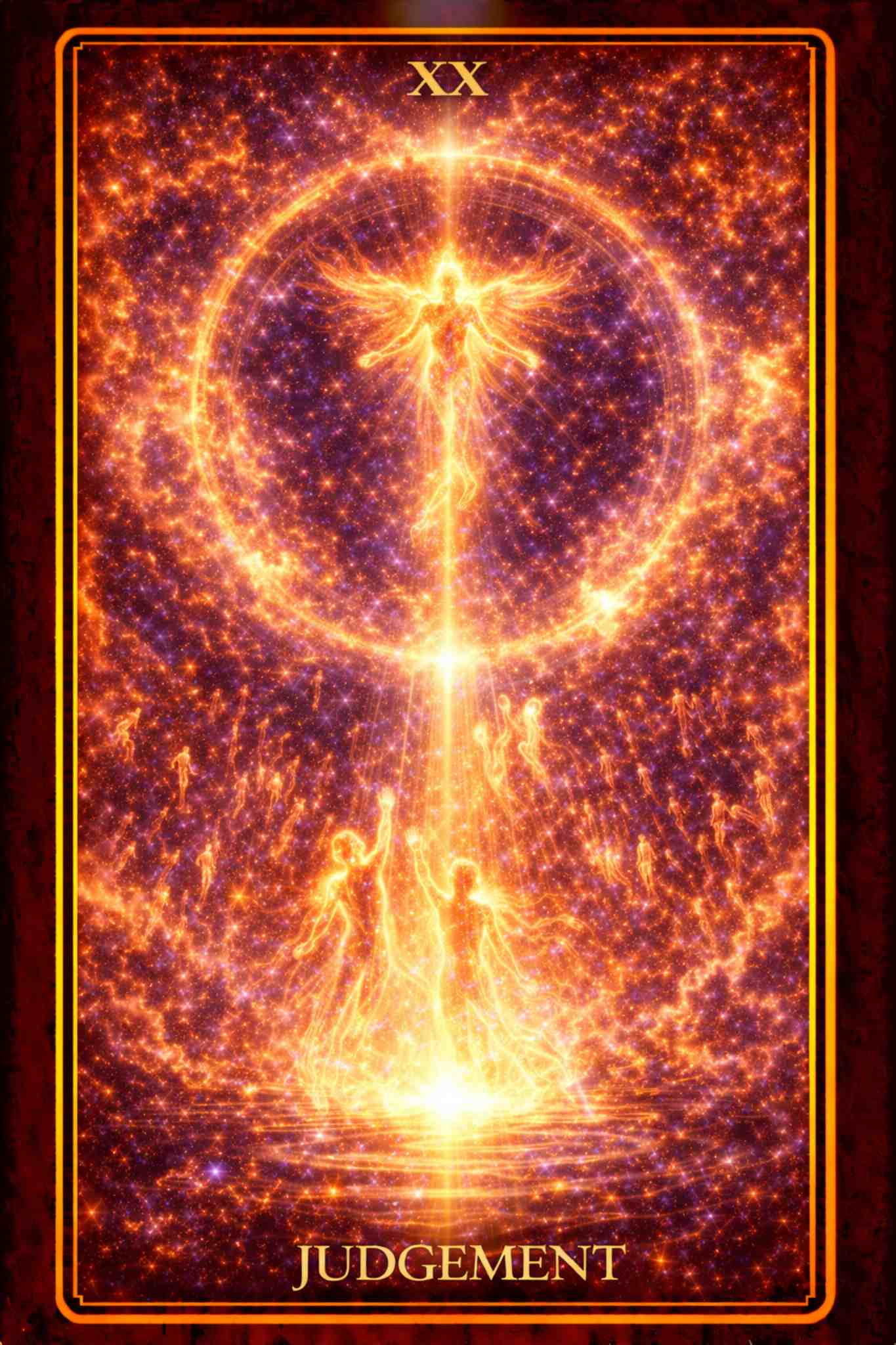
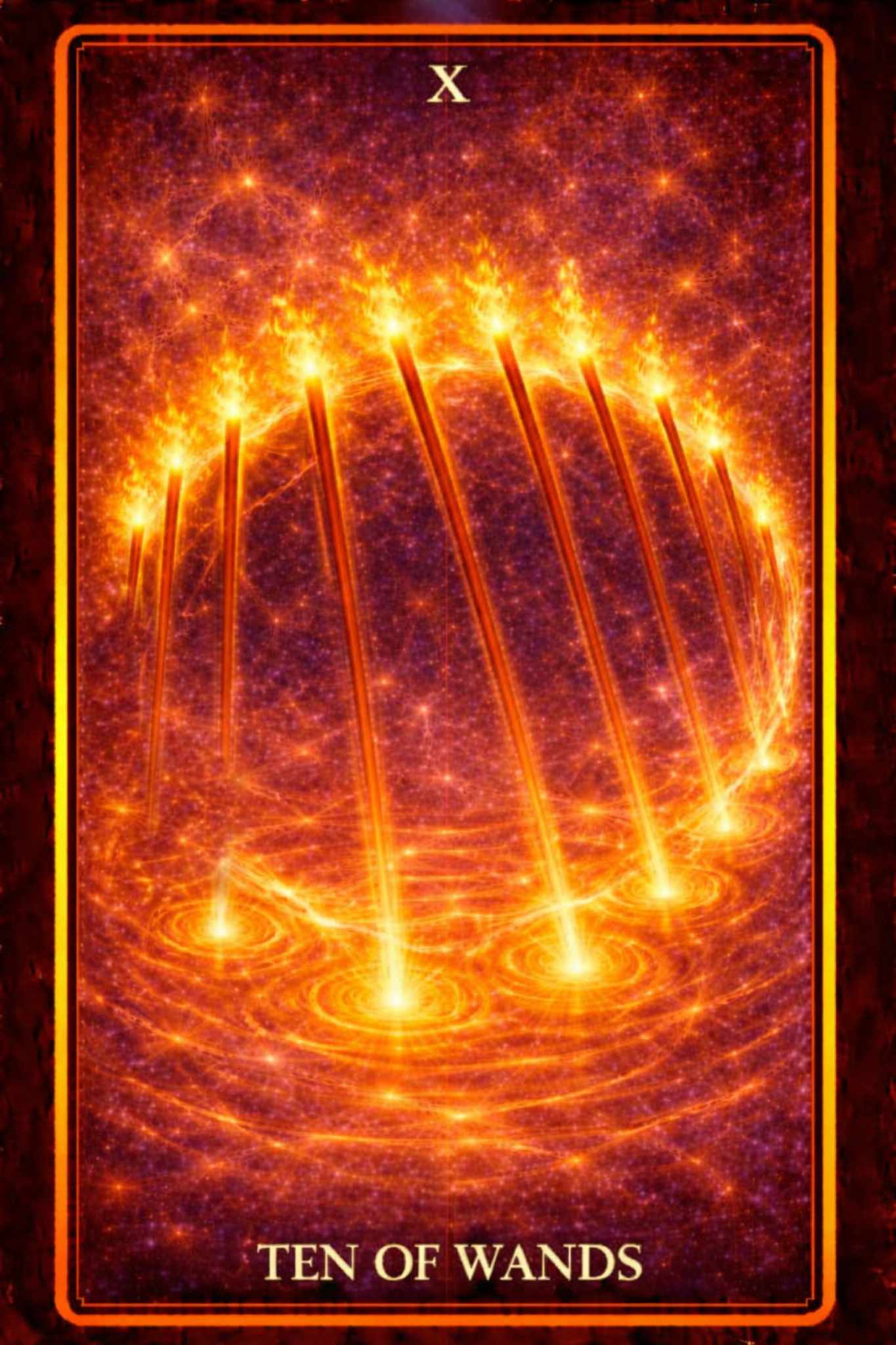
Judgement and Ten of Wands Tarot Combination Meaning
Some tarot pairings speak about expansion. This one speaks about the moment truth makes weight impossible to excuse. Judgement and Ten of Wands often appear when a deeper awakening reveals how much of life has been built around carrying, compensating, enduring, and staying functional long past the point of genuine alignment. Judgement is the card of reckoning, awakening, and the moment inner truth becomes clear enough to change the terms of conscience. The Ten of Wands brings overload, accumulated burden, fatigue, pressure, and the strain of holding too much for too long. Together, these cards describe spiritual clarity under load. Something real is waking up, and because it is waking up, the burden can no longer be called ordinary in the same way.
This gives the pair a sobering kind of force. Judgement does not only reveal possibility here. It reveals cost. A person may suddenly see how much of their life has been organized around duty, overfunctioning, usefulness, or the habit of carrying more than one human being should be expected to hold. The Ten of Wands shows that this weight may have been present for a long time, though awakening changes how it is experienced. What once felt merely tiring may now feel spiritually unsustainable. The issue is no longer only whether the person can continue. The deeper issue is what part of their life is being buried beneath what they have learned to carry so well.
When awakening reveals the price of endurance
Judgement often appears after a long internal process has matured into undeniable clarity. A person recognizes what they can no longer continue, what has ended inwardly, what kind of life is beginning to call them, or what deeper truth has become stronger than postponement. The Ten of Wands enters when that recognition lands inside a reality still shaped by overload. The responsibilities remain. The expectations remain. The habits of overholding remain. This creates a painful but useful contrast. The awakened self becomes clearer at the exact moment the burden becomes harder to romanticize.
This is why the pair can feel so pressing. The Ten of Wands does not allow awakening to remain abstract. It asks how the deeper truth will survive if the structure of life remains permanently compressed. That question can be profoundly confronting, especially for people who have built identity around being dependable, capable, and endlessly strong. Judgement does not insult that strength. It does reveal that strength can become distorted when it is used to protect an arrangement that is draining life rather than serving it. Once the deeper call has been heard, carrying everything stops looking noble in the same unquestioned way.
There is another layer here as well. These cards often appear when the person has spent so long managing, helping, producing, or enduring that they have begun to mistake load for purpose. Judgement interrupts that confusion. It asks whether responsibility still belongs to the living truth of the person, or whether responsibility has become a way of postponing more honest change. The Ten of Wands then becomes diagnostic. It shows where the old life is too dense, too crowded, too burdened to let the new one breathe.
The burden that can no longer travel forward
One of the deepest themes in this combination is that awakening changes what a person is willing to call necessary. Before Judgement, overload can be normalized. A person may tell themselves that this is simply duty, adulthood, loyalty, or the price of building anything meaningful. Then the reckoning comes, and the whole arrangement starts looking different. The weight becomes visible in moral, emotional, and spiritual terms. It is no longer just hard. It is misaligned.
Want to explore this combination in a more personal way?
If this pairing feels important right now, a simple tarot spread can help you reflect on it with more context.
This can be profoundly clarifying because it moves the conversation away from vague dissatisfaction and toward exact questions. What is genuinely yours to carry? What once belonged to your path but no longer does? What never belonged to you in the first place? What part of the burden is practical responsibility, and what part is identity built around overholding? Judgement asks such questions with unusual force because the person is no longer free to remain comfortably numb to the answers. The old self may have tolerated compression. The emerging self cannot live inside it as easily.
That does not mean every responsibility must be abandoned in dramatic fashion. The cards are more intelligent than that. The Ten of Wands often points toward reorganization, redistribution, simplification, and truth-telling rather than theatrical collapse. Judgement gives those changes their deeper legitimacy. The life asking to emerge is not weak because it needs space. It is simply becoming honest enough to recognize that burden and vocation are not the same thing.
Love and relationship meaning
In love readings, Judgement and Ten of Wands often point to a relationship or emotional pattern where truth has become strong enough to expose the burden built into the bond. Judgement may reveal what the connection truly means, what has ended inwardly, what one or both people can no longer ignore, or what kind of love the heart is now ready to answer more honestly. The Ten of Wands adds emotional labor, imbalance, carrying too much of the relationship alone, or the heaviness that appears when care has become entangled with management, duty, or exhaustion.
At their healthiest, these cards bring a very necessary reckoning. A person may realize that while love or care is real, the current structure of the relationship is crushing too much life out of them. They may see how often they are compensating, absorbing, solving, and containing more than their share. Or they may understand that a bond once justified through loyalty no longer reflects the self now awakening within them. The point is not blame first. The point is clarity. The awakened heart starts naming what it can no longer keep hauling forward in silence.
This pair can also signal a decisive turning point. Sometimes that turning point leads to a healthier redistribution of effort, a more honest conversation, or the release of roles that were quietly deforming the relationship. Sometimes it reveals that the bond in its current form cannot accompany the next chapter of the self. Either way, the deeper lesson is similar: love cannot remain a sacred excuse for self-erasure once the truth has been heard this clearly. The heart is being called into a more conscious and breathable form of devotion.
Career, work, and creative life
In work and creative life, Judgement and Ten of Wands often mark the moment when calling and overload collide. Judgement reveals what matters most deeply, what work has genuine soul in it, or what path can no longer remain secondary without creating inner cost. The Ten of Wands shows that this awakening is happening inside a life still crowded with too many tasks, too many demands, too much maintenance, too much inherited pressure, and too much identity built around carrying everything.
This can be an exacting and liberating realization. Many people assume their problem is lack of inspiration, discipline, or clarity, when in fact the deeper problem is compression. They already know what matters. They simply have no room left to live it. Judgement makes that painfully plain. The awakened work cannot keep breathing under every accumulated obligation forever. Something has to be reorganized, delegated, concluded, simplified, or released. The Ten of Wands asks what is currently being carried in the name of professionalism, reliability, or productivity that is actually suffocating the work the soul most wants to bring forward.
This message can be especially important for caretakers, founders, artists, and highly responsible people. The burden often looks admirable from the outside. Yet the cards ask a better question than admiration. They ask whether the load still serves the deeper truth or whether the load has become the entire identity of the path. Judgement can be ruthlessly healthy here. It refuses to let a person glamorize depletion once the deeper self has already named what needs space. The burden may once have helped build something real. It may no longer deserve to remain in charge.
Psychological and spiritual meaning
Psychologically, Judgement and Ten of Wands often describe the moment when the psyche can no longer maintain the old arrangement between truth and burden. A person may have survived for years by carrying more than they could comfortably hold and translating inner need into continued functioning. Then awakening arrives, and the cost of that arrangement becomes too visible to deny. This can produce grief, anger, relief, exhaustion, and startling clarity all at once. The psyche understands that something must change, even if the outer mechanics of change are still unfolding.
Spiritually, the combination asks whether burden has become a substitute for worth. Judgement is the deeper voice of the soul. The Ten of Wands is the accumulated load that has shaped identity through endurance. Together, they raise a serious question: has carrying become the primary way the person knows how to exist meaningfully? Many people trust themselves most when useful, stretched, and overextended. Many fear that if they stop holding everything together, nothing solid will remain. Judgement interrupts that illusion. It says there is a life in you that deserves more than compression, and the fact that you can hear that now means the next chapter cannot be built on the same unquestioned weight.
There is also a deep spiritual dignity in setting something down for the right reason. The Ten of Wands is often misread as simple stress. Beside Judgement, it becomes much more than that. It becomes the moment when the soul recognizes that continuation itself can be a form of betrayal if it is preserving a structure that no longer allows truth to live. In that sense, release is not avoidance. It is fidelity.
Shadow expression and challenge
The shadow of this combination often appears when a person hears the truth clearly and still keeps adding weight, as though greater clarity will somehow make the load easier to survive. Another shadow appears when responsibility has become so tied to identity that laying anything down feels like moral failure. In that state, awakening can feel almost cruel because it reveals what is unsustainable without instantly removing the conditions that created it. Yet the cards are not cruel. They are compassionate in a rigorous way. Seeing the burden accurately is the beginning of freedom from it.
The deeper remedy is truthful reorganization. Ask what genuinely belongs to your life and what belongs more to a former version of you built around overcarrying. Ask what duties are real and what duties are inherited, exaggerated, or maintained by fear. Ask what you keep lifting simply because you are the one who can. These questions are not selfish. They are part of answering the deeper call. Judgement and Ten of Wands are strongest when strength stops being used to preserve old compression and starts being used to create room for the life now awakening.
Timing and what must be laid down
Timing matters profoundly with this pair because it often appears when the burden has reached its revealing point. This may be the season to simplify, redistribute, conclude, delegate, or finally admit that the next chapter cannot begin if everything from the old one is dragged into it unchanged. The Ten of Wands shows that the person may already be near capacity. Judgement shows that the soul has become too awake to keep calling that state normal.
A useful timing question is what weight has become incompatible with the life now asking to emerge. Another is what you are still carrying because it is truly yours and what you are carrying because you have forgotten how else to live. These questions keep the process honest. Judgement gives the clarity. The Ten of Wands reveals where that clarity now demands release.
FAQ
Does this combination always mean burnout?
It often points toward overload, though the emphasis is broader than burnout alone. The cards usually highlight the moment when a person can finally see how much their current life has been shaped by carrying too much.
Is Judgement and Ten of Wands a sign that I need to quit something?
Sometimes, yes. In other cases, it points more toward redistribution, simplification, delegation, or a major change in how responsibility is being handled. The key issue is whether the burden still serves the life that is trying to emerge.
What does this mean in a relationship reading?
It often suggests emotional labor, imbalance, or a bond where one person has been carrying too much for too long. The combination asks for honesty about what the heart can no longer keep managing in silence.
What does this mean for career or creative work?
It usually means the calling is real, though it is being crowded by excessive obligations, maintenance tasks, or an identity built around overfunctioning. The message is often less about needing more motivation and more about needing more space.
Can this combination be spiritually positive even if it feels heavy?
Yes. It can be deeply positive because it reveals the truth about what is unsustainable. That kind of clarity is often the first step toward a more honest and breathable life.
What is the main lesson of Judgement and Ten of Wands together?
The main lesson is that rebirth often begins through release. Once the truth is clear, some burdens can no longer be carried without distorting the next chapter of life.
What this combination is really asking
Judgement and Ten of Wands ask a grave and liberating question: once you know what is true, what can you no longer keep carrying without betraying the life trying to be born through you? That is the heart of the pair. Judgement reveals the awakening, the call, and the irreversible recognition. The Ten of Wands brings the full reality of overload, accumulated burden, and identity built around endurance. Together, they teach that rebirth often begins not with adding more, but with laying down what the awakened self can no longer honestly drag forward.
Want to place this combination into a wider reading?
If this pairing feels close to something you are experiencing, a simple spread can help you reflect on the surrounding energy with more clarity.
Closing reflection
There is something deeply clarifying in this combination, even when it feels heavy. Judgement says that the deeper voice has spoken clearly enough that the old life can no longer hide behind habit. The Ten of Wands says that the burden you have normalized may now be the very thing blocking the future from taking a fuller breath. That recognition may feel sobering, though it is also profoundly honest.
The deeper wisdom here is to stop measuring worth only by what you can carry. Let the truth show you the cost of your load. Let it also show you what deserves to remain and what has reached its rightful end. Some awakenings begin as release rather than relief, and this pair often appears exactly there, at the threshold where burden must finally give way to a truer form of strength.
More combinations with Judgement
More combinations with Ten of Wands
Continue with Judgement
Explore Related Guides by Topic
If you want to explore this combination through a more specific emotional lens, these tarot guides can help you follow the broader pattern behind the reading.