
The Hermit + Six of Wands
Explore how these two tarot cards interact in a reading through symbolic overlap, contrast, and shared narrative. Tarot combinations often reveal meaning that neither card fully expresses on its own.

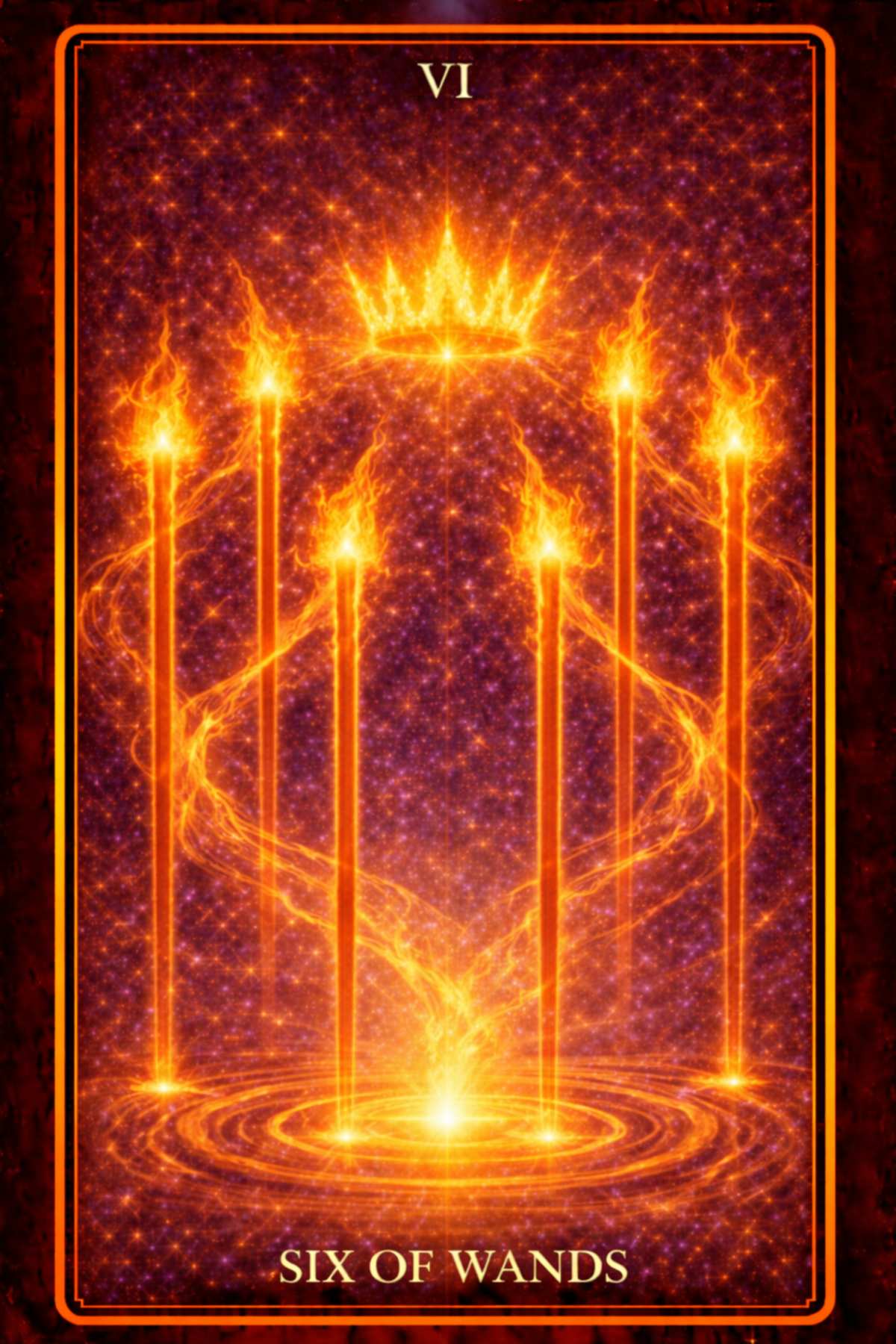
The Hermit and Six of Wands Tarot Combination Meaning
The Hermit and Six of Wands create a compelling tension between inward truth and outward recognition. The Hermit is the card of withdrawal, self-examination, mature distance, and the quiet search for what remains meaningful when external approval falls away. The Six of Wands, by contrast, carries visibility, validation, success, esteem, and the experience of being seen, affirmed, or recognized by others. When these cards appear together, the reading often centers on an important question: what happens when a private path begins to receive public response? Can success be integrated without losing depth? Can recognition be accepted without becoming the source of identity?
This is one of the reasons the combination feels so psychologically rich. The Hermit is not anti-success, nor is he allergic to being seen. He simply refuses to measure truth by applause. The Six of Wands, meanwhile, is not shallow by nature. Recognition can be earned, deserved, and even restorative. But it introduces fire into a very particular place. It lights up the part of life that is visible. It invites response, praise, momentum, and confirmation. The Hermit wants to know whether that light illuminates what is real or tempts the self away from its center. The pairing therefore speaks not only about success, but about the spiritual handling of success. It asks whether outer affirmation supports inner truth or begins to replace it, and whether the visible form of progress still belongs to the deeper purpose that created it.
When the private path becomes visible
The Hermit often appears in seasons of deep work, retreat, study, emotional simplification, or slow internal refinement. A person may have stepped away from noise in order to understand themselves, their calling, their standards, or the deeper meaning of what they are building. Then the Six of Wands enters and changes the dynamic. What was inward begins to receive response. Effort is noticed. A message lands. A contribution is acknowledged. Recognition, support, or the first signs of success begin to appear. This can feel gratifying, but also disorienting if one has become accustomed to moving privately, and if the self has come to trust silence more than applause.
That disorientation matters. The Hermit often trusts what grows in silence more than what arrives with fanfare. So when validation appears, it does not automatically settle the matter. Instead, the Hermit asks: what exactly is being recognized? Is it the deeper work, or only the most visible layer of it? Is the praise aligned with what you value, or is it rewarding a version of yourself that feels easier for others to consume? The Six of Wands brings warmth, momentum, and the healthy possibility of being received. The Hermit insists that reception be examined. Not cynically, but carefully. Not all recognition nourishes equally, and not all visibility strengthens the path that made it possible.
Confidence that comes from within
At its healthiest, this combination describes a beautiful balance: quiet confidence meeting deserved acknowledgment. The Hermit contributes substance, seriousness, and a form of self-trust that does not depend on constant reinforcement. The Six of Wands contributes encouragement, visibility, and the feeling that one's effort is beginning to bear fruit in a recognizably human way. Together, they can show someone whose confidence is no longer empty performance, because it has already been forged inwardly. Recognition then becomes something that confirms rather than creates value.
This is an important distinction. Many people seek the Six of Wands before they have passed through the Hermit's work. They want to be seen before they truly know what they stand for. But when these cards appear together in a constructive form, the message is often that public success is healthiest when it emerges from inner alignment. Visibility does not need to corrupt the path if the path was not built for visibility alone. Recognition can then be received with gratitude while remaining in proportion. It is appreciated, but not worshiped. It warms the fire without becoming the fire's only fuel, and it does not have to turn the self into a performance for the sake of maintaining momentum.
- Private depth can support public success without being erased by it.
- Recognition is healthiest when it confirms inner truth rather than replacing it.
- Visibility tests integrity just as much as difficulty does.
- Encouragement is useful, but it should not become the only source of direction.
Love and relationship meaning
In love readings, The Hermit and Six of Wands can point to the tension between private feeling and outward acknowledgment. A connection may be moving from internal significance toward more visible affirmation. This could mean clarity, commitment, mutual recognition, or the sense that a bond is no longer hidden in uncertainty. The Hermit suggests that one or both people have taken the relationship seriously inwardly. The Six of Wands suggests that this seriousness may now be entering a more open, confident, or affirming phase. What has been quietly felt may be becoming easier to name, easier to stand beside, or easier to let others see without defensiveness.
Want to explore this combination in a more personal way?
If this pairing feels important right now, a simple tarot spread can help you reflect on it with more context.
This can be positive when the recognition is genuine. Someone who has been emotionally careful may begin to show up more clearly. A relationship that felt ambiguous may gain a stronger sense of mutual valuing. There may be pride in one another, a willingness to stand beside the connection more openly, or a renewed sense that what is shared deserves acknowledgment rather than secrecy. The pairing can indicate a move from silent depth toward visible appreciation, especially where honesty has already been building in private before it becomes visible in outer life.
In shadow form, however, the combination can reveal an imbalance between private truth and public image. Someone may care more about how the relationship looks than about what it actually is. The Hermit senses this quickly. He is not interested in display without substance. If the Six of Wands becomes too image-driven, the reading may ask whether the bond is truly being honored or simply used as a source of ego validation. The healthiest version of the pair is simple: quiet depth that is not threatened by being seen, and recognition that does not flatten intimacy into performance or turn emotional truth into something curated for response.
Career, vocation, and creative work
In work readings, The Hermit and Six of Wands can be especially significant for anyone whose path has involved long effort before visible reward. The Hermit often points to private mastery, careful development, specialized knowledge, or work done with integrity even when applause was absent. The Six of Wands suggests that this phase may now be receiving acknowledgment. Recognition, successful reception, momentum, or increased visibility may be emerging around something that was built seriously and often quietly. What was developed in private may now be stepping into a phase where its relevance is harder to ignore.
This can be a powerful sign for creative, spiritual, intellectual, or independently driven work. It suggests not instant fame, but earned response. The work may finally be reaching people. A reputation may be forming. The person may begin to realize that the path they cultivated inwardly has real value in the outer world. Yet the Hermit remains a necessary guide. He prevents the self from being overly shaped by the audience. The work should not lose its center in order to remain visible. Success becomes healthier when it is allowed to support the mission rather than rewrite it, and when the person remembers what they were building before anyone started clapping.
At times, the combination may also ask a practical question: are you ready to be seen? Some people are inwardly prepared to create, but not yet fully prepared for response. The Hermit values privacy, autonomy, and slowness. The Six of Wands introduces attention. That attention can be welcome, but it can also challenge one's boundaries and self-definition. The cards therefore suggest a mature form of visibility, one in which recognition is received without becoming spiritually destabilizing, and where public movement does not require abandoning the deeper rhythm that made the work meaningful in the first place.
Spiritual meaning
Spiritually, The Hermit and Six of Wands speak to the relationship between inner illumination and outer affirmation. The Hermit seeks truth beyond performance. He is concerned with direct knowing, with conscience, with what remains when ego is stripped away. The Six of Wands asks what happens when that inward work begins to manifest in ways others can see or affirm. This can be a spiritually delicate stage. Recognition can either become a distraction or a test of whether humility is strong enough to survive success.
At a deeper level, the combination may indicate that a person is learning not to reject appreciation out of false purity. Some spiritually serious people become suspicious of all praise and visibility, as if being seen automatically contaminates the path. These cards suggest a more balanced view. Recognition is not the problem. Attachment is the problem. Visibility is not inherently corrupting. Losing touch with inner truth is what corrupts. The Hermit can therefore bless the Six of Wands when the latter is held cleanly. The outer response becomes part of the path, not its replacement, and affirmation becomes something that can be received without becoming spiritually addictive.
Shadow expression and challenge
The shadow of this pairing often appears in two opposite forms. In one, the Hermit resists recognition so strongly that the person cannot receive encouragement, support, or the natural visibility of their work or presence. They may withdraw from being seen even when being seen would be appropriate and life-giving. In that case, the reading may reflect an unresolved discomfort with worth, success, or relational acknowledgment. The person trusts obscurity more than affirmation, even when affirmation is honest, and may quietly equate invisibility with safety or moral seriousness.
In the opposite form, the Six of Wands overwhelms the Hermit. Recognition becomes intoxicating. Validation begins to steer choices. The person may start shaping their life around what gets the strongest response rather than what feels most inwardly true. In this shadow, the inner lamp becomes secondary to the crowd's reaction. The cards warn gently against that drift. The point is not to refuse success, but to remain anchored enough that success does not become a false compass. What is praised is not always what is deepest, and what receives the most response is not always what should lead.
What this combination is really asking
The Hermit and Six of Wands ask: can you remain true to what you know in private when life begins to answer you in public? That question is not limited to career or reputation. It can apply to relationships, creativity, teaching, healing work, leadership, and any path where inward seriousness eventually meets outward recognition. The challenge is not merely to earn acknowledgment. It is to handle acknowledgment without losing the soul of what made it meaningful, and without quietly adjusting your values to fit what is easiest to reward.
The deeper lesson is that quiet truth and visible success do not have to be enemies. They become enemies only when one replaces the other. The Hermit contributes integrity, restraint, and perspective. The Six of Wands contributes morale, confirmation, and the healthy experience of being received. Together, they suggest that the strongest visibility is the kind that does not force you to betray your inward life in order to sustain it, and the strongest confidence is the kind that could still stand even if the room went quiet again.
FAQ
Is The Hermit and Six of Wands a positive tarot combination?
Often, yes. It can indicate earned recognition, steady confidence, and success that grows from real inner work. The challenge is not the success itself, but how it is handled. The healthiest expression of the combination is visible affirmation that remains connected to deeper truth.
Does this combination mean public recognition?
It can. In many readings, the Six of Wands points to being seen, acknowledged, or appreciated more openly, while The Hermit suggests that what is being recognized may have been built privately over time. The combination often reflects visibility arriving after depth, practice, or inward refinement.
What does this mean in love readings?
It can point to a relationship becoming more clearly acknowledged, more openly valued, or more confidently expressed. It may also ask whether the connection is being honored for what it truly is, rather than for how it appears from the outside. Private sincerity and public affirmation are both part of the reading.
Can this combination warn against ego?
Yes. In shadow form, it can show a person becoming too affected by praise, external response, or the need to remain visible. The Hermit acts as a corrective here, reminding you that recognition is healthiest when it supports your path rather than defines it.
Ready to see how this applies to your situation?
A focused tarot reading can help you explore how The Hermit + Six of Wands may reflect your current situation, not just the general meaning of the cards.
Closing reflection
The Hermit and Six of Wands describe a moment when inwardly earned substance may be meeting outward response. Something private may be becoming visible. Something long cultivated may be receiving acknowledgment. This can feel gratifying, but it can also test your center. The cards do not ask you to reject the warmth of recognition. They ask you to receive it without forgetting what taught you how to stand alone in the first place.
When lived well, this pairing becomes a picture of quiet authority. Not loud ego, not false modesty, but a more mature confidence rooted in truth before applause. The fire here is not only the fire of being seen. It is the fire of knowing what remains true whether or not anyone is watching, and allowing that truth to shape how success is carried, shared, and survived.
More combinations with The Hermit
More combinations with Six of Wands
Continue with The Hermit
Explore Related Guides by Topic
If you want to explore this combination through a more specific emotional lens, these tarot guides can help you follow the broader pattern behind the reading.