
The Hanged Man + Two of Wands
Explore how these two tarot cards interact in a reading through symbolic overlap, contrast, and shared narrative. Tarot combinations often reveal meaning that neither card fully expresses on its own.
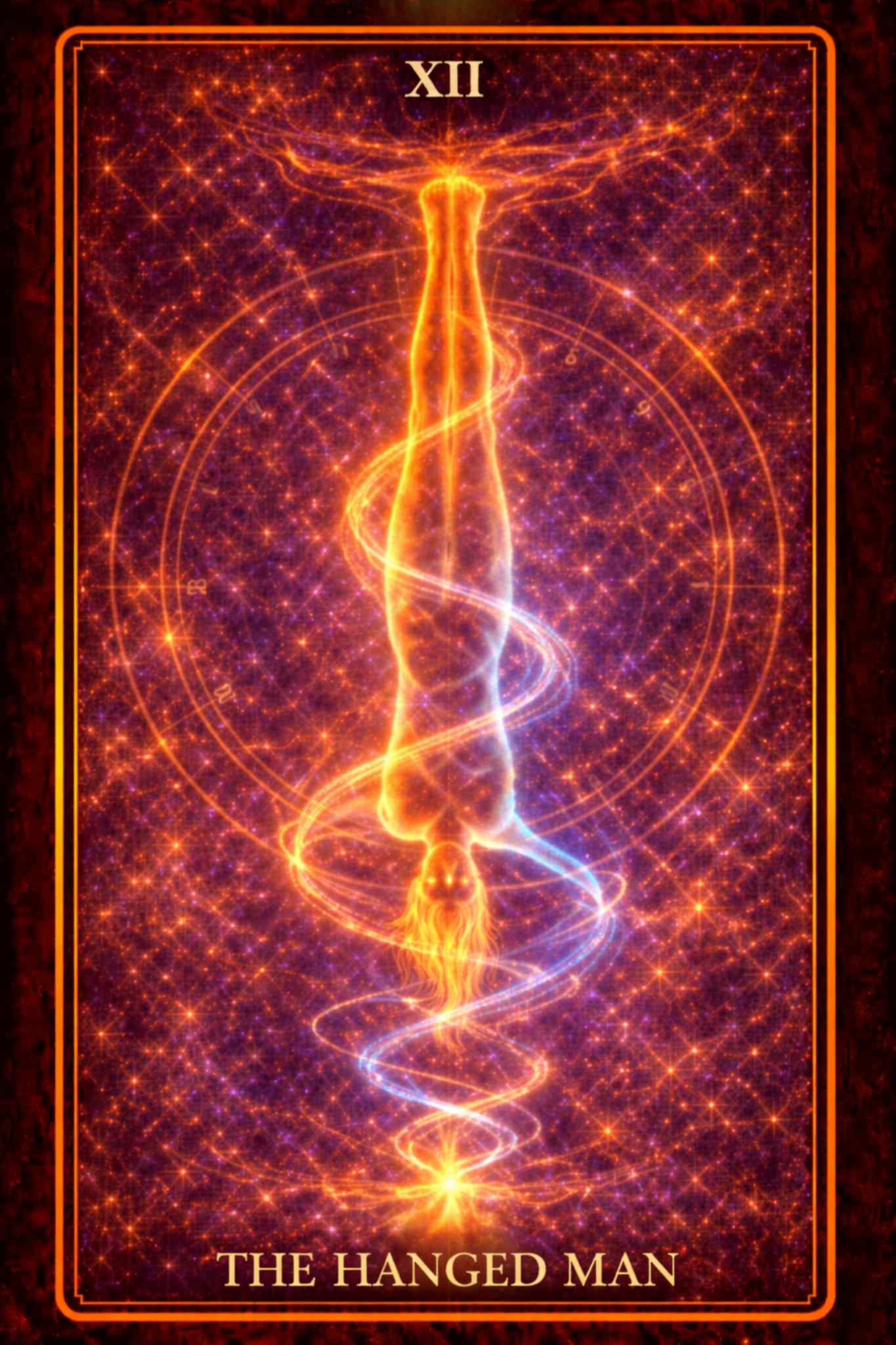
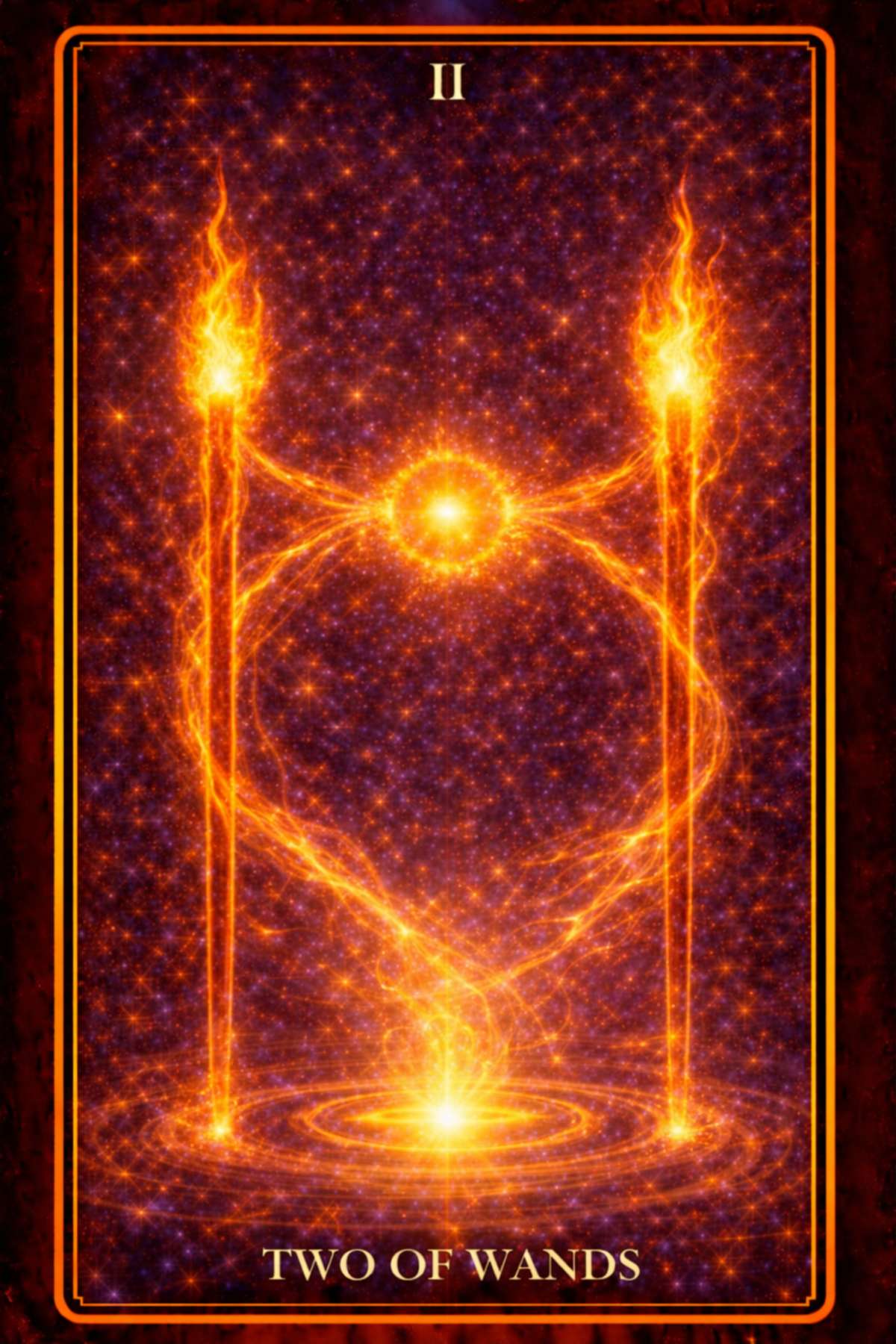
The Hanged Man and Two of Wands Tarot Combination Meaning
The Hanged Man and Two of Wands meet where vision is present, yet direct movement no longer feels honest enough. The Two of Wands is a card of horizon, anticipation, intention, and the moment when someone begins to understand that life could widen beyond its current frame. It carries strategy, desire for growth, and the charged awareness that a new chapter may be within reach. The Hanged Man enters that field as a deep interruption of ordinary will. He does not deny the future. He questions the state of consciousness from which that future is being imagined. Together, these cards often appear when the next path can already be sensed, while planning alone cannot carry the person there. Something in the inner posture has to change first.
This is what makes the pairing so rich. The Two of Wands naturally wants to orient itself toward what comes next. It wants to weigh options, read the landscape, and begin shaping direction. The Hanged Man introduces a very different demand. He suggests that the vision itself may still be filtered through an old identity, an old definition of progress, or an old need to turn uncertainty into control. The future may indeed be calling, yet strategy by itself will not be enough. There are moments when the mind can see ahead, while the deeper self still needs time to loosen, surrender, and look from another angle.
When planning reaches its limit
One of the clearest themes in this combination is the point where planning stops creating real clarity. The Two of Wands is often strong when a person is capable, imaginative, and mentally prepared for expansion. It sees options. It senses possibility. It knows the current phase may be growing too small. Yet there are moments when more thought, more projection, and more scenario-building only create a more polished form of pressure. The Hanged Man appears exactly there. He reveals that some next steps are found when intention softens and a truer orientation begins to emerge on its own.
This speaks of a deeper kind of intelligence. A person may already have several reasonable plans. On the surface, each one may look workable. Yet The Hanged Man asks whether those plans come from alignment, or from discomfort with the in-between. The middle space can feel deeply irritating to the Two of Wands because it wants possibility to become direction. The Hanged Man gives that threshold dignity. He shows that what looks like delay may be the very space that prevents a misdirected future.
Perspective before expansion
This pairing is deeply concerned with order. The Two of Wands emphasizes expansion: wider horizons, bigger decisions, stronger agency, the courage to move beyond what is already known. The Hanged Man insists that perspective must come before expansion if that growth is to mean anything. Otherwise, ambition may simply carry the same unresolved pattern into a larger field. The scenery changes, but the inner pattern stays intact.
Need a little more context around this pairing?
A short reading can help you reflect on the tension, direction, or lesson this combination may be pointing toward.
The Hanged Man protects against that repetition. He asks what must be seen differently before the next chapter is truly worth choosing. Is the person reaching because the soul is ready, or because stillness feels unbearable? Are they drawn to a new horizon because it is aligned, or because it flatters identity and promises relief from uncertainty? These are demanding questions, but they are cleansing ones. The Two of Wands without reflection can become restless strategizing. The Hanged Man turns strategy into discernment.
- A future vision that needs inner reorientation before commitment
- Ambition slowed down until it becomes more truthful
- A threshold where waiting reveals more than pressure does
- Planning that must yield to deeper seeing
- Expansion that gains meaning through surrender
Love and relationship meaning
In relationship readings, The Hanged Man and Two of Wands often point to a connection standing near possible movement while still requiring patience, perspective, and a shift in perception before any outer decision can be trusted. The Two of Wands may show one or both people imagining a future, sensing potential, or wondering what this bond could become if given room to grow. The Hanged Man suggests that the relationship cannot be understood through forward desire alone. Something about the way it is being viewed still needs to change.
This can take many forms. Someone may be wondering whether to deepen the bond, define it more clearly, pursue it with greater openness, or begin imagining a more serious path together. The cards rarely reject that movement outright. More often, they say: a different angle is needed first. A controlling story may need to loosen. A projection may need to be recognized. A person may need to admit that the imagined future has been shaped more by longing than by what is actually unfolding between two people.
At its healthiest, this combination helps love become more real by slowing the part of the psyche that wants to secure it too quickly. The Hanged Man teaches someone how to remain inside uncertainty without turning it into pressure. The Two of Wands keeps hope alive by showing that a future may genuinely exist here. The real question is whether that future is being approached through clarity or through the need to escape ambiguity.
Career, work, and long-range direction
In work or career readings, The Hanged Man and Two of Wands often describe a stage where the next direction is visible enough to awaken desire, though still ripening before clear action can arise. The Two of Wands may appear when someone is considering expansion, leadership, relocation, a broader platform, or a more ambitious path. The Hanged Man enters to suggest that the deeper task is seeing more truthfully.
This pairing becomes especially meaningful when someone feels suspended between options. On the surface, it may look like indecision. More deeply, the issue is often that the available paths are still being interpreted through a perspective that is already changing. The person is no longer who they were when the old goals were formed, yet the new version of self has not fully settled. The Hanged Man gives dignity to that threshold. It is the place where the future is being re-read.
At the same time, the Two of Wands keeps the energy oriented toward eventual embodiment. This is strategic surrender. The ambition remains alive, but it becomes wiser when it stops serving expansion for its own sake. The strongest action coming out of this pair is rarely the fastest option. It is the direction that still feels true after urgency, comparison, and self-proving have begun to lose their grip.
Psychological and spiritual meaning
Psychologically, The Hanged Man and Two of Wands often describe the tension between mental projection and deeper knowing. The mind wants maps. It wants preferred outcomes, fallback plans, manageable scenarios, and some convincing image of what comes next. The Two of Wands is excellent at building that field. Yet life does not always unfold in straight lines, and this is where The Hanged Man becomes invaluable. He interrupts the assumption that more planning always produces more truth. Sometimes it produces attachment to an imagined future that has not yet earned the right to govern the present.
Spiritually, this pairing can reflect a threshold around will itself. A person may believe they need to direct the next chapter through effort and design, while life is actually asking them to loosen that authorship for a time. This does not make them powerless. It makes them available to a broader alignment. The Hanged Man asks whether someone can bear the discomfort of partial knowing long enough for a deeper orientation to arrive. The Two of Wands shows why that is difficult: the future is already whispering. Yet a whisper is different from a command. It invites relationship, not immediate control.
Shadow expression and challenge
The shadow side of this combination appears when the Two of Wands becomes overidentified with control or when The Hanged Man becomes a shelter for avoidance. One distortion shows up as endless planning. The person generates more options, more strategy, more future language, and more analysis in the hope that one of those things will remove the discomfort of uncertainty. Yet none of it resolves the deeper issue, because the real need is inner reorientation. Another distortion appears when suspension stretches too far and is renamed wisdom, while underneath it there is fear of commitment, fear of losing possibilities, or fear of discovering that the imagined future may not actually hold the meaning once projected onto it.
The healthier expression asks a simpler question: is the pause changing the relationship to the horizon? If the answer is yes, then the waiting is alive. If the answer is no, then the suspension may need a more honest look. The Two of Wands still belongs here as imagination, readiness, and openness to expansion. The Hanged Man still belongs here as humility, surrender, and the willingness to let old mental structures loosen. With balance, the pair becomes threshold wisdom.
Timing and the maturity of the next step
Timing matters deeply in this pair because the Two of Wands often feels ready before The Hanged Man agrees. The mind sees the horizon and wants to begin positioning. The will feels momentum and wants to move while the opportunity still seems bright. Yet The Hanged Man suggests that timing is about more than outer conditions. It is also about whether the inner self is prepared to meet the future from a different consciousness. A step taken too early may look successful from the outside and still carry the same unresolved lesson into a larger chapter.
That is why these cards often ask for patient but intentional waiting. They suggest a period where something continues to ripen beneath the visible surface. A person may still research, observe, reflect, and quietly prepare, yet the real decision tends to come cleanly only when the pressure to escape the present has eased. At that point, the next step becomes more than strategic. It becomes congruent. The Two of Wands wants a horizon. The Hanged Man wants a transformed seer.
FAQ — The Hanged Man and Two of Wands
Does this tarot combination mean delay?
It often points to delay, though usually with purpose. The pause tends to carry insight that helps a future decision become more grounded and more honest.
Is this bad for ambition?
No. It refines ambition. The cards suggest that vision grows stronger when it passes through patience, surrender, and clearer self-understanding.
What does it mean in relationships?
It can show a bond with real future potential, though the connection still needs perspective, emotional honesty, or a shift in expectation before movement becomes healthy.
Can this be positive in career readings?
Yes. It can be very constructive when someone is standing at a threshold and needs to distinguish true direction from pressure, comparison, or restless expansion.
What is the central lesson here?
The central lesson is that vision becomes more trustworthy when it is filtered through surrender. Sometimes the best preparation for the future is a different way of seeing it.
What this combination is really asking
The Hanged Man and Two of Wands ask whether you are trying to choose the future before allowing the present to alter your point of view. That is the heart of the pair. The horizon may be real. The ambition may be real. The next chapter may genuinely be waiting. Yet a future chosen from old positioning will never feel the same as one chosen after real inner reorientation. The issue is more than what comes next. It is also who is doing the choosing.
The deeper lesson is that expansion without perspective can become repetition in a wider field. The Two of Wands brings vision, anticipation, and the courage to imagine more than the known world. The Hanged Man brings suspension, surrender, and the humility to let familiar mental frameworks loosen. Together, they offer a subtle but powerful truth: the future is not always reached by pushing toward it. Sometimes it becomes visible only after the need to master it begins to soften.
Explore the next layer of this reading.
This combination can mean different things depending on context. A short tarot reading can help you reflect on the question behind the cards.
Closing reflection
There are seasons when the horizon is visible, yet ordinary effort cannot quite reach it. This pairing belongs to those seasons. It suggests that the pause you may be resisting is doing more than standing in the way. It may be changing the one who will eventually take the step. The Hanged Man keeps the threshold open. The Two of Wands keeps the horizon alive. Between them lives a demanding kind of wisdom — the willingness to wait until the next direction feels more than exciting. It feels inhabited, earned, and deeply one’s own.
More combinations with The Hanged Man
More combinations with Two of Wands
Continue with The Hanged Man
Explore Related Guides by Topic
If you want to explore this combination through a more specific emotional lens, these tarot guides can help you follow the broader pattern behind the reading.