
The Hanged Man + Three of Cups
Explore how these two tarot cards interact in a reading through symbolic overlap, contrast, and shared narrative. Tarot combinations often reveal meaning that neither card fully expresses on its own.
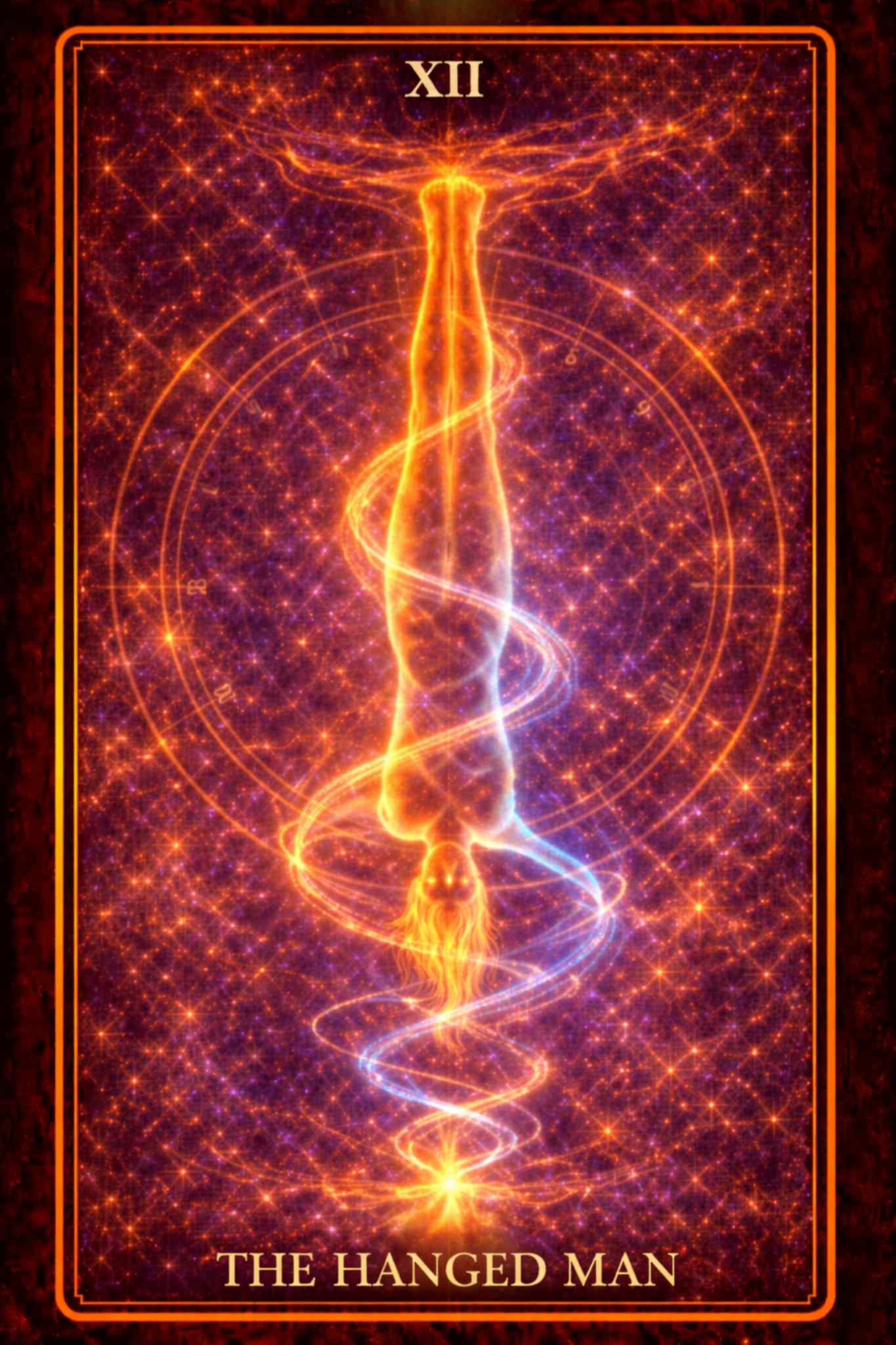
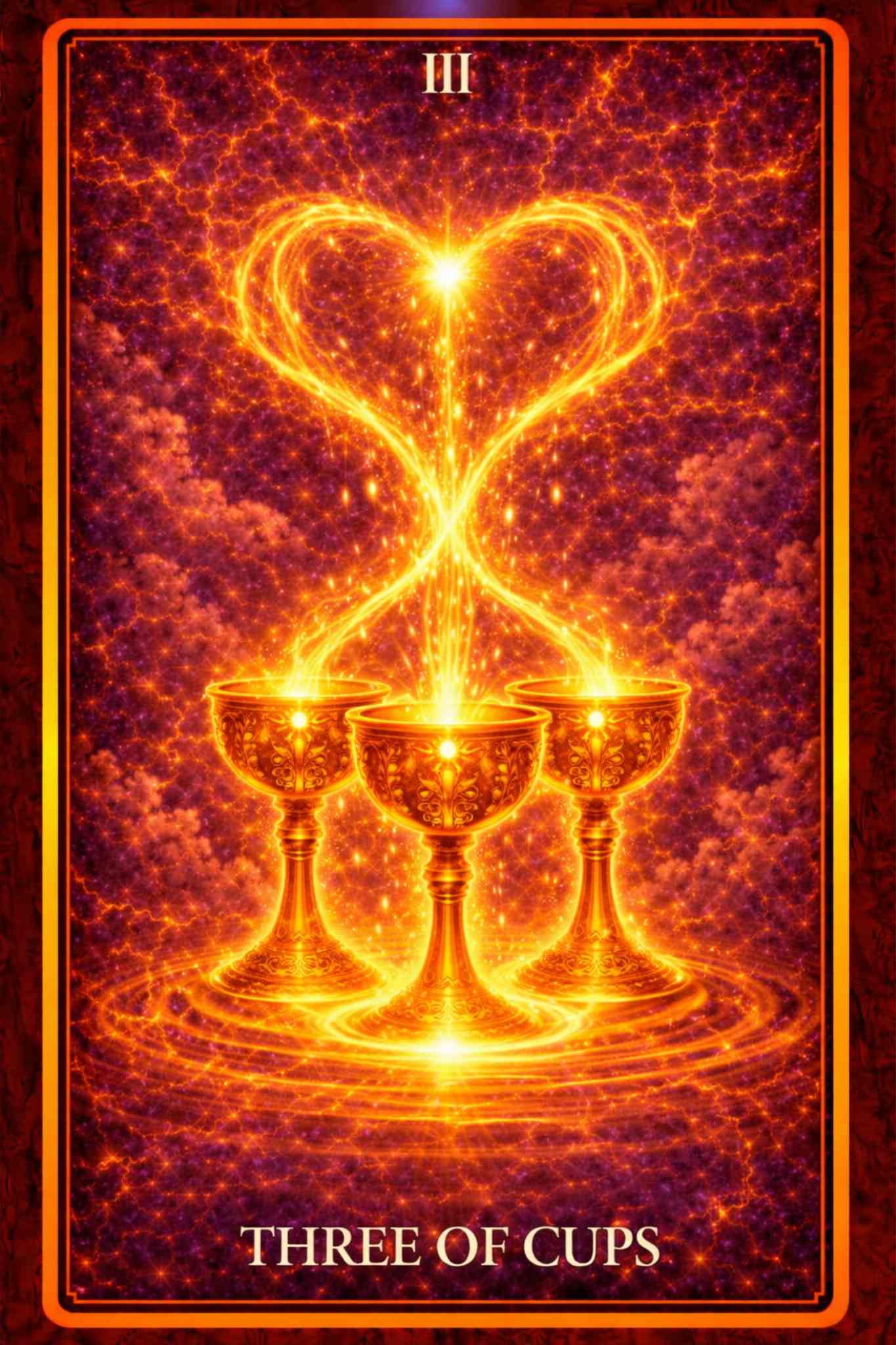
The Hanged Man and Three of Cups tarot combination meaning
The Hanged Man and Three of Cups brings together celebration and suspension, shared feeling and inward perspective, warmth between people and the quieter realization that joy also needs reflection if it is to mean something lasting. At first glance, the pairing may seem unusually soft. The Three of Cups is one of the most socially open cards in the suit of Cups. It speaks of friendship, support, reunion, encouragement, emotional relief, and the kind of shared happiness that becomes possible when life briefly loosens its grip. Yet The Hanged Man changes the texture of that joy. It does not take it away. It deepens it. It slows the reflex to remain only at the visible surface of togetherness and asks what the emotional atmosphere is actually showing from underneath.
This is not the kind of combination that says pleasure is false or celebration is shallow. It says something more nuanced. Sometimes what feels light on the outside carries a deeper turning point inside. A gathering, a conversation, a reconnection, or a period of emotional release can reveal a truth that would have remained hidden in isolation. The Hanged Man is not interested in social performance. It is interested in what becomes visible when the usual frame loosens. In combination with Three of Cups, that often means recognizing how relationships, friendships, or shared emotional spaces invite a different way of seeing yourself. It may also mean discovering that some joy has been treated too casually, or that some emotional support deserves deeper gratitude than it has received.
There is often a strangely beautiful paradox here. The Three of Cups wants flow, easy connection, and the healing effect of being emotionally met by others. The Hanged Man introduces pause, stillness, and a less obvious form of movement. Together they suggest that emotional nourishment may arrive through community, yet its real gift becomes clear only when the person stops moving so quickly through the experience. A conversation may linger in the mind because it opened a new angle. A reunion may feel meaningful because it quietly shifts an old emotional burden. A joyful environment may reveal how much tension has been carried for too long. The experience is relational, but the transformation often happens inwardly.
Shared joy seen from a deeper angle
The Three of Cups is often celebrated for its openness. It can mark laughter, support, social harmony, emotional generosity, and the comfort of being among those who understand you. The Hanged Man reframes that comfort. Instead of treating shared joy as a final answer, it asks what this emotional exchange is teaching. Are these connections helping you breathe again, or are they distracting you from what still needs honest inner attention? Are you truly receiving support, or simply staying busy inside pleasing atmospheres so you do not have to feel what lies beneath? The question is not designed to diminish happiness. It is designed to protect meaning from becoming superficial.
Need a little more context around this pairing?
A short reading can help you reflect on the tension, direction, or lesson this combination may be pointing toward.
That is why this pairing can sometimes appear when a person is in the middle of emotional rearrangement but only begins to understand it through other people. A friend’s presence may reveal how tired they have been. A moment of being welcomed may show them how guarded they had become. A circle of care may highlight the difference between genuine belonging and social participation that never truly reaches the heart. The Hanged Man makes these contrasts easier to see, because it suspends automatic interpretation and invites a more honest kind of witnessing.
In some readings, this combination can resemble the softer emotional tone found in quiet emotional clarity. Both pairings allow illumination to emerge through a change of perspective, though Three of Cups is more interpersonal, more rooted in emotional exchange and the healing intelligence of community. The light here does not come from broad confidence alone. It comes from the heart realizing, often gently, that shared joy can also be revelatory. A similar emotional expansion can also be seen in nurtured emotional joy, where connection begins to restore something deeper over time.
Love, friendship, and relational tone
In relationship contexts, The Hanged Man and Three of Cups can point to a phase in which connection becomes clearer through social or emotional atmosphere rather than direct declaration. A person may learn a great deal by noticing how a bond feels in relaxed company, how it opens in friendly space, or how shared warmth changes the usual emotional pattern. This can be a useful combination when a relationship is no longer asking for forceful progression, but for observation. What happens when pressure is removed? What becomes obvious when two people are allowed to simply share presence, support, or emotional ease without immediately deciding what the entire connection must become?
That does not make the combination casual in a dismissive sense. On the contrary, its depth lies in recognizing that some emotional truths only appear when the environment becomes lighter. The Hanged Man understands that a person under too much pressure tends to repeat old patterns. The Three of Cups offers a looser atmosphere in which those patterns can be seen from another angle. In love, that may mean discovering whether warmth is genuine or merely situational, whether closeness expands in shared joy or becomes strangely uncertain once it enters real life, and whether the bond invites deeper honesty or simply pleasant distraction.
This is also a valuable pair for reading friendship itself. Not all important connections are romantic, and the emotional intelligence of this combination often blooms most clearly in supportive, heart-led friendships. Someone may realize that a friend has become an anchor during a period of suspension. Or they may see that communal joy has been helping them heal without demanding explanations. Where emotional life has felt stuck, this combination may show that movement begins through relational warmth rather than direct effort.
For broader context around emotional openness in supportive bonds, the emotional openness in love can add a relevant perspective, especially where connection mixes affection, warmth, and the presence of others. Paired with The Hanged Man, that same emotional field becomes more reflective and less immediate, asking what shared happiness is quietly changing within the heart. To understand how pause shapes emotional direction more directly, reflective love energy offers a useful companion lens.
When celebration becomes insight
One of the quiet lessons of this pair is that celebration is not always escape. Sometimes it is revelation. A person who has been carrying too much inward weight may suddenly realize, in company that feels nourishing, how long they have lived without enough emotional ease. Another may recognize that their need to stay in control softens when they are among people who do not demand performance. The Hanged Man uses these moments of relaxed connection to produce inner clarity. What looks simple from outside may carry a deep emotional turning point inside.
This is also why timing matters here. The combination often suggests that answers do not come through pushing the issue, isolating with it endlessly, or trying to solve everything from the inside out. Sometimes the wiser movement is to stay present within the emotional field of life and let meaning arise indirectly. A conversation, celebration, or period of human closeness may create exactly the spaciousness needed for a rigid interpretation to loosen. The Hanged Man is not asking you to withdraw from joy. It may be asking you to let joy show you what your usual seriousness has hidden.
If the situation calls for a broader emotional snapshot instead of a single conclusion, the timeline clarity spread can work well with this pairing. It helps show whether shared joy belongs to release from the past, support in the present, or the opening of a more emotionally connected future. This kind of spread suits the combination because it honors both the visible sweetness of Three of Cups and the inward transition of The Hanged Man.
Want to place this combination into a wider reading?
If this pairing feels close to something you are experiencing, a simple spread can help you reflect on the surrounding energy with more clarity.
Emotional atmosphere as a space of transformation
There is a particular quality to this combination that becomes clearer over time rather than immediately. The Three of Cups creates an environment where emotional life can move more freely, where interaction softens internal tension and allows a person to step outside their usual patterns. The Hanged Man then alters how that environment is experienced, not by removing its warmth, but by slowing the way it is processed. Instead of passing quickly through moments of connection, the person begins to absorb them more deeply. This can lead to a subtle but meaningful shift, where shared experiences are no longer just events, but reflections of something changing within. Over time, these reflections begin to form a clearer emotional picture, one that could not have been seen through direct analysis alone.
This is where the combination reveals its more introspective nature. A person may initially enter social or emotional spaces simply to connect, to relax, or to experience a sense of belonging. Yet as these moments accumulate, a deeper awareness begins to emerge. Certain interactions may feel more significant than others, certain conversations may linger longer in the mind, and certain environments may create a sense of ease that contrasts with previous emotional states. The Hanged Man invites the person to remain with these impressions rather than dismissing them. By doing so, the emotional atmosphere becomes a source of understanding rather than just experience. It reveals not only how one relates to others, but how one has been relating to oneself.
There is also an important distinction here between movement and integration. The Three of Cups brings movement in the form of connection, interaction, and emotional exchange, yet The Hanged Man introduces a pause within that movement. This pause allows experiences to settle rather than dissipate. Without it, shared joy may remain temporary, leaving little lasting impact. With it, the same joy can become transformative, creating insight that continues to unfold long after the moment has passed. This is why the pairing can feel both light and significant at the same time. It carries the ease of connection alongside the depth of reflection, allowing both to exist without conflict.
Within this dynamic, emotional patterns often become more visible. A person may begin to notice how they respond to support, how they receive attention, or how they navigate moments of closeness when they are not under pressure. These observations are not forced. They arise naturally as the person becomes more present within the experience. The Hanged Man supports this awareness by reducing the need to react immediately, while the Three of Cups ensures that the emotional field remains open and responsive. Together, they create a space where understanding develops organically, shaped by experience rather than imposed through analysis.
This process can also highlight the difference between genuine nourishment and habitual engagement. Not all connection carries the same depth, and not all emotional environments contribute equally to growth. Through repetition and reflection, the person may begin to recognize which interactions feel sustaining and which feel merely distracting. This recognition does not require judgment. It emerges through awareness, becoming clearer as the person remains present within the emotional field. Over time, this can lead to more intentional choices about where energy is placed and how connection is experienced.
Another layer of this pairing involves the way emotional openness interacts with inner resistance. Even in supportive environments, a person may notice moments where they hesitate, withdraw, or hold back. These reactions can become more visible within the slower rhythm introduced by The Hanged Man. Instead of being overlooked, they are given space to be understood. This does not interrupt the connection. It deepens it by bringing awareness to the internal dynamics that shape how connection is experienced. In this way, the pairing becomes both relational and introspective, allowing insight to emerge through interaction.
Ultimately, this additional layer reinforces the broader message of The Hanged Man and Three of Cups. Shared emotional experience is not only about connection itself, but about what connection reveals when it is fully received. Joy, support, and belonging become more than passing states. They become entry points into deeper awareness, showing how emotional life can shift through presence rather than force. By allowing these experiences to unfold without rushing their meaning, the person gains a clearer understanding of both the connection and their own place within it. In that understanding, the pairing reaches its full depth, offering not only shared feeling, but a more conscious relationship with it.
More combinations with The Hanged Man
More combinations with Three of Cups
Continue with The Hanged Man
Explore Related Guides by Topic
If you want to explore this combination through a more specific emotional lens, these tarot guides can help you follow the broader pattern behind the reading.