
The Hanged Man + Knight of Wands
Explore how these two tarot cards interact in a reading through symbolic overlap, contrast, and shared narrative. Tarot combinations often reveal meaning that neither card fully expresses on its own.
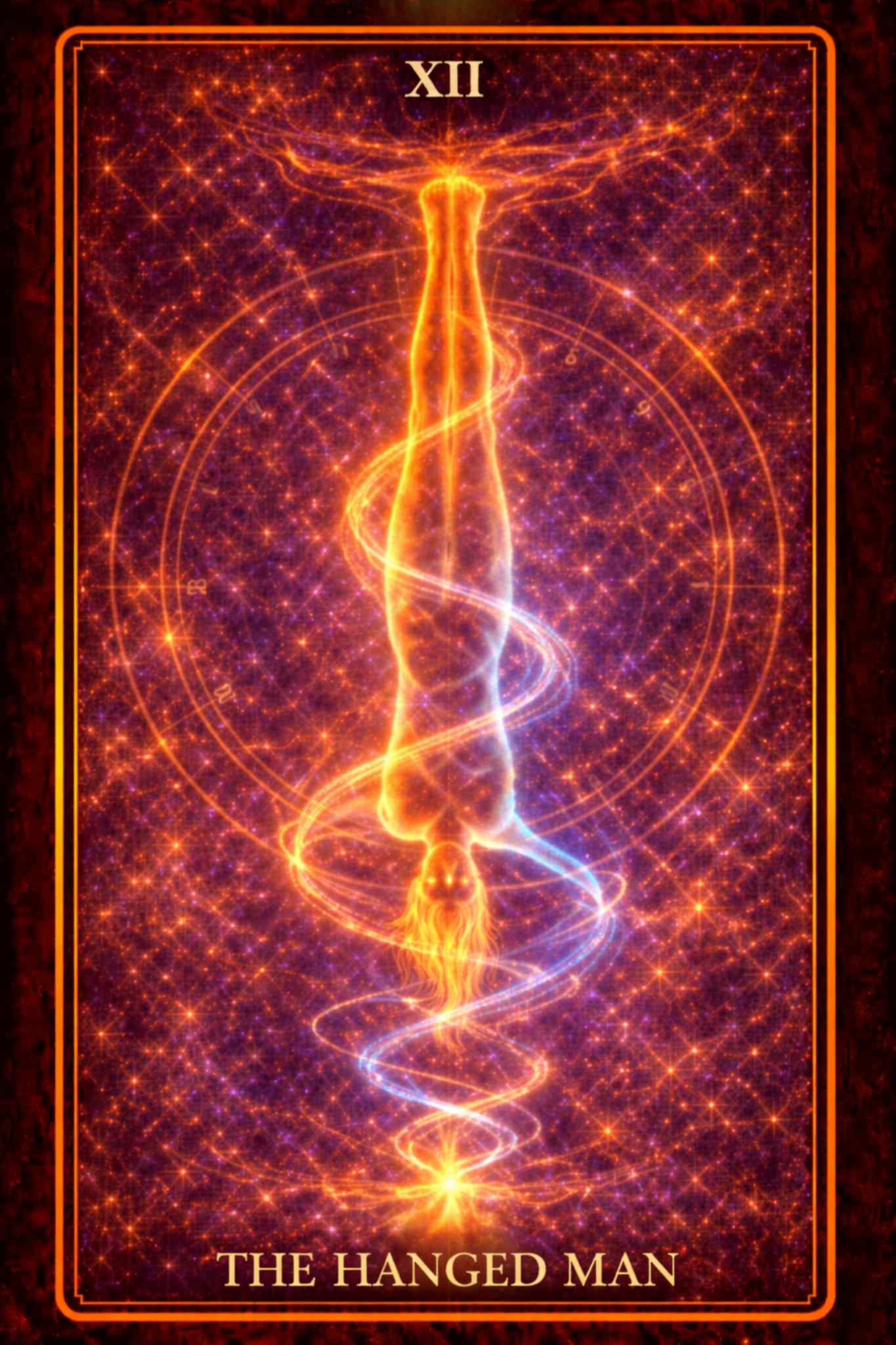
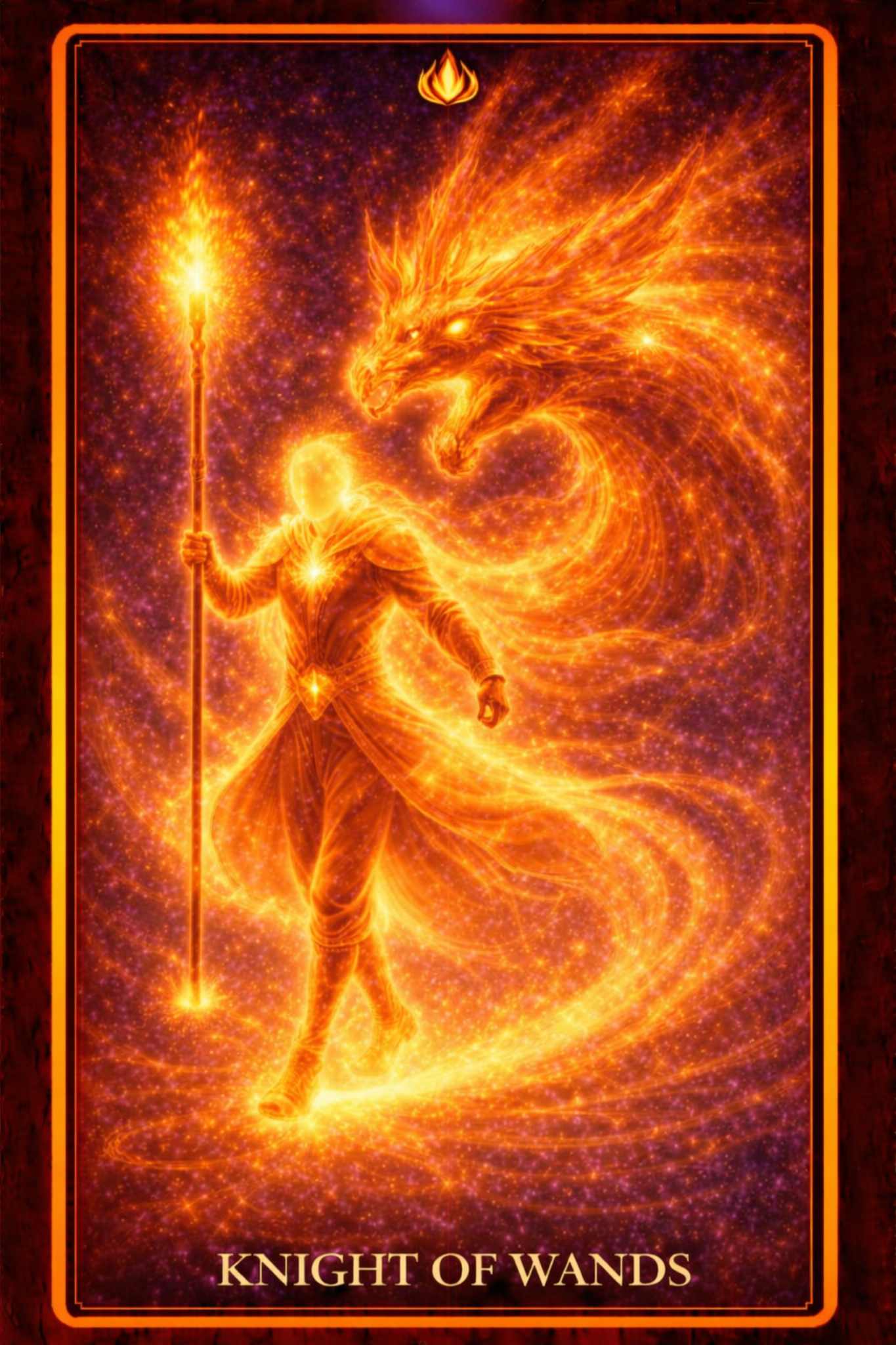
The Hanged Man and Knight of Wands Tarot Combination Meaning
The Hanged Man and Knight of Wands meet where desire is strong, movement feels urgent, and the deeper truth asks for more than instinctive forward motion. The Knight of Wands is one of the boldest expressions of fire in tarot. He brings appetite, motion, charisma, pursuit, risk, confidence, and a powerful refusal to stay still once something feels alive enough to chase. He is direct, vivid, and charged with momentum. When he appears, something wants action, heat, direction, contact, or breakthrough. The Hanged Man stands almost directly against that rhythm, though never as an enemy. He comes to suspend the ego’s assumption that strong desire automatically knows where it should go. Together, these cards often appear when a person feels intensely ready to move, while life is asking them to discover whether that readiness belongs to truth or to the discomfort of being unable to force clarity fast enough.
This creates a sharp and deeply human tension. The Knight of Wands wants to do something now. He wants to answer the spark with motion, and he often trusts velocity as proof that life is alive. The Hanged Man asks what happens when life is alive, yet the right response still needs time to ripen. He brings the difficult medicine of patience into the middle of momentum. That can feel almost unbearable when the Knight is strong, because the energy feels embodied rather than theoretical. A person may be full of urgency, longing, conviction, frustration, or the sense that if they do not move soon, the chance will slip away. The Hanged Man asks whether this assumption is true, or whether it is the kind of pressure the ego produces when it cannot tolerate a fertile intermediate state. In that sense, the pairing refines fire through surrender.
When impulse becomes too convinced by itself
One of the deepest themes in this combination is the distinction between intensity and guidance. The Knight of Wands often experiences intensity as self-evident truth. Something feels alive, therefore it must be followed. Something feels blocked, therefore it must be pushed through. Something feels possible, therefore hesitation becomes an enemy. This logic can be effective in certain phases of life, especially when a person has been trapped in stagnation or fear. Yet The Hanged Man introduces a crucial interruption. He asks whether the intensity is actually clear, or simply powerful. Those are very different things. Fire can be real while still growing into wisdom. Desire can be authentic while still seeking its right direction.
This is why the pairing can feel so demanding. A person may genuinely believe they know what they need to do. They may feel it in the body, in the nerves, in the emotional field. The Knight of Wands does not fake conviction. But The Hanged Man asks whether conviction is still operating through an older framework: old urgency, old pride, old need to prove vitality through action, old fear that stillness equals defeat. Sometimes what feels like bold clarity is actually resistance to surrender. Action restores a sense of authorship, and that can be intensely seductive. The Hanged Man removes that comfort. He asks whether the fire can remain fire even when it is not allowed to dominate the timeline. That is the maturity test hidden inside this combination.
The courage to wait without collapsing the fire
The Hanged Man and Knight of Wands together create an unusual form of bravery. Most people understand courage as movement in the face of fear. This pair introduces another kind: the courage to remain with powerful fire without immediately spending it. The Knight of Wands often wants expression, conquest, approach, declaration, travel, contact, or bold change. He is built for motion. The Hanged Man asks whether motion right now would actually serve the deeper truth, or simply relieve the pressure of wanting. That question matters enormously. A person can ruin timing because they could not bear the state of desire without converting it into action too quickly.
This does not mean the Knight is meant to disappear. He is meant to mature. The Hanged Man helps that happen by turning the energy inward for a time. What is revealed when the pursuit cannot yet proceed? What is the person really seeking through the action? Is it connection, breakthrough, embodiment, proof, freedom, escape, validation, or relief from uncertainty? The pause can feel irritating, even humiliating to the ego, yet it often transforms raw pursuit into cleaner intention. Then, if and when movement does come, it is less theatrical, less reactive, and more deeply aligned. The Knight still moves, though now he moves because the fire has survived surrender and become more truthful.
Love and relationship meaning
In relationship readings, The Hanged Man and Knight of Wands often point toward strong attraction, pursuit, chemistry, emotional impatience, or a powerful desire to move a connection forward quickly, with an equally strong indication that immediate action or interpretation may still need more perspective. The Knight of Wands brings undeniable energy into the bond. Someone may want contact, movement, a declaration, physical closeness, or a rapid leap out of ambiguity. The Hanged Man suggests that while the desire may be real, the relationship cannot be read accurately through heat alone. Something about timing, perspective, or inner clarity still needs to deepen.
Want to explore this combination in a more personal way?
If this pairing feels important right now, a simple tarot spread can help you reflect on it with more context.
This can be especially relevant in situations where the attraction is intense enough to feel self-validating. The Knight often assumes that because the chemistry is strong, the path must therefore be clear. The Hanged Man interrupts that assumption. He asks whether the desire is directed toward the actual person and the truth of the bond, or toward the relief of movement after frustration, loneliness, stagnation, or emotional suspension. This can be a painful distinction because the energy itself feels convincing. Yet many connections become distorted when intensity is asked to do the work of truth. The Hanged Man protects the connection from that collapse by slowing interpretation.
At its best, this pair can lead to a much more honest form of relational fire. Someone may still pursue, speak, or move, but only after realizing that urgent feeling alone should not dictate the pace of the bond. The Knight’s desire then becomes less about conquest or discharge and more about genuine willingness to meet the other from a deeper place. In more difficult forms, the cards can show impulsive behavior, erratic pursuit, or frustration with waiting that begins to create pressure in the relationship itself. The lesson is rarely that passion is the problem. More often, it is that passion without surrender easily mistakes its own force for emotional truth.
Career, work, and ambitious momentum
In work readings, The Hanged Man and Knight of Wands often describe a person or situation charged with ambition, urgency, bold initiative, or a strong desire to break through stagnation, with a simultaneous need for strategic suspension before the next move becomes wise. The Knight of Wands may indicate a fast career push, a launch impulse, travel, a strong professional gamble, a bold proposal, or the hunger to move out of delay with visible force. The Hanged Man suggests that if the person acts only from impatience, the move may reflect tension relief more than true alignment. This is especially important when someone has been waiting too long. Relief from waiting can masquerade as clarity.
This pairing can be highly relevant for entrepreneurship, creative risk, leadership decisions, and any situation where bold action seems attractive. The Knight wants to break through. The Hanged Man asks whether the breakthrough would actually be clean right now, or whether the person is still being asked to relinquish an old way of approaching success. Perhaps the drive is real, while the framework is still immature. Perhaps the opportunity is valid, while the ego is trying to use it to prove invulnerability, speed, or exceptionalism. Perhaps the next move is indeed coming, though it must arise from a different relationship to force. These are ambitious questions in their healthiest form. They keep ambition from becoming self-defeating.
At its healthiest, this combination can produce action that is both courageous and precise. The Knight of Wands keeps the fire alive, the appetite intact, and the willingness to take a meaningful leap available. The Hanged Man makes sure the leap is more than a reaction against stillness. Together, they can mark the difference between a dramatic move and a truly aligned one.
Psychological and spiritual meaning
Psychologically, The Hanged Man and Knight of Wands often describe the strain of carrying high activation without immediate release. The nervous system wants discharge. The will wants movement. The imagination wants the future now. The Knight of Wands embodies that whole field of urgency, appetite, and confident impulse. The Hanged Man asks the person to stay inside the activation without obeying it blindly. That can feel infuriating, because the usual ways of managing desire through action are temporarily suspended. Yet this is often where profound self-knowledge emerges. Without the immediate option to move, the person begins to see what their momentum has been serving: power, escape, proof, aliveness, visibility, relief, or genuine alignment.
Spiritually, this pair can mark an initiation around fire and surrender. Many people imagine surrender as something soft and fire as something forceful. These cards show that true fire may sometimes need surrender in order to avoid becoming destructive or self-deceptive. The Knight of Wands without reflection can become intoxicated with his own movement. The Hanged Man without fire can become overly passive or disconnected from life’s forward call. Together, they ask whether desire can survive a pause. If it can, it may reveal itself as deeper than impulse. If it cannot, then what looked like destiny may have been more about restlessness than truth. This is a hard teaching, but a liberating one.
Shadow expression and challenge
The shadow side of this combination appears when the Knight of Wands either refuses surrender or when The Hanged Man becomes an excuse for never risking embodiment. In one version, the person becomes increasingly impatient, reckless, dramatic, or forceful because the suspended state feels intolerable. They may chase, speak too soon, push an opening, or frame restraint as weakness. The Hanged Man exposes this by showing how much of the action is actually reaction to pressure. In the other version, the person remains suspended indefinitely, talking about timing, depth, or perspective while quietly fearing the vulnerability of full movement. The Knight then becomes frustrated life-force kept in a holding pattern. The healthier expression lets the fire deepen without going dead and lets the pause clarify without turning into paralysis.
This means the waiting should have transformative value. It should reveal something real about the direction, the desire, or the self that wants to move. If it does not, then the pause may be drifting into avoidance. Likewise, if the fire becomes more chaotic under delay, then the person may still be treating desire as something that must dominate rather than something that can be understood. The combination is healthiest when impulse becomes conscious enough to act cleanly and surrender becomes alive enough to stay connected to life.
Timing and the friction between urgency and truth
This pair carries a sharp timing message because the Knight of Wands usually feels immediate. He prefers decisive movement. The Hanged Man suggests that the moment may still belong to a deeper ripening, even if everything in the person wants outward force right away. That does not mean the action will never come. Quite often it does. But the right timing may depend on whether the fire can be held long enough to become more truthful. In that sense, the delay is refinement. It keeps a merely energetic move from pretending to be a wise one.
Sometimes this combination appears right before a major burst of motion, but only after an inner surrender has taken place. Other times, it shows that the urge to act is stronger than the actual readiness of the situation. The lesson is subtle and vital: urgency is vivid, but guidance runs deeper. The Knight says, “Now.” The Hanged Man asks, “From what consciousness?” That question may determine whether the next move becomes liberation or repetition.
What this combination is really asking
The Hanged Man and Knight of Wands ask: can you hold strong fire without letting it dictate the truth before deeper perspective has arrived? That is the heart of the pair. The desire may be real. The momentum may be real. The call to move may indeed matter. But the cards ask whether you are ready to distinguish urgency from guidance, intensity from alignment, and action from reaction. They want to know whether the fire is serving truth or trying to outrun surrender.
The deeper lesson is that boldness becomes cleaner when it is no longer driven by the ego’s inability to remain in the unknown. The Knight of Wands brings appetite, motion, risk, courage, and the will to pursue what feels alive. The Hanged Man brings suspension, altered perspective, non-forcing, and the recognition that every living thing does not become truer when pushed. Together, they create a fierce and valuable teaching: what is meant for you will not be strengthened by panic, and what truly matters can often survive the pause that reveals whether your fire is deep or merely fast.
Ready to see how this applies to your situation?
A focused tarot reading can help you explore how The Hanged Man + Knight of Wands may reflect your current situation, not just the general meaning of the cards.
Closing reflection
There are moments when everything in you wants movement. This pairing appears in such moments, not to shame the desire, but to purify it. Passion is powerful, but it is not automatically wise. Urgency is vivid, but it is not automatically true. Sometimes the greatest test of fire is whether it can remain alive without immediately turning itself into action.
The Hanged Man holds the fire in suspension. The Knight of Wands keeps it intense. Between them is a profound lesson in maturity: the difference between movement that merely feels strong and movement that has become true enough to trust.
More combinations with The Hanged Man
More combinations with Knight of Wands
Continue with The Hanged Man
Explore Related Guides by Topic
If you want to explore this combination through a more specific emotional lens, these tarot guides can help you follow the broader pattern behind the reading.