
The Hanged Man + Nine of Cups
Explore how these two tarot cards interact in a reading through symbolic overlap, contrast, and shared narrative. Tarot combinations often reveal meaning that neither card fully expresses on its own.
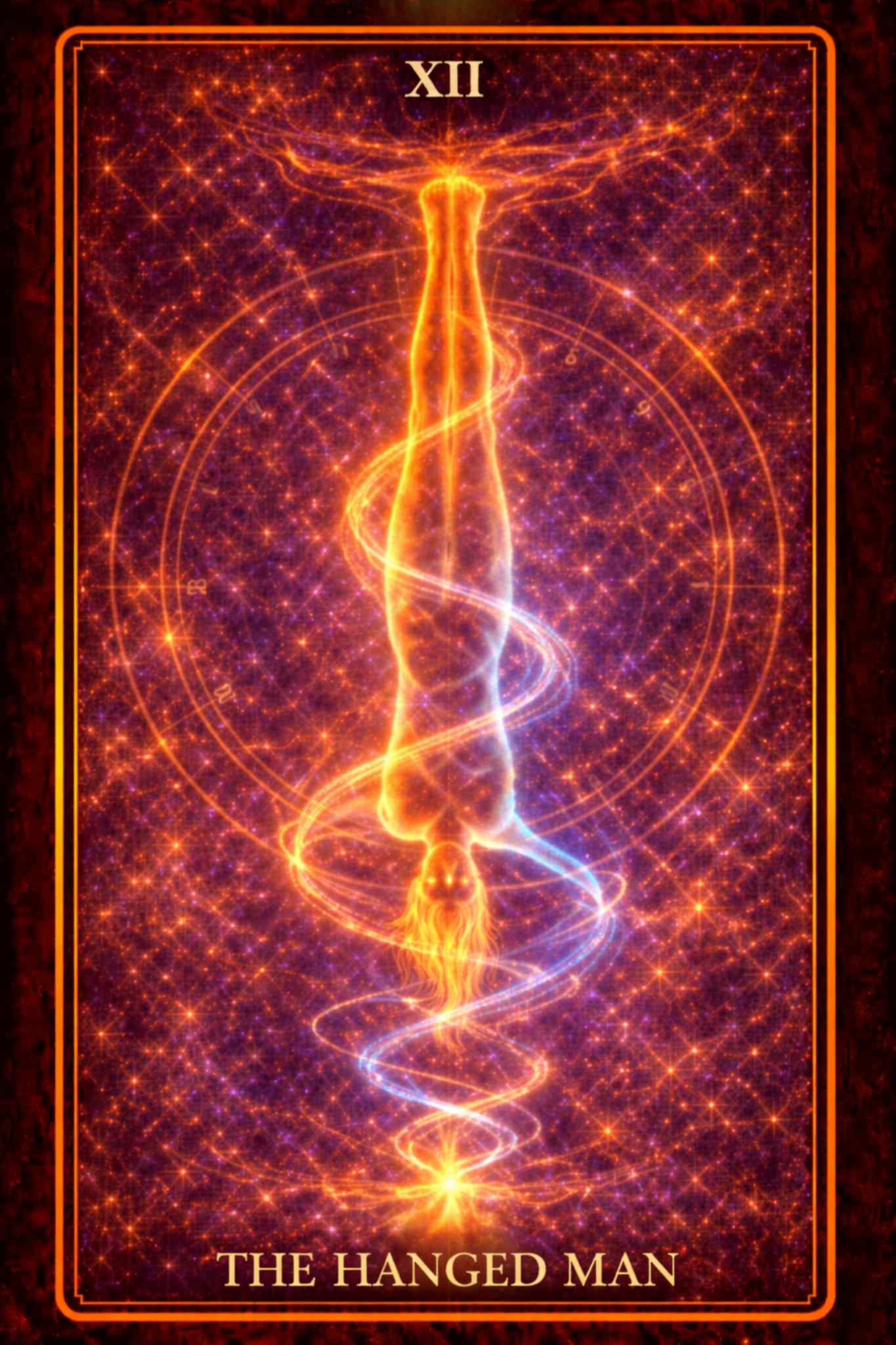
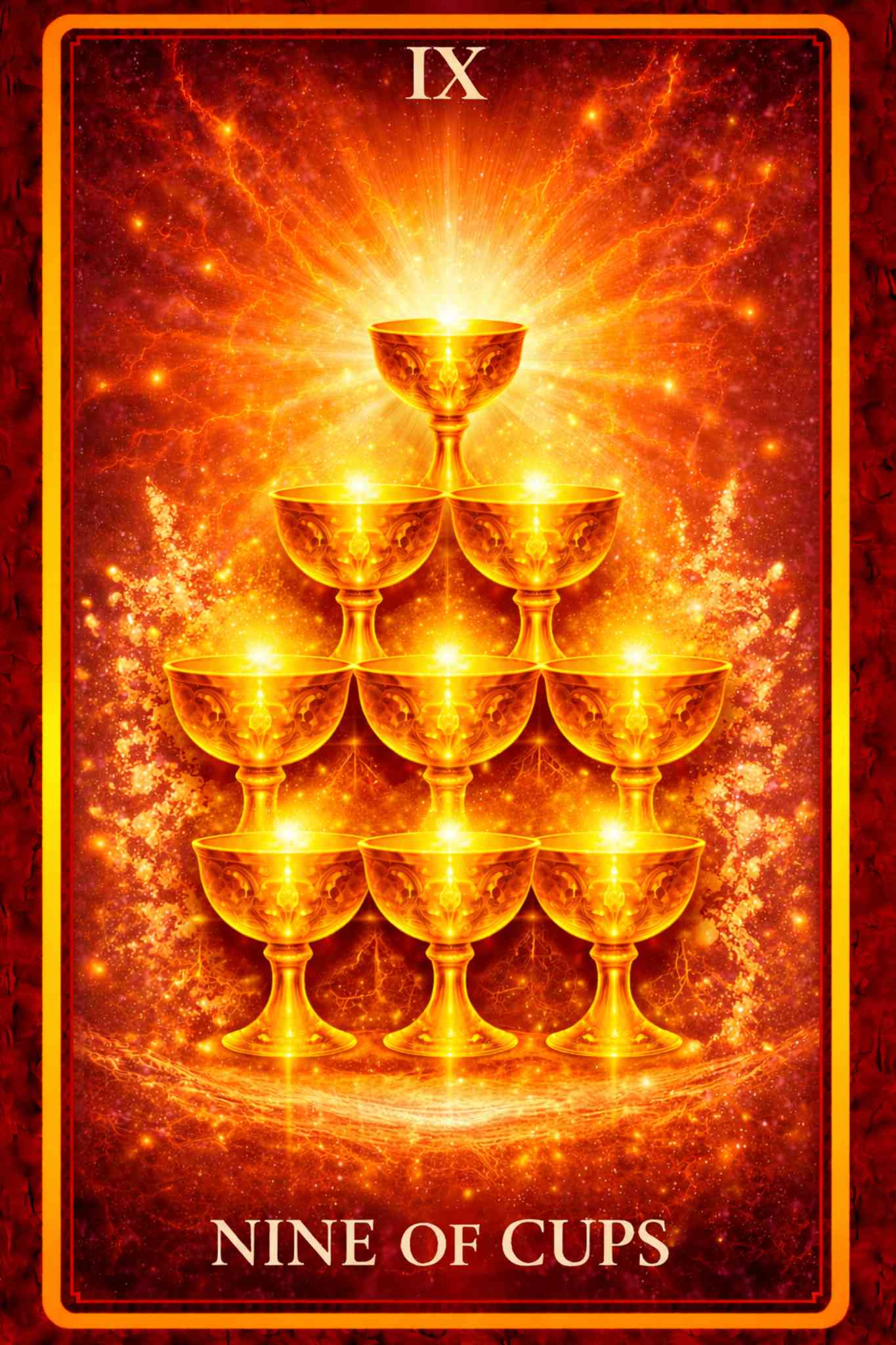
The Hanged Man and Nine of Cups tarot combination meaning
The Hanged Man and Nine of Cups is a pairing about the inner weight of fulfillment, the strange seriousness that can arise when something finally feels good and the heart realizes that pleasure alone does not explain why it matters. The Nine of Cups is often associated with satisfaction, enjoyment, comfort, and the emotional glow that comes when desire seems to meet reality in a pleasing form. The Hanged Man enters that glow and changes its depth. Instead of letting fulfillment remain a simple reward, it introduces stillness inside it, as though the soul wants to look at satisfaction from the inside rather than merely enjoy its surface. This is what gives the combination its distinct tone. It is less about getting what you want and more about understanding what your wanting has been built around all along.
There is something unusually reflective in this pair because it does not treat happiness as self-explanatory. The Nine of Cups can certainly bring pleasure, relief, or the sense that life has briefly aligned in a gratifying way. Yet The Hanged Man asks whether gratification and truth are fully the same. It slows the instinct to label a pleasant emotional state as final simply because it feels welcome. The person may discover that satisfaction carries layers: one layer answers a wish, another reveals what that wish was compensating for, and another quietly asks whether what feels full is also spiritually stable. This makes the pairing much richer than a simple card of reward beside a card of delay. It becomes a meditation on how emotional fulfillment changes once it is observed with patience.
That is why the pairing can feel so subtle and so mature. Many tarot combinations ask whether something is working, arriving, leaving, or changing. This one often asks whether what has already arrived is being understood deeply enough. A person may be in a state of comfort, validation, affection, or emotional success, yet feel an inward pause that they cannot easily explain. The Hanged Man does not come in to ruin the moment. It gives the moment depth. It suggests that what has been gained, received, or enjoyed may be part of a wider inner turning. Sometimes fulfillment reveals the soul. Sometimes it reveals the limits of what the soul once thought it needed. In either case, the pleasure is real, but it is no longer shallow.
When contentment becomes a question
The Nine of Cups often carries the warm atmosphere of emotional ease. There may be satisfaction in a relationship, personal progress, a wished-for result, or simply the feeling that something currently fits in a pleasing way. The Hanged Man changes the direction of attention. Instead of asking how to preserve the good feeling immediately, it asks what the good feeling is showing. This is a different kind of emotional intelligence. The person stops relating to contentment only as an experience to maintain and begins to see it as information. What has actually been fulfilled here? What part of the self is resting, and what part is waking up because the old hunger has finally quieted enough to be examined?
That shift matters because many desires remain mysterious even after they are met. A person may spend years wanting a certain relationship, emotional atmosphere, or confirmation of worth, only to discover that satisfaction opens a second layer of truth. The first layer says, “This feels good.” The second says, “Why did I need this so much?” The Hanged Man makes that second layer visible. It suspends the easy flow of gratification just long enough for the person to see whether fulfillment is rooted in alignment, compensation, relief, vanity, healing, or some subtle mixture of all of them. The Nine of Cups provides pleasure. The Hanged Man makes pleasure transparent enough to become meaningful.
This is why the combination can feel unexpectedly spiritual even when the surface situation seems simple. Emotional enjoyment is often treated as the end of the story, yet these cards suggest that pleasure can become a doorway to deeper self-knowledge. Once the heart stops struggling for what it wants, it becomes able to see what wanting has been organizing inside the self. That is an intimate moment. It may reveal an old emptiness, a new wholeness, or a quiet realization that what once seemed ultimate is actually only one layer of the inner life. The pairing remains warm, but its warmth carries reflection inside it.
Love and emotional fulfillment
In love readings, The Hanged Man and Nine of Cups often speaks of a connection that feels emotionally rewarding yet asks for a more thoughtful kind of presence. There may be comfort, chemistry, affection, emotional pleasure, or the simple relief of being with someone who feels easy to enjoy. The Nine of Cups brings that sweetness readily. The Hanged Man slows the instinct to take sweetness at face value. It does not diminish what feels good, but it asks what kind of depth the pleasure rests on and whether the emotional satisfaction is opening a deeper truth about the relationship rather than merely flattering present desire.
This can create a very nuanced love reading. A person may feel happy, chosen, desired, or emotionally fed, while also sensing that something important is still ripening underneath the visible enjoyment. The relationship may be genuinely fulfilling, but the cards ask whether it is also changing the person’s perspective on intimacy, need, and emotional sufficiency. Sometimes the deeper lesson is beautiful. The person realizes they no longer need to chase intensity because a steadier form of satisfaction has become possible. At other times, the lesson is more complex. The person may notice that what feels good is real, yet still partially shaped by the fulfillment of an old wound rather than by complete inner freedom.
This is where a comparison with radiant perspective can be illuminating. Both combinations can carry emotional warmth and a sense of inner opening, but the tone is different. The Sun tends to radiate clarity outward. Nine of Cups is more intimate, more private, more tied to personal satisfaction and the inward experience of emotional reward. The Hanged Man deepens both, yet here it does so by asking what satisfaction means when it is no longer only enjoyed but examined. That distinction gives the love reading greater maturity. The connection may feel good, but the cards suggest that its deeper significance depends on what that goodness is teaching the heart.
For readers exploring how present fulfillment interacts with deeper values, a resource like the horseshoe spread can be especially useful. It helps place the current emotional satisfaction within a larger sequence of influences, making it easier to see what led to this point, what is supporting it now, and what it may still be asking the person to understand. That suits this pairing well, because these cards rarely speak only about the immediate feeling. They speak about the emotional architecture beneath the feeling as well.
The wish behind the wish
One of the deepest themes in this pairing is the difference between the visible wish and the hidden wish beneath it. The Nine of Cups is often linked with desires fulfilled, yet desires are rarely as simple as they appear. People want love, approval, comfort, peace, sensuality, emotional safety, or a sense of being blessed, but beneath each want there is often a quieter longing shaping the whole experience. The Hanged Man reveals that deeper layer. It asks whether the visible fulfillment is answering the true hunger or only its nearest emotional form. This can be profoundly clarifying. A person may realize that what they thought they wanted was actually a doorway to something more essential, such as worthiness, rest, self-trust, or a more peaceful relationship with desire itself.
You may also want to go one step deeper.
The Hanged Man + Nine of Cups can open up differently inside a focused personal reading.
That is one reason the pairing can feel unexpectedly moving. The heart may receive what it has asked for, yet instead of ending the story, the satisfaction softens the inner defenses enough for an older truth to appear. The person begins to see that some of their longing was never only about the object of desire. It was about what the desired thing seemed to promise: relief, arrival, recognition, healing, belonging, proof that life could still become sweet. The Nine of Cups brings the sweetness. The Hanged Man asks whether sweetness alone is the final teaching or whether it has opened the door to a more honest understanding of the self.
This deeper layer is part of what keeps the combination from becoming shallowly celebratory. The cards do not say, “You have what you wanted, so all is complete.” They say, “Now that you have tasted what you wanted, what do you see more clearly?” Sometimes the answer is gratitude. Sometimes it is humility. Sometimes it is the realization that fulfillment, once achieved, becomes less about possession and more about interpretation. That is the quiet wisdom of the pair. Satisfaction becomes real wisdom only when the person lets it reveal what it has been standing in for emotionally and spiritually.
Spiritual meaning and inner receptivity
Spiritually, The Hanged Man and Nine of Cups can describe a moment when enjoyment becomes contemplative rather than compulsive. The Nine of Cups often carries the pleasure of having enough, or at least having something that feels richly affirmative in the moment. The Hanged Man blesses that experience with pause. It asks the person to remain inside the satisfaction long enough that it becomes more than appetite answered. This can be a deeply spiritual discipline. Many people know how to long. Fewer know how to receive fully without immediately grasping, repeating, or turning their satisfaction into a new demand. The Hanged Man teaches the art of staying present inside the fulfilled moment without trying to turn it into permanent control.
This inward receptivity can reveal a great deal. A person may discover that their satisfaction deepens when they stop clutching it and allow it to breathe. They may also realize that some forms of fulfillment are less stable than they first appeared, because they depend too heavily on outer validation, comfort, or emotional self-congratulation. The Hanged Man is especially important here because it transforms pleasure into perspective. It does not condemn delight, yet it asks whether delight is connected to deeper alignment. In this way, the pair becomes spiritually refining. It teaches that true fulfillment is not measured only by how good something feels, but by what kind of inner truth it awakens and whether that truth remains intact when the emotional glow settles.
This layer can also be illuminated through sacred suspension, especially where the pause itself becomes spiritually meaningful rather than frustrating. The Hanged Man in spiritual contexts often asks for surrender of mental certainty and deeper trust in what becomes visible through stillness. Joined with Nine of Cups, that stillness enters the realm of emotional reward and asks a piercing but beautiful question: can pleasure become a path of awakening rather than merely a place of rest? For some, this is exactly the lesson. The soul learns that fulfillment is most illuminating when it is received with awareness, not just consumed with relief.
When enough is still unfolding
Another important dynamic in this pair is the recognition that “enough” can be true in one sense and still incomplete in another. The Nine of Cups often suggests emotional sufficiency. Something feels good, something works, something satisfies. The Hanged Man does not argue with that. It reveals that enoughness can still be in process. A person may be genuinely content and still at the beginning of understanding what that contentment means for the next stage of life. They may be emotionally fed and still discovering whether the form of their satisfaction belongs to a temporary season, a deeper calling, or a transitional answer that will itself evolve. This makes the combination especially subtle. It respects fulfillment while refusing to freeze it into a final label too quickly.
This is one reason the pair can be deeply reassuring without becoming simplistic. It allows a person to enjoy what is good without demanding that enjoyment immediately justify the future. The Hanged Man supports that kind of emotional maturity. It says that something may be beautiful and real without needing to become the whole story in one moment. The Nine of Cups welcomes that truth because it is, at its best, a card of receiving what is available with warmth and gratitude. Together, they create a field in which fulfillment is honored, studied, and softened into wisdom rather than inflated into absolute certainty.
A related perspective can be seen in blessed contentment, where satisfaction is viewed through a framework of meaning, value, and established truth. That pairing leans more clearly toward form, blessing, or traditional structure. The current combination is more introspective. The Hanged Man takes the joy inward and asks what happens when fulfillment is no longer evaluated through approval or visible completion, but through the soul’s quieter relationship to what feels sufficient now. That shift makes the satisfaction less performative and more intimate.
Yes or no, desire and discernment
The Nine of Cups is often associated with an affirmative tone, especially in simplified reading systems where pleasure and fulfillment are easily translated into agreement or success. Yet The Hanged Man complicates that response in a wise way. It does not necessarily reverse the positivity, but it slows it. The question becomes less “Is this a yes?” and more “What kind of yes is this, and what still needs to be seen inside it?” That difference matters because emotional satisfaction can sometimes make people rush into conclusions before the deeper implications are understood. The Hanged Man insists that even good answers deserve contemplation.
This is where fulfilled answer can add useful nuance. Nine of Cups often carries a naturally favorable tone, yet the Hanged Man reminds the reader that affirmation without perspective can easily become assumption. A pleasing outcome may still contain complexity, and a satisfying answer may still be part of a larger internal lesson. This does not weaken the card. It strengthens it by preventing surface gratification from becoming the whole interpretation. The person is being invited to enjoy what feels like a yes while remaining open to the deeper truth that the yes may still be unfolding.
Explore the next layer of this reading.
This combination can mean different things depending on context. A short tarot reading can help you reflect on the question behind the cards.
Where fulfillment becomes wisdom
The Hanged Man and Nine of Cups ultimately describes a form of emotional satisfaction that deepens through reflection instead of ending there. The pleasure is real. The relief, comfort, warmth, or wish-fulfillment may be fully present. Yet the pairing suggests that the deeper value of the moment lies in what becomes visible when the person remains present inside that satisfaction without immediately closing the story around it. This is where fulfillment becomes more than gratification. It becomes a mirror, a spiritual pause, and sometimes a gentle revelation about what the heart has truly been seeking all along.
That is why this combination feels so distinctive. It does not oppose joy, and it does not dissolve contentment into doubt. It invites a more conscious relationship with having, receiving, and enjoying. The Hanged Man asks for stillness inside the wish fulfilled. The Nine of Cups answers with emotional richness that is ready to be seen more clearly. Together they form a reading about sufficiency that is still ripening into understanding, about delight that carries self-knowledge inside it, and about the quiet moment when the heart realizes that getting what it wanted may be only the beginning of seeing why it wanted it at all.
More combinations with The Hanged Man
More combinations with Nine of Cups
Continue with The Hanged Man
Explore Related Guides by Topic
If you want to explore this combination through a more specific emotional lens, these tarot guides can help you follow the broader pattern behind the reading.