
The Emperor + Seven of Wands
Explore how these two tarot cards interact in a reading through symbolic overlap, contrast, and shared narrative. Tarot combinations often reveal meaning that neither card fully expresses on its own.
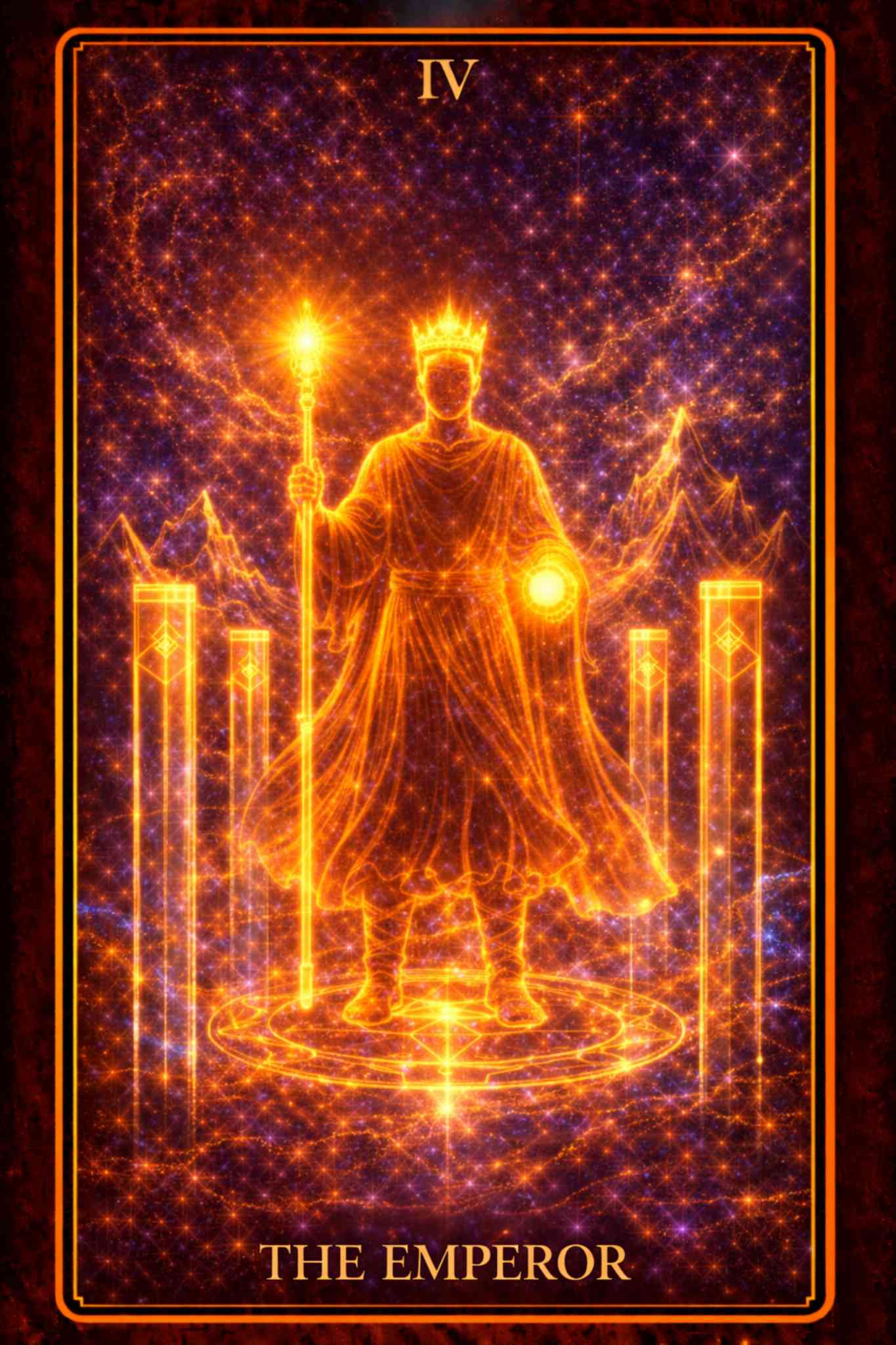
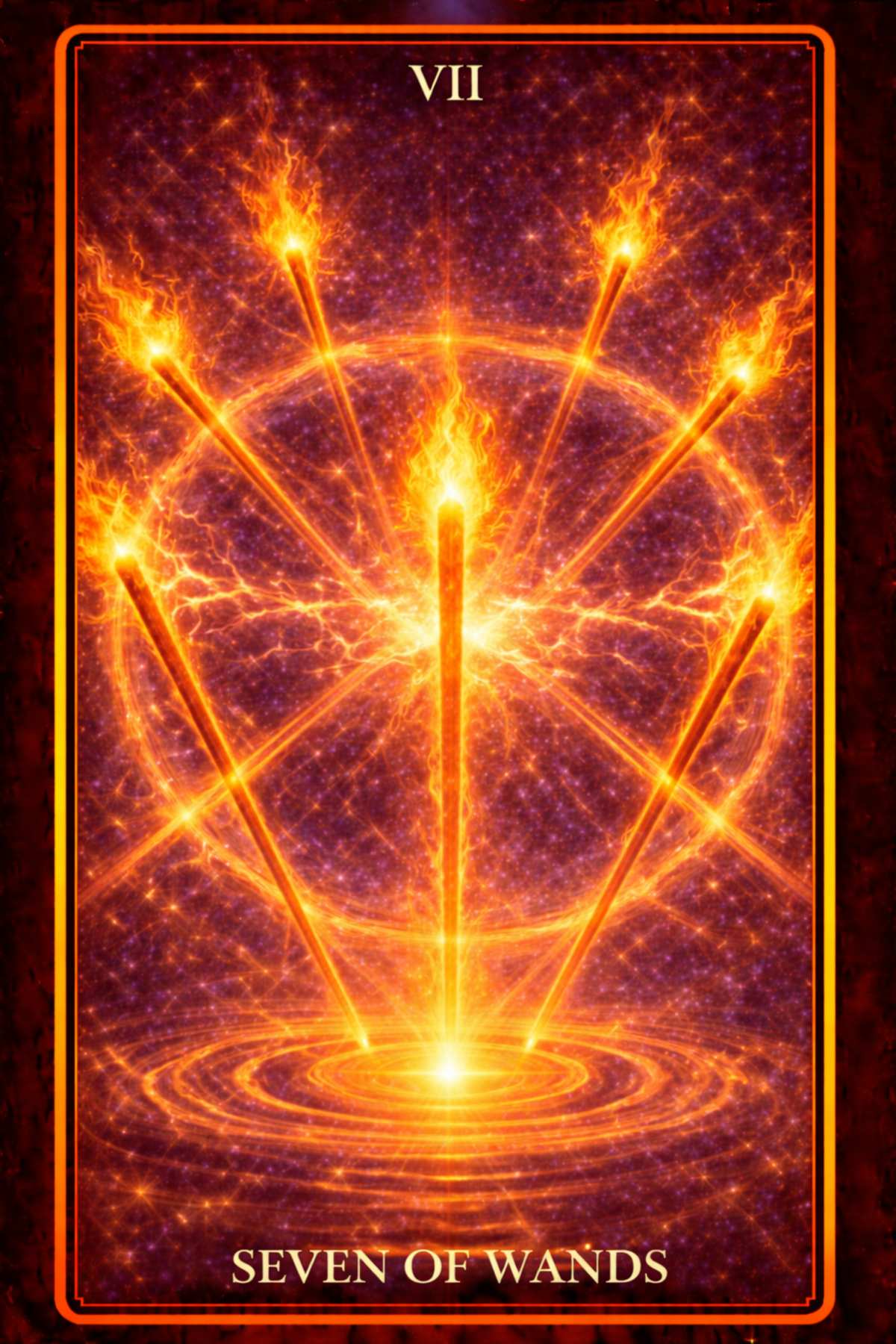
The Emperor and Seven of Wands Tarot Combination Meaning
Some forms of strength are easy to admire because nothing is actively pressing against them. A person appears composed, a system looks stable, a boundary seems clear, and from the outside it can all feel settled enough. But not all stability has been tested. The Emperor with Seven of Wands belongs to the stage where stability is no longer theoretical. Pressure arrives. Resistance forms. Competing forces push upward. Questions sharpen. What seemed solid in quiet conditions must now show whether it can remain solid under strain. This combination does not describe the first building of power. It describes what happens after a position has already been claimed and must now be held.
The Emperor represents structure, order, responsibility, hierarchy, rules, and the discipline required to create a real center rather than a temporary appearance of control. He is not simply “authority” in a shallow sense. At his best, he is the principle that says some things must be held together deliberately or they will dissolve. The Seven of Wands represents challenge, pressure, opposition, defended ground, and the reality that once a position exists, it will not remain untested forever. Others push. Circumstances push. Fear pushes. Doubt pushes. Existing authority becomes visible precisely because something is now pushing against it. Together, these cards describe a phase where boundaries are no longer just declared. They must be actively maintained.
Core meaning of The Emperor and Seven of Wands
At the core of this tarot combination is defended legitimacy. That phrase matters more than defended control. Control alone can be brittle. It can demand compliance without deserving trust. The Emperor, in his stronger form, is not merely trying to dominate the field. He is trying to create a structure that can actually hold. The Seven of Wands asks whether that structure has enough integrity to withstand resistance without collapsing into either passivity or aggression. This is why the combination often appears when someone must protect what they have built, justify a standard through action rather than image, or remain aligned with a necessary boundary even when pressure keeps trying to wear it down.
Want to explore this combination in a more personal way?
If this pairing feels important right now, a simple tarot spread can help you reflect on it with more context.
This can show up in practical, emotional, and psychological ways. A leader has to defend an important decision even when others dislike it. A person finally establishes a healthier boundary and then discovers how much resistance that boundary triggers. A relationship reaches the point where vague good intentions are no longer enough and the real architecture of respect must be tested. A creative or professional identity becomes defined enough that it begins attracting challenge, comparison, or pushback. In each of these cases, the issue is not simply whether pressure exists. The issue is whether what is being defended is actually sound.
What this pairing is not about
This is not a simple message about fighting harder. It is not saying that every challenge proves you are right. It is not glorifying endless combat. It is not suggesting that authority becomes wise merely because it refuses to bend. The Emperor with Seven of Wands is more demanding than that. It asks whether what you are protecting has earned the right to be protected in its current form. Some boundaries are essential. Some are ego walls. Some standards create order. Others simply preserve control. The Seven of Wands does not flatter. It reveals where pressure is landing, and pressure has a way of exposing the difference between principled firmness and anxious defensiveness.
This distinction is part of what gives the combination its depth. The Emperor often wants a stable order. The Seven of Wands asks whether that order has become strong enough to hold complexity, or whether it begins to panic whenever resistance appears. If resistance automatically feels intolerable, the authority may be more fragile than it first appears. If resistance is met with clarity, proportion, and disciplined steadiness, then the structure may in fact be legitimate. The cards together ask for the second kind of strength, not the first.
Pressure as a revealer of truth
One of the central lessons in this pairing is that pressure does not only threaten structures. It reveals them. It shows where a person is steady and where they are merely performative. It shows where a relationship has real respect and where it was surviving on easy conditions. It shows whether a role is being inhabited responsibly or only worn as an identity. The Seven of Wands is uncomfortable precisely because it removes the luxury of abstraction. You cannot say you value boundaries in theory; now the boundary must stay intact when someone pushes against it. You cannot say you are a leader in theory; now your leadership must remain coherent when your authority is questioned. You cannot say you know what matters; now you must continue to protect it even when that protection becomes tiring.
The Emperor belongs to this stage even if he does not enjoy it. He understands that the worth of a structure is proven by what it can endure without losing its center. Yet endurance alone is not enough. A structure can endure for the wrong reasons too. It can endure because it suppresses, dominates, or refuses all feedback. So the deeper challenge here is subtler: can you stay firm without becoming closed, and can you remain open without letting the line collapse entirely? That is the mature form of defended authority.
There is also fatigue inside this combination, and that is worth naming honestly. Sometimes the difficulty is not dramatic conflict but repetition. The same standard has to be maintained again. The same pressure returns. The same boundary has to be reinforced. The cards do not pretend that this is glamorous. They suggest that persistence itself is part of the test. Not every important act of strength feels inspiring while it is being lived.
The Emperor and Seven of Wands in love and relationships
In relationship readings, this pairing often indicates a bond under pressure from questions of boundary, respect, role, or emotional territory. There may be competing needs, a clash in expectations, or the sense that one or both people are trying to hold their ground rather than relax into easy agreement. That does not automatically mean the relationship is failing. It may simply mean the bond has entered a more real stage, where its internal structure is being tested rather than imagined.
The Emperor in love does not naturally symbolize chaos. He wants stability, consistency, standards, and clear commitment to what is being built. The Seven of Wands introduces friction into that field. A partner may feel the need to defend their time, their emotional space, their dignity, or their sense of self. The relationship may also be under outside pressure, practical strain, or differing views on how the partnership should be organized. What matters most is whether both people can engage the tension without turning the bond into a permanent contest.
In a healthier expression, this pairing can describe strong boundaries, honest disagreement, mutual respect, and the ability to remain committed without collapsing into constant struggle. In a more difficult expression, it can slide into defensive postures, rigid enforcement of roles, power struggles disguised as clarity, or the exhausting feeling that the relationship must always be guarded rather than simply lived. The grounded reading here is not absolute. It says something more useful: the relationship is showing where its structure is being tested. If the foundation is sound, pressure may strengthen it through honesty. If the foundation is weak, the pressure may reveal where repair, humility, or reevaluation is needed.
The Emperor and Seven of Wands in work, leadership, and reputation
In professional life, this pairing is especially strong for situations involving defended standards, leadership under challenge, and the strain of holding a position that others may question or compete with. A manager may be trying to maintain order in a noisy environment. A founder may be defending a vision that now faces internal or external pushback. A person in authority may be discovering that visible leadership naturally attracts scrutiny. This is not incidental. The more defined the role becomes, the more likely it is to be tested.
The Emperor here is not just about rank. He is about responsibility for a structure larger than immediate personal comfort. The Seven of Wands asks what happens when that structure is challenged repeatedly. Can you keep standards without becoming tyrannical? Can you defend what matters without exhausting yourself by treating every disagreement as a threat? Can you distinguish meaningful pushback from background noise? These are leadership questions, not just emotional questions, and the pairing often appears when those distinctions need to become sharper.
There is also a quieter professional meaning here: sometimes success itself creates the pressure. Once your work, voice, role, or perspective becomes defined enough to matter, it also becomes easier for others to compare, resist, project onto, or compete with. The Seven of Wands is often the card of having to maintain position because position now exists. The Emperor asks whether you can do that with discipline rather than paranoia, and with consistency rather than overreaction.
The deeper paradox: authority must resist, but cannot live only in resistance
One of the most important paradoxes in this combination is that authority sometimes must defend itself, yet if it becomes obsessed with defense, it begins to deform. A boundary that is never enforced is not a real boundary. A structure that yields to every pressure is not a structure. But a person who lives in constant battle mode loses proportion. They begin treating every challenge as equal, every disagreement as threat, every demand as invasion. The Emperor with Seven of Wands therefore asks for something more refined than toughness. It asks for measured defense.
This means staying connected to purpose. What exactly are you defending? Why does it matter? What would be damaged if you abandoned it? What would be damaged if you defended it in the wrong way? These questions prevent the pairing from becoming simplistic. They shift it away from ego and back toward legitimacy. Not everything deserves your full force. Not every challenge requires your presence. Not every pressure carries the same meaning. The wisdom here lies in knowing what must hold and refusing to waste strength where no real principle is at stake.
That restraint matters because otherwise the entire field becomes organized around opposition. And once that happens, even valid authority begins to lose its shape. It starts reacting more than governing. The Emperor is strongest not when he attacks every challenge, but when he remains clear enough to know which ones actually deserve an answer.
The Emperor and Seven of Wands in personal growth
On an inner level, this combination often appears when you are trying to stabilize a more mature version of yourself, but older habits, fears, reflexes, or loyalties continue pressing against that effort. You may have made a clear decision. You may know what kind of life, standard, or boundary you want to keep. Yet maintaining it is harder than declaring it. The Seven of Wands shows that inner resistance. Part of you wants the structure. Another part resists its implications. You may feel tired of having to keep saying no, keep protecting your time, keep refusing the same old compromise. But that repetition is often part of integration.
The Emperor here is the part of the self that takes responsibility for inner order. Not perfection, and not coldness, but order. The Seven of Wands is the pressure that asks whether your inner authority is mature enough to keep going when discipline stops feeling glamorous. This can be especially relevant in healing work, habit change, emotional recovery, or any phase where healthier patterns are being established but not yet fully natural. The cards do not condemn the difficulty. They name it. That naming matters. It helps distinguish between “this is hard” and “this is wrong.” Quite often, the pairing means the former.
Shadow side of The Emperor and Seven of Wands
The shadow side appears when defended authority turns into brittle control. An unbalanced Emperor may begin to interpret all resistance as disrespect. An unbalanced Seven of Wands may become chronic vigilance, exhaustion, and the inability to rest even when no true danger is present. Together, these distortions create a life organized around perpetual defensiveness. The person becomes harder, but not wiser; stricter, but not stronger. Boundaries are maintained, but sometimes at the expense of proportion, trust, or humanity.
This can look like a leader who cannot accept feedback, a partner who confuses emotional control with stability, or a person who has become so used to protecting themselves that they no longer know how to soften without feeling exposed. In these moments, the pairing warns that pressure has begun to overdefine identity. The answer is not to abandon boundaries. It is to rebuild them on deeper legitimacy, so they do not require constant aggressive maintenance in order to feel real.
The shadow is not having boundaries. The shadow is becoming so identified with defending them that you forget why they exist.
Ready to see how this applies to your situation?
A focused tarot reading can help you explore how The Emperor + Seven of Wands may reflect your current situation, not just the general meaning of the cards.
Closing reflection
The Emperor and Seven of Wands describe a phase where what has been built is now being tested by pressure, challenge, or repeated demand. That can feel tiring, but it is also clarifying. It shows whether your authority is rooted, whether your boundaries are real, and whether your structure can remain standing without losing dignity when resistance appears.
The most grounded response is not louder control, and not surrender. It is firm, intelligent steadiness. Protect what actually matters. Refuse what would destabilize the core. Stay open enough to learn, but not so open that the center collapses. When this combination is lived well, it becomes a sign of legitimate strength: not power for display, not defense for ego, but responsible authority capable of holding its ground because there is something real worth holding.
More combinations with The Emperor
More combinations with Seven of Wands
Continue with The Emperor
Explore Related Guides by Topic
If you want to explore this combination through a more specific emotional lens, these tarot guides can help you follow the broader pattern behind the reading.