
The Emperor + Nine of Wands
Explore how these two tarot cards interact in a reading through symbolic overlap, contrast, and shared narrative. Tarot combinations often reveal meaning that neither card fully expresses on its own.
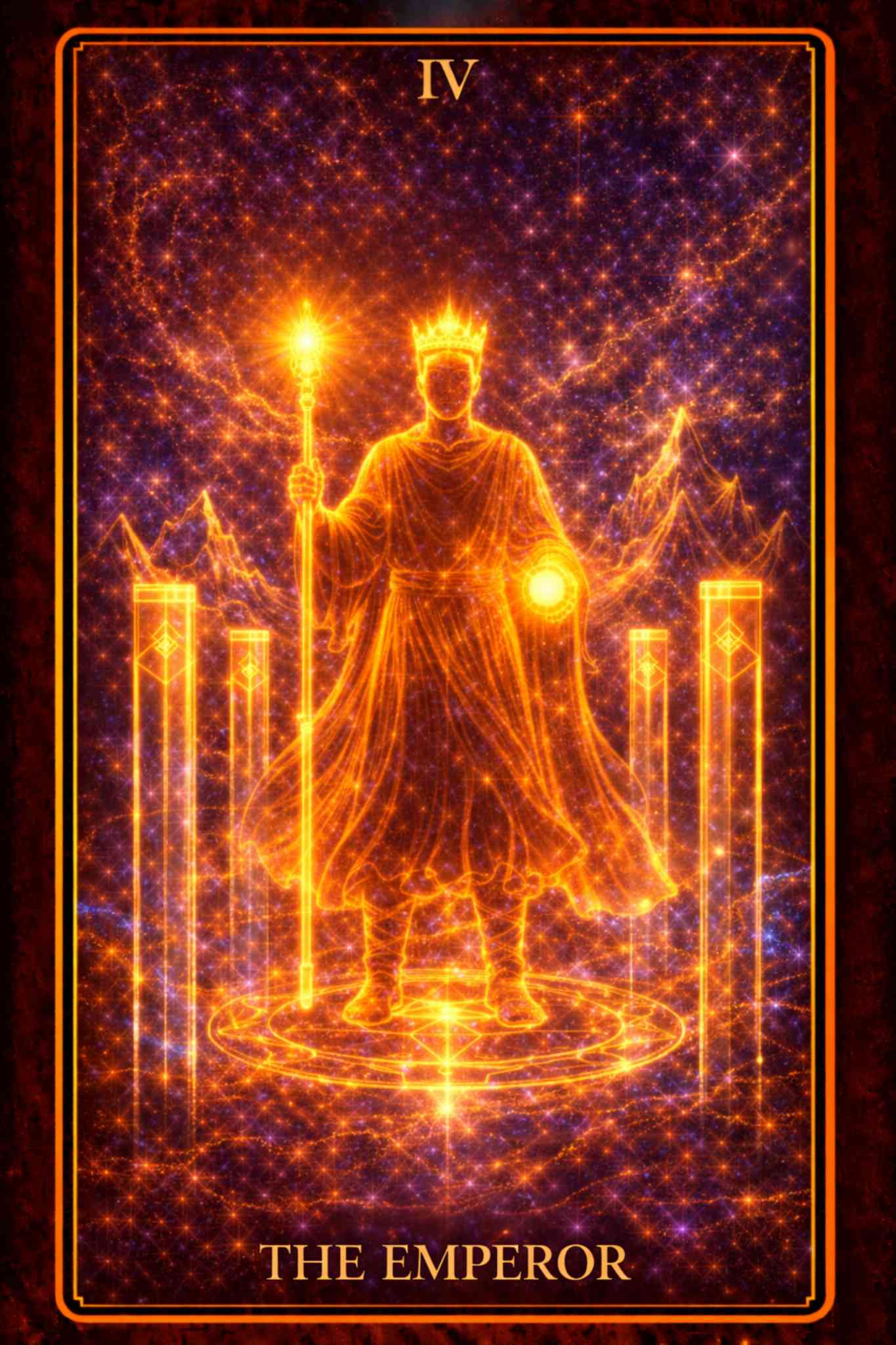
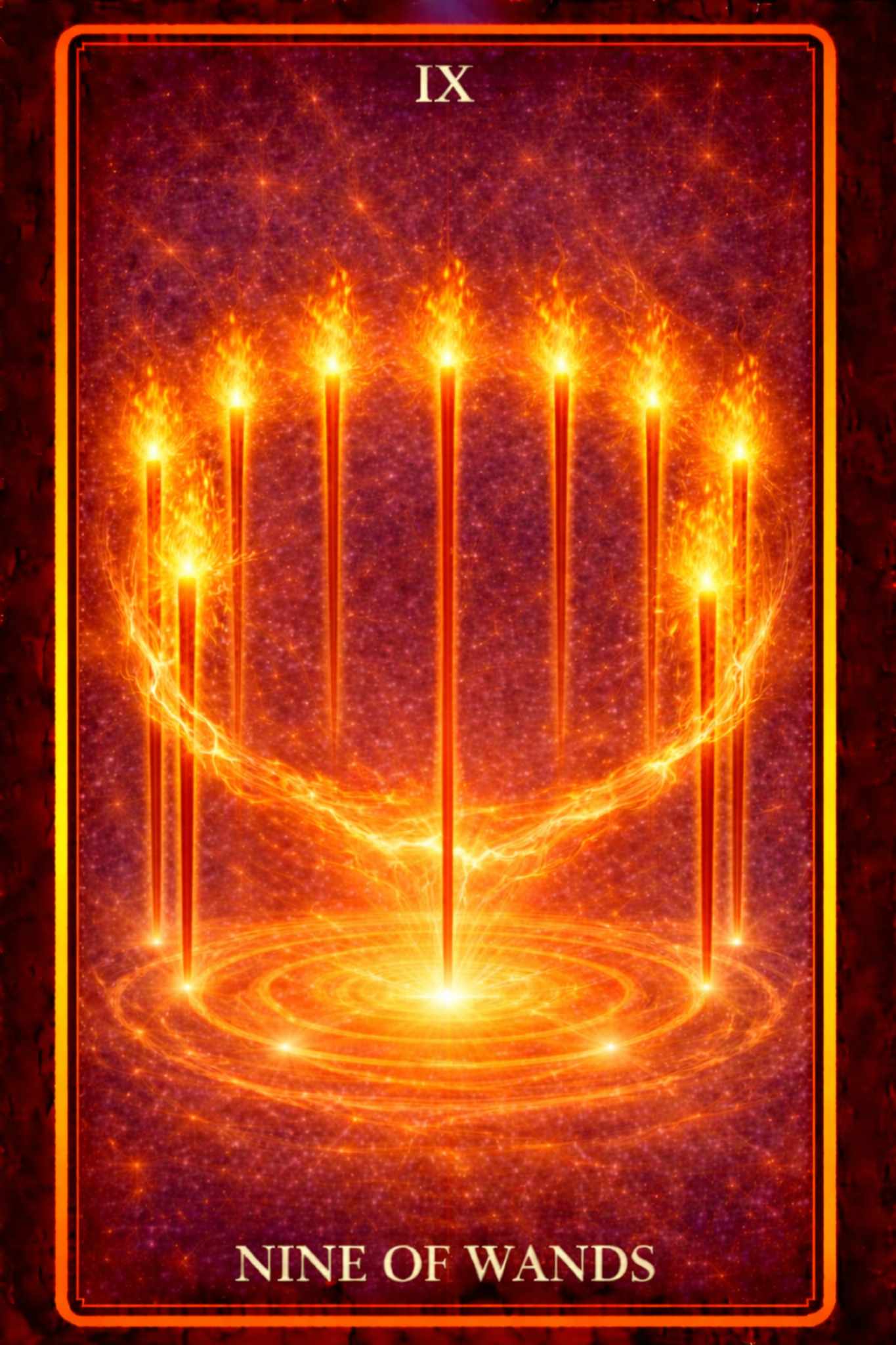
The Emperor and Nine of Wands Tarot Combination Meaning
There is a kind of strength that becomes almost invisible because it no longer looks like momentum, victory, or visible progress. It looks like continuation. It looks like still being there. It looks like holding the line after the dramatic part is already over, when something has been built, tested, and required effort for longer than anyone expected. The Emperor with Nine of Wands belongs to that stage. It describes a phase where the question is no longer whether something can begin, and not even whether it can survive the first challenge, but whether it can continue without becoming deformed by the strain of carrying itself for so long.
The Emperor represents order, structure, authority, responsibility, and the deliberate act of maintaining what has weight. The Nine of Wands represents endurance, guardedness, accumulated effort, and the knowledge that the process is not fully finished even after a great deal has already been asked of you. Together, these cards create a tone that is quieter than earlier stages of struggle, but no less serious. There is no fresh excitement here. No easy applause. No clean sense of beginning. What remains is the continued act of holding what has already been established, even when the energy to do so no longer feels abundant.
Core meaning of The Emperor and Nine of Wands
At its core, this combination is about endurance within responsibility. The Emperor creates and maintains structure. The Nine of Wands shows what happens when maintaining that structure requires sustained effort over time, without immediate relief or closure. This is not about proving capability for the first time. It is about continuing after multiple tests have already taken place, when the system has held so far but still demands vigilance.
This often appears when someone has already invested heavily into something meaningful. A relationship that has gone through strain but remains intact. A career path that has required years of discipline. A personal standard or boundary that has been hard-won and still needs reinforcement. A family role, leadership position, or life structure that cannot simply be abandoned because fatigue has appeared. The common thread is not difficulty alone. It is duration. This is pressure that has lasted long enough to change how it feels. It is no longer dramatic. It becomes steady, repetitive, sometimes quiet, sometimes exhausting, but still undeniably present.
This is why the combination can feel so mature. It does not ask whether you are capable of intensity. It asks whether you are capable of continuity. And continuity is often the harder test, because it receives less admiration while asking more from the inner structure of a person.
The tension between resilience and exhaustion
One of the most important layers in this pairing is the tension between resilience and exhaustion. The Nine of Wands does not usually indicate collapse. In many cases, it appears precisely because collapse has not happened. The structure has held. The boundary has remained. The person has continued. But the cost of that continuation is becoming visible. Energy is no longer surplus. Action is no longer powered by freshness. What remains is commitment, and commitment feels very different when it has to carry fatigue as well as purpose.
The Emperor does not remove that fatigue. He organizes it. He asks whether what is being maintained is still aligned with something real, or whether the act of maintaining it has become automatic. That distinction matters. There is a difference between holding something because it is meaningful and holding it because it has already been held for so long that letting go feels dangerous, shameful, or unfamiliar. The Nine of Wands can blur that line if the situation is not examined honestly enough.
This is where the combination becomes more subtle than a simple “stay strong” message. It does not glorify endurance for its own sake. It asks what endurance is serving. Is the structure still alive? Is the responsibility still clean? Is the boundary still protective in a healthy way, or has vigilance become a habit that no longer knows how to rest? These are not small questions. They are often the real heart of the reading.
When responsibility starts to feel heavy
There are phases in life where responsibility feels stabilizing. It gives shape. It offers direction. It strengthens self-respect. But there are other phases where the same responsibility starts to feel heavier because the strain has been ongoing for too long. The Emperor and Nine of Wands often appear there, at the point where commitment is real, but so is weariness. The reading does not trivialize that weariness. In fact, it depends on naming it honestly.
Some people become harsher with themselves at this stage. They assume fatigue means weakness, or that if something still matters, they should be able to carry it indefinitely without emotional cost. The cards do not support that fantasy. They suggest that strain changes the inner climate. A person may become more guarded, more vigilant, less trusting of ease, not because they are dramatic, but because they have been braced for a long time. That bracing can protect something important. It can also become its own burden if it is never softened or reassessed.
The deeper wisdom here is not simply endurance. It is conscious endurance. The kind that knows what it is preserving, what it is protecting, and what might need to change so that continuation does not become needless depletion.
The Emperor and Nine of Wands in love and relationships
In relationship readings, this combination often reflects a bond that has endured pressure and continues to exist, but not without cost. There may be history here, shared effort, significant tests, and the unmistakable sense that something real has been built. At the same time, there may be guardedness, subtle defensiveness, or a lingering expectation that difficulty could return at any time. The relationship is not necessarily fragile, but it may not be fully relaxed either.
You may also want to go one step deeper.
The Emperor + Nine of Wands can open up differently inside a focused personal reading.
The Emperor wants stability, clarity, and a framework that can hold commitment with seriousness. The Nine of Wands shows that maintaining that framework has required repeated effort. This can create genuine resilience. It can also create a protective posture that remains active even when it is no longer fully needed. In some relationships, that means both people are still half-braced, still watching for the next disruption, still carrying older strain into the present moment. The bond survives, but survival and ease are not the same thing.
In a healthier expression, the pairing describes loyalty, tested commitment, and the kind of endurance that gives a relationship real backbone. In a more difficult expression, it can become guarded attachment, rigid defensiveness, or a bond that continues more from habit and duty than from a living sense of mutual nourishment. The deeper question is not only whether the relationship has lasted. It is whether it can now become safer, softer, and less organized around vigilance.
This is why the pairing can be so emotionally honest. It does not dismiss what has been built. It respects it. But it also asks whether the structure of the relationship still allows room for openness, or whether both people have become so used to enduring that they no longer know how to settle.
The Emperor and Nine of Wands in work, duty, and long-term responsibility
In practical life, this pairing is strongly associated with sustained responsibility over time. It often appears in roles where consistency matters more than visibility, where systems must keep functioning even when motivation fluctuates, and where leadership becomes less about initiating and more about continuing. This can apply to management, caregiving, long-term projects, institution-building, or any situation where stability depends on steady effort rather than occasional bursts of inspiration.
The Emperor represents the system itself, or the principle that keeps the system standing. The Nine of Wands represents the lived human reality of continuing to carry that system when the effort has become cumulative. This can be admirable, but it can also become heavy in ways that are easy to underestimate. Not everything that has been maintained needs to be maintained forever in the same form. Part of mature authority is recognizing when endurance is still aligned with purpose and when it has quietly turned into chronic strain.
There is often a hidden dignity in this pairing at work. It does not always belong to the most visible success. Sometimes it belongs to the person who kept the structure intact while others came and went. Sometimes it points to the stage where a project, role, or responsibility is no longer exciting, yet still matters deeply. That form of steadiness is real strength. But the cards also ask whether the system is asking too much from the person sustaining it, and whether support, adjustment, or redistribution is overdue.
The deeper lesson: not all strength feels powerful
One of the deepest lessons in this combination is that strength does not always feel energizing. Early strength can feel clear, visible, and even inspiring. Later strength can feel repetitive, quiet, and at times profoundly unglamorous. The Emperor with Nine of Wands speaks to that later form. It is the strength of continuation, of keeping faith with something meaningful when the emotional reward is no longer immediate and the strain is no longer new.
This is where people often misread their own lives. They assume that if something feels heavy, it must therefore be wrong. Sometimes that is true. Sometimes weight is a sign that something is draining life rather than supporting it. But not always. Sometimes the heaviness comes from the simple fact that real things require sustained attention. Real structure needs tending. Real healing needs repetition. Real boundaries need reinforcement. The cards do not tell you to push blindly. They ask you to examine what you are holding, why you are holding it, and whether the continuation still belongs to the life you are consciously trying to build.
The question is not only “Can you keep going?” It is also “What is the quality of the self that is doing the continuing?” If endurance is making you truer, steadier, and more grounded, it may still be aligned. If endurance is making you hollow, permanently braced, or unable to imagine rest, something in the structure may need attention.
The Emperor and Nine of Wands in personal growth
On an inner level, this combination often appears when you have already done a great deal of work to create more order in your life, but that order still requires effort to maintain. Healthier habits have been built, but not fully naturalized. Stronger boundaries exist, but still need reinforcement. Emotional recovery is underway, but old patterns continue pressing at the edges. The Emperor reflects the part of you that knows why the structure matters. The Nine of Wands reflects the fatigue that can come from having to keep choosing it over and over again.
This is not failure. In many cases, it is the middle-to-late stage of real change. The old self is no longer fully in charge, but the new pattern is not yet effortless. That can feel discouraging if you expected maturity to arrive as ease. The cards suggest something more realistic. Sometimes maturity arrives first as steadiness, and only later as relief. The fact that the effort is still effort does not automatically mean the structure is wrong.
At the same time, the pairing asks for self-honesty. Are you protecting a necessary boundary, or are you becoming identified with vigilance itself? Are you continuing because the path still matters, or because stopping would force you to ask difficult questions about what all this endurance has been for? These are serious questions, but they are also freeing ones.
Shadow side of The Emperor and Nine of Wands
The shadow side appears when responsibility hardens into siege mentality. An unbalanced Emperor may become rigid, severe, or so attached to preserving order that flexibility starts to feel like weakness. An unbalanced Nine of Wands may become chronic defensiveness, emotional fatigue, suspicion, or the inability to rest even when the immediate danger has passed. Together, these distortions can create a life built on constant maintenance but lacking renewal.
This can show up as a relationship that survives but no longer breathes, a work role that is sustained at the cost of the self, or an inner life so organized around protection that peace feels unfamiliar. In these cases, the cards do not tell you to abandon everything. They ask whether the structure has become too identified with strain, and whether endurance is still serving something living or only preserving what once mattered.
The shadow here is not endurance itself. The shadow is forgetting to ask what that endurance is in service of.
Want to place this combination into a wider reading?
If this pairing feels close to something you are experiencing, a simple spread can help you reflect on the surrounding energy with more clarity.
Closing reflection
The Emperor and Nine of Wands ask a quiet but serious question: are you continuing because it is still right, or because you have already come this far? The difference is subtle, but essential. One comes from alignment. The other can come from fear, habit, or the inability to imagine releasing what has taken so much effort to hold.
When this combination is lived well, it becomes a sign of mature strength. Not dramatic strength. Not flashy strength. Something steadier than that. It is the strength to continue consciously, to protect what still has integrity, and to recognize when responsibility needs renewal rather than mere repetition. What matters here is not blind persistence. It is whether the structure you are carrying still belongs to the life you are trying to live.
More combinations with The Emperor
More combinations with Nine of Wands
Continue with The Emperor
Explore Related Guides by Topic
If you want to explore this combination through a more specific emotional lens, these tarot guides can help you follow the broader pattern behind the reading.