
Justice + Knight of Cups
Explore how these two tarot cards interact in a reading through symbolic overlap, contrast, and shared narrative. Tarot combinations often reveal meaning that neither card fully expresses on its own.
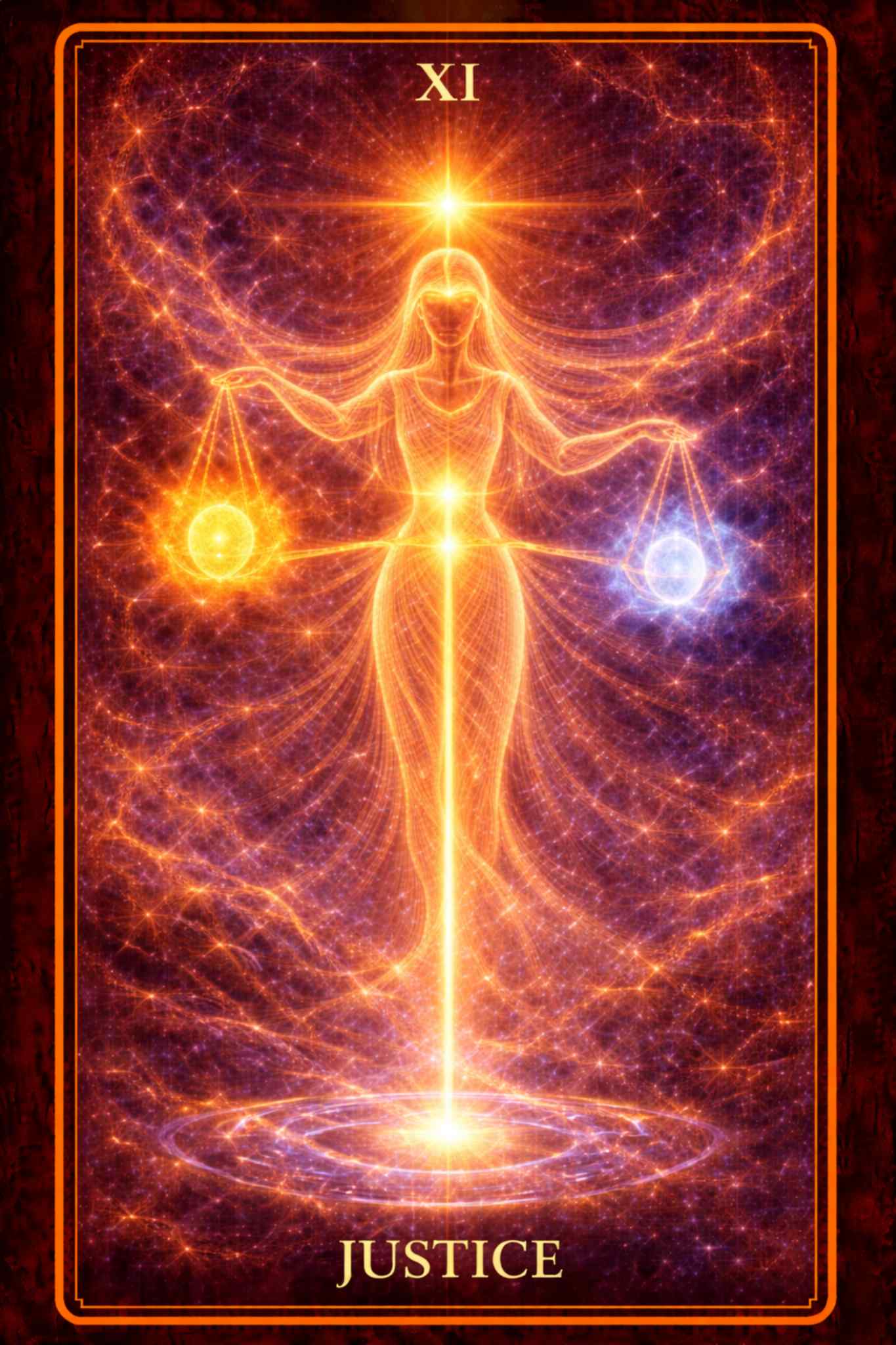
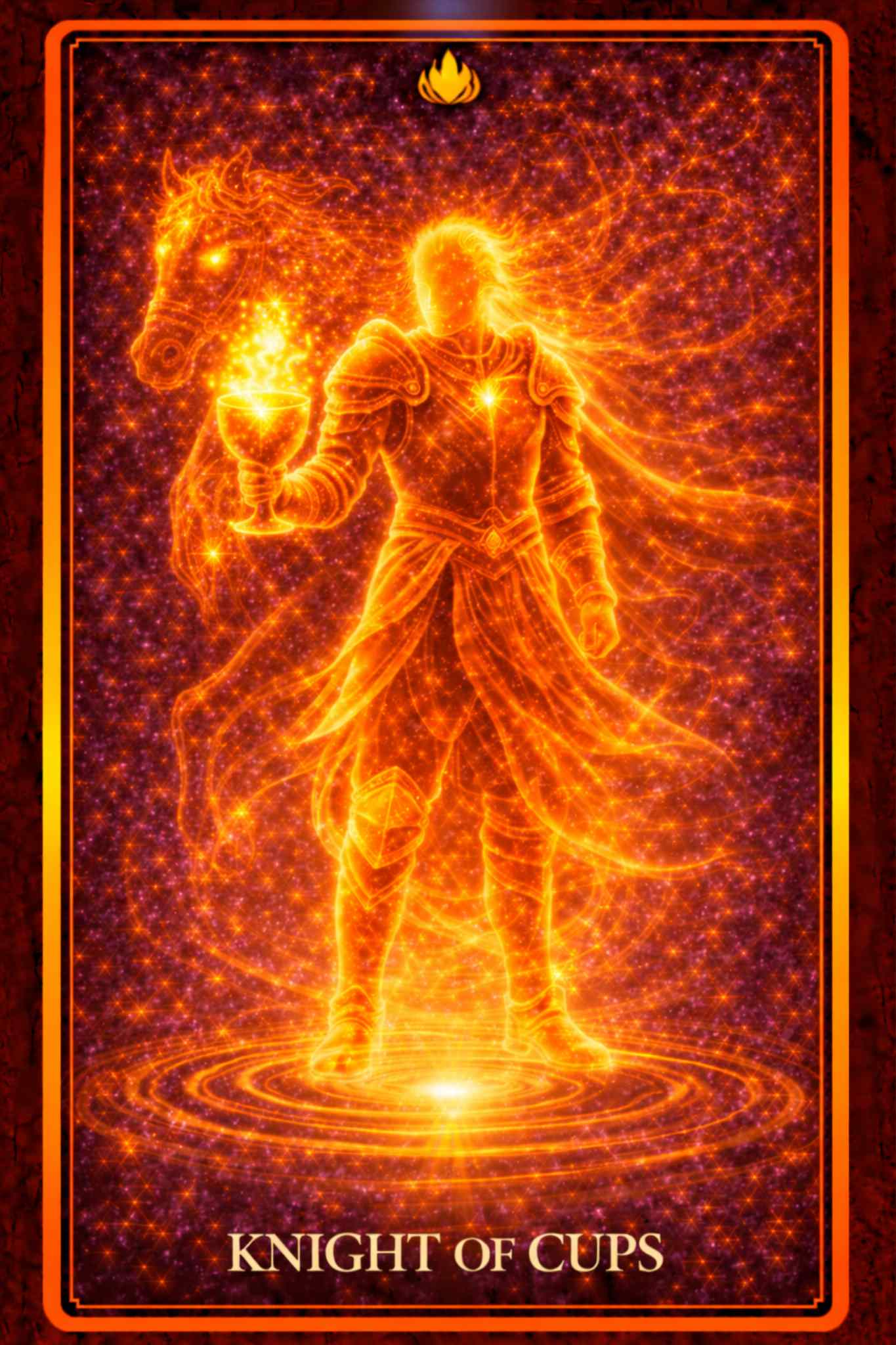
The Justice and Knight of Cups tarot combination meaning
Justice and Knight of Cups is a pairing about romantic movement being tested by reciprocity. The Knight of Cups brings pursuit, emotional invitation, tenderness, longing, charm, and the desire to move toward connection in a way that feels meaningful, intimate, and alive. Justice changes the center of gravity. Instead of asking only whether the feeling is sincere, it asks whether the feeling is capable of entering a balanced relational exchange. Can this emotional movement receive as well as offer? Can it remain steady when another person answers with their own needs, boundaries, pace, and truth? This is what gives the combination its depth. It shifts the focus away from romantic atmosphere alone and toward relational readiness. The heart may be stirred, the gesture may be beautiful, the intention may even be genuine, yet Justice wants to know whether the whole dynamic can hold two realities at once rather than only one person’s emotional current.
This makes the pairing especially nuanced because the Knight of Cups is often strongest in approach. He knows how to feel forward. He knows how to move, imagine, invite, and enchant. What is less certain, depending on context, is how well that movement tolerates equal response. Justice enters here as a card of proportion, exchange, and accountability. It asks whether the romantic energy is prepared for the actual conditions of partnership, where feeling must meet mutuality and longing must become relationally usable. A person may be emotionally expressive, deeply drawn, even earnest in the moment, and still be less ready for shared emotional reality than their gestures suggest. Justice does not flatten the romance. It asks romance to become relationally complete.
There is also a very beautiful possibility here. When the Knight’s movement is healthy and Justice is strong, the combination can describe a form of courtship that is emotionally alive without becoming self-centered. One person reaches, but they also listen. They desire, but they also respond. They bring emotional color, though they do not make the relationship orbit only around their own mood, longing, or fantasy. In that case, the combination becomes one of the most promising in romantic readings, because it suggests that attraction is growing in a way that can actually become shared life. The Knight brings motion. Justice makes that motion fair enough to trust.
When emotional pursuit meets the reality of another heart
The Knight of Cups usually enters a reading when something is moving toward contact. A person may be approaching with affection, romantic interest, apology, invitation, emotional openness, or the wish to create a more intimate atmosphere. Justice asks what happens when that movement encounters another fully real person. This is where the pairing becomes more mature than the Knight alone. It asks whether the emotional offer can remain coherent once another perspective enters the field. Does the pursuit become more grounded as the connection deepens, or does it become unsettled when the other person brings complexity, boundaries, timing, or needs that cannot be absorbed into a perfect romantic script?
This is an important distinction because many people are emotionally generous in motion but less skilled in exchange. They can express. They can yearn. They can make the moment feel charged and beautiful. Yet real relational life requires more than expressive intensity. It requires the capacity to hear, adjust, respond, and remain upright when the emotional field becomes mutual rather than merely aspirational. Justice measures that. It asks whether the person wants a relationship, or whether they are more at home in the feeling of moving toward one. Those are not always the same thing. The Knight often carries emotional courage, though Justice wants to know whether that courage can survive the loss of control that real reciprocity always brings.
A useful contrast can be seen in Justice and The Fool, where emotional movement is tied more closely to openness, risk, and the willingness to step into the unknown without much structure. In Justice and Knight of Cups, the movement is warmer, more relationally charged, and more deliberately directed toward connection, but Justice still asks whether the emotional journey is prepared for what true encounter requires. The difference is subtle but important. The Fool leaps. The Knight approaches. Justice asks what kind of partner arrives when the approach is answered.
Love and relationship meaning
In love readings, Justice and Knight of Cups often points to attraction that is real enough to create movement, though the deeper issue is whether the movement can support mutual relationship rather than remain suspended in romance itself. There may be heartfelt communication, affectionate pursuit, thoughtful gestures, emotional availability, or a sense that one person is genuinely trying to move closer. Justice refines the reading by asking how balanced that approach actually is. Is the other person being heard as clearly as they are being desired? Is the emotional current becoming more reciprocal, or is it still being shaped mostly by one person’s longing, style, and interpretation of what the connection could be?
This is why the combination can be so useful in emerging relationships. Many connections begin with one person carrying more momentum. That is natural. Justice is not demanding perfect symmetry from the first moment. It is asking whether the dynamic is capable of becoming more equal as it grows. Can the Knight slow down enough to understand the other person’s truth? Can the romantic atmosphere remain intact when practical questions enter? Can affection survive clearer definitions, clearer expectations, and clearer timing? When the answer is yes, this combination can describe a bond that begins beautifully and matures honorably. When the answer is less certain, Justice protects the heart from mistaking movement for mutual readiness.
When asking about another person, this pair may suggest that they are emotionally drawn and willing to move toward connection, though they are also being tested by what that movement requires. They may be romantic, sincere, imaginative, and genuinely touched. Yet Justice indicates that the more important question is whether they can carry their own feelings with enough steadiness to create something clean and reciprocal. This often makes the combination more trustworthy than Knight energy alone, because it shows that desire is being asked to grow up into conduct. If you want to compare this with a more clearly structured and relationally established form of emotional meeting, Justice and Two of Cups offers a strong contrast, since that pairing reflects overt mutuality while Justice and Knight of Cups often sits in the transition between pursuit and equal exchange.
For another angle on how this card behaves when romantic movement, intention, and emotional offering are central to the question, the Knight of Cups love meaning adds a very relevant layer. That page helps show how the Knight expresses desire, pursuit, and emotional invitation. In this combination, Justice asks whether the invitation can become something shared and sustainable rather than remain beautiful mainly in approach.
Courtship, responsiveness, and the difference between being moved and being available
One of the most revealing themes in Justice and Knight of Cups is the difference between emotional movement and emotional availability. A person may be deeply moved and still remain only partially available for true relational exchange. The Knight can feel strongly, imagine vividly, and act romantically without yet being fully practiced in shared emotional structure. Justice highlights that difference with unusual precision. It asks whether the person is actually available for the kind of reciprocity their own gestures invite. Are they ready for another person’s equal depth? Are they prepared for a response that may ask for consistency instead of atmosphere, patience instead of intensity, and reliability instead of beautiful ambiguity?
This is where the pairing becomes especially rich. It teaches that courtship is not only about offering. It is also about receiving well. To receive well means allowing another person to be real rather than symbolic. It means letting them answer in their own voice, at their own pace, with their own conditions of safety and meaning. The Knight of Cups can sometimes fall in love with the emotional arc of pursuit itself. Justice asks whether the person can remain generous when the story becomes less poetic and more mutual. That is a far deeper test of romantic maturity than charm alone can ever provide.
There is also a lovely possibility here when the answer is yes. Some people do bring both romance and responsiveness. They can express desire without dominating the field. They can be emotionally vivid without becoming unstable when the exchange becomes more balanced. In those cases, Justice and Knight of Cups can describe a courtship that feels graceful because each person is gradually making space for the other. The romantic movement does not disappear under reality. It becomes more believable because reality is welcomed into it.
A different shape of emotional courtship can be seen in The Empress and Knight of Cups, where warmth, sensuality, and receptive abundance color the interaction more strongly. Justice and Knight of Cups is less lush and more exacting. It asks whether the romantic gesture carries the discipline needed for equal relationship, which makes it less about pure enchantment and more about the ethics of emotional pursuit.
Timing, readiness, and when pursuit becomes meaningful
Timing with this pair often suggests that emotional movement is real, though its meaning depends on whether it becomes more relationally grounded as time passes. The Knight of Cups can appear early, bringing messages, invitations, intensifying emotional tone, or a clear sense that someone is approaching. Justice advises paying attention to what develops after the first emotional momentum. Does the person become more consistent once the door opens? Do they hold the same energy when things are less idealized, less private, or more practically defined? These are the timing questions that matter most here, because the combination is not trying to decide whether romance exists. It is trying to determine whether romance is growing into a form that can hold shared life.
Need a little more context around this pairing?
A short reading can help you reflect on the tension, direction, or lesson this combination may be pointing toward.
This is why the pairing often prefers measured development over dramatic acceleration. A connection may feel powerful, though Justice reminds the person that the true quality of the movement is revealed in how it behaves over several stages. Early pursuit matters. Follow-through matters more. Emotional style matters. Response under ordinary conditions matters even more. The healthiest expression of this pair allows the Knight enough space to show who he becomes once the thrill of movement gives way to the work of mutual presence.
If you need a spread that can help separate attraction, intention, reciprocity, and long-term relational viability, the Mirror Tarot Spread works especially well with this combination. Justice benefits from a layout that highlights balance and contrast, while the Knight of Cups benefits from a structure that reveals whether emotional motion is mirrored, answered, and strengthened by the other side.
Shadow expression and relational distortion
The shadow side of Justice and Knight of Cups appears when pursuit remains emotionally captivating but structurally incomplete. A person may keep moving romantically while avoiding the fuller demands of reciprocity. They may love the approach, the conversation, the mood, the longing, and the aesthetic of emotional connection more than the equal responsibilities of relationship itself. Justice reveals that gap. It asks whether the Knight is offering a path, or only a beautifully lit threshold. That distinction can save a great deal of emotional confusion, because many people stay attached to what feels emotionally meaningful without noticing that the exchange has never fully become mutual in practice.
Another shadow form appears when the person being pursued becomes overly focused on reading sincerity while overlooking relational balance. They may keep asking whether the Knight means what he says instead of asking the more important question: does he relate in a way that allows something stable and fair to emerge between two people? Justice corrects this beautifully. It says that sincerity matters, but reciprocity matters more. A person can mean every word they speak and still be less ready for shared connection than their own heart believes. That is not villainy. It is simply a difference between feeling and relational maturity.
There is also the possibility of overcorrection, where Justice becomes so stern that it refuses to allow romance any breathing room. In that case, the heart may begin requiring proof too early, flattening the natural warmth of courtship before it has had a chance to reveal its better qualities. The healthiest form of the pair avoids both extremes. It does not collapse into charm, and it does not interrogate feeling into lifelessness. It lets emotional movement unfold while staying attentive to whether the exchange is becoming more equal, more responsive, and more grounded with time.
Spiritual and inner meaning
On an inner level, Justice and Knight of Cups can represent the maturation of romantic nature itself. A person may still value beauty, longing, poetry, tenderness, and the emotional courage to move toward what matters. Yet they are learning that the deepest form of romantic integrity lies in how feeling behaves when another soul answers back. This is a powerful inner shift. Instead of asking only what moves them, they begin asking what kind of emotional presence they are becoming in relationship. Justice makes that question unavoidable. The Knight gives it heart.
This can also be spiritually meaningful because it suggests a reconciliation between desire and fairness. The person may be learning that romance does not become less sacred when it is tested by mutuality. It becomes more sacred because it is willing to let another human being remain fully real. The dream of connection begins to lose its need for emotional control. In its place comes something more generous and more grounded: a form of love that can offer, receive, and respond without collapsing into fantasy or self-protection. That is one of the deepest teachings of this pair.
Want to place this combination into a wider reading?
If this pairing feels close to something you are experiencing, a simple spread can help you reflect on the surrounding energy with more clarity.
Where romance becomes trustworthy because it can meet an equal response
Justice and Knight of Cups ultimately describes emotional pursuit being asked to grow into reciprocity. There may be charm here, attraction, longing, tenderness, invitation, and the unmistakable movement of the heart toward something desired. The deeper question is whether that movement can meet another person in truth rather than merely approach them in beauty. Justice asks whether the romance is becoming more balanced, more responsive, and more able to share the space it wants to enter. The Knight of Cups brings feeling into motion. Justice makes that motion answerable to equal exchange.
This is what gives the combination its real power. It does not reduce romance to suspicion, and it does not allow romance to remain above examination. Instead, it shows that the most meaningful emotional pursuit is the one that can welcome reciprocity without losing coherence. When that happens, the heart is doing more than reaching. It is relating. And once the romantic current becomes capable of that, it becomes far more than persuasive. It becomes something that can truly be built with.
More combinations with Justice
More combinations with Knight of Cups
Continue with Justice
Explore Related Guides by Topic
If you want to explore this combination through a more specific emotional lens, these tarot guides can help you follow the broader pattern behind the reading.