
The High Priestess + Ten of Cups
Explore how these two tarot cards interact in a reading through symbolic overlap, contrast, and shared narrative. Tarot combinations often reveal meaning that neither card fully expresses on its own.
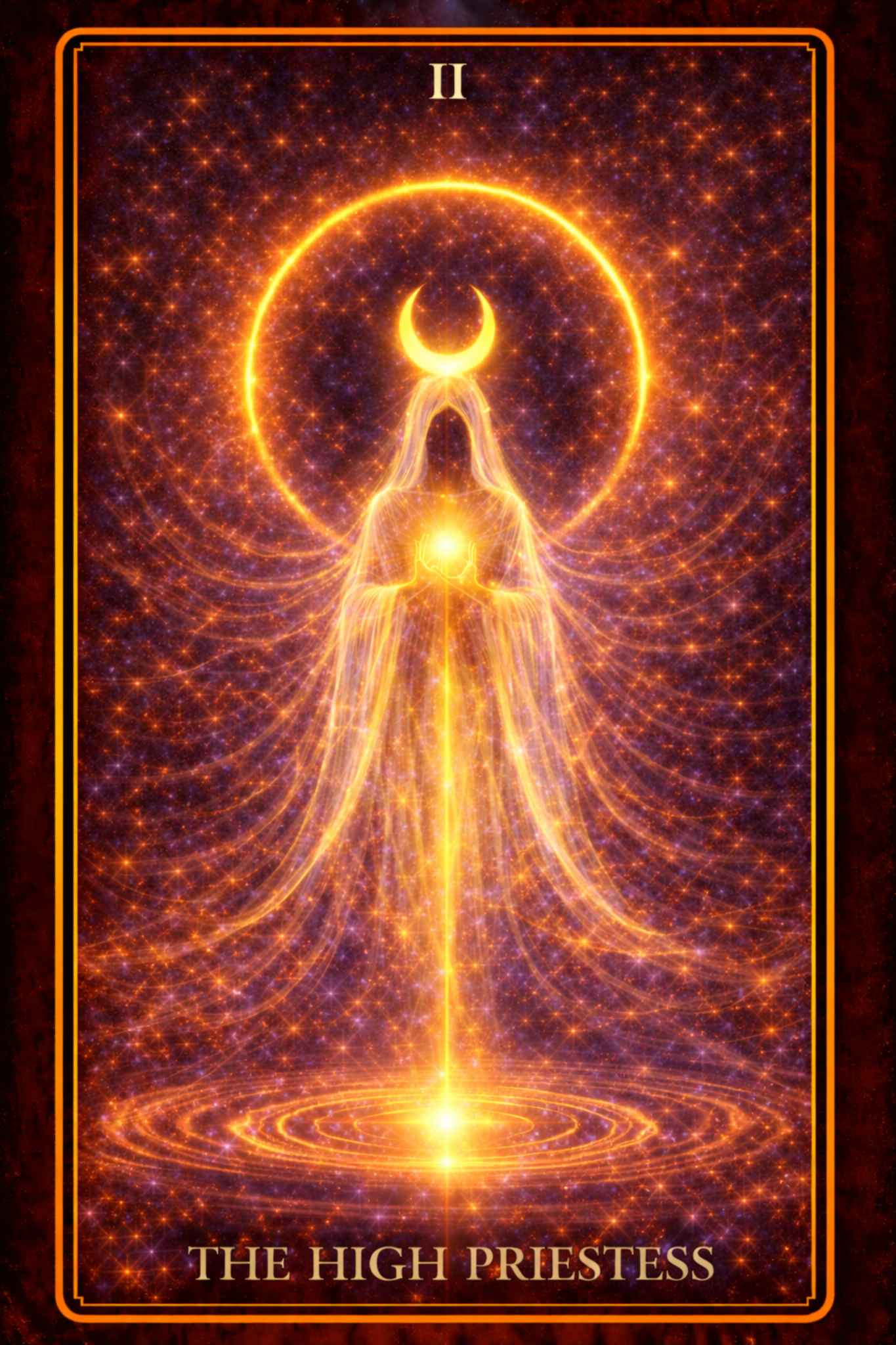
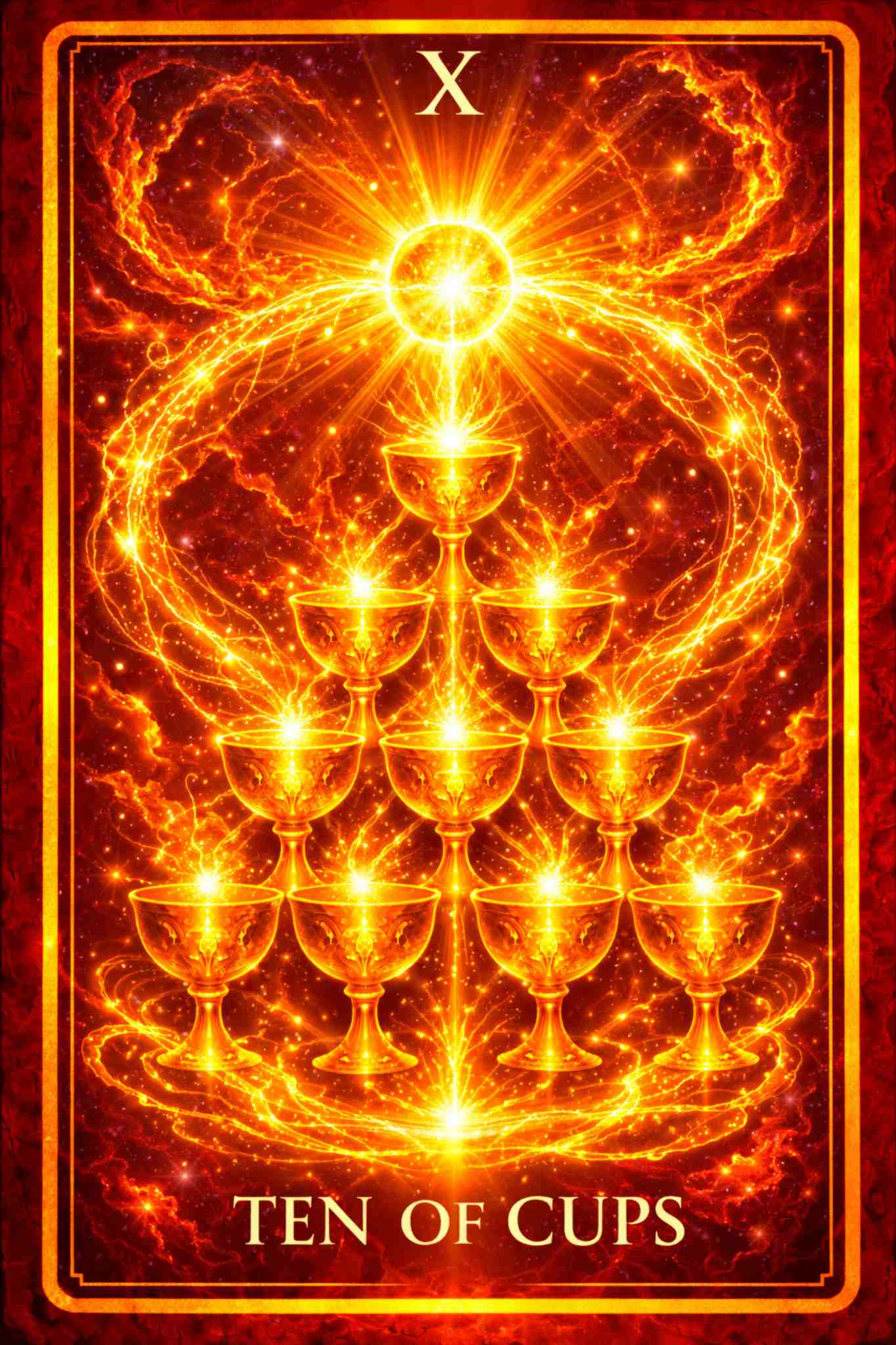
The High Priestess and Ten of Cups Tarot Combination Meaning
Some forms of happiness look complete from the outside. The atmosphere is warm, the bond appears harmonious, and the emotional picture seems to explain itself. Other forms of happiness ask for a deeper kind of listening. The visible sweetness may still be real, yet the real question lives beneath the image: is this shared joy fully inhabited, or is it being admired more than it is actually lived? The High Priestess and Ten of Cups speaks to that quieter threshold. This pair is about shared ideal and lived emotional reality. It asks whether belonging is only beautifully shaped, or whether it has reached the hidden places where the heart truly rests.
The Ten of Cups brings harmony, togetherness, emotional fulfillment, family feeling, and the sense that happiness can become an atmosphere rather than a passing moment. The High Priestess enters that atmosphere and listens below its surface. She is less interested in whether the picture is beautiful than in whether the deeper emotional body agrees with it. Does the peace feel inwardly real? Does the togetherness carry truth when silence enters the room? Is the warmth something the soul can trust, or something the mind wants to trust because it resembles the image of fulfillment it has always longed for?
This is what gives the pairing its depth. The Ten of Cups can easily be treated as a symbol of completion, yet The High Priestess reminds us that completion is never fully known from appearances alone. A relationship, family, home, or emotional future may look radiant and still contain hidden distance. At the same time, something simple and quiet may carry profound emotional truth even if it lacks dramatic outward signs. The High Priestess protects against easy idealization and easy doubt alike. She asks for a more intimate standard: does this shared field reach the deeper self, or does it mostly satisfy the longing to stand inside a beautiful emotional picture?
When happiness becomes something the inner life can trust
One of the strongest gifts in this combination is the possibility that happiness becomes inwardly believable. The Ten of Cups offers the visible shape of fulfillment, though beside The High Priestess that fulfillment grows quieter, more embodied, and more exact. It is no longer mainly about how things appear or even how they can be described. It becomes a felt condition inside the hidden self, a recognition that the emotional world one is standing in is truly safe enough, warm enough, and honest enough for the deeper heart to soften inside it.
This can be a beautiful realization because many people know how to desire happiness long before they know how to receive it. They may be offered closeness, peace, tenderness, or family feeling and still remain partially outside the experience, watching it, measuring it, or waiting for it to fail. The High Priestess reveals this hidden layer with unusual honesty. She asks whether the person can actually live inside the joy being offered. The Ten of Cups provides the shared field. The High Priestess tells us whether the inner life has relaxed enough to trust that field as real.
That distinction matters enormously. A person may have the outer signs of fulfillment and still feel a faint emotional distance from them, as if the life they wanted has arrived while some hidden part of the self is still standing at the threshold. In other cases, the person may realize that what they have is more deeply nourishing than any image could have prepared them for. The High Priestess and Ten of Cups therefore becomes a pair about emotional inhabiting. It asks whether happiness is being lived from within or only recognized from the outside.
The difference between ideal harmony and emotional home
At a deeper level, this pair draws a subtle distinction between ideal harmony and emotional home. Ideal harmony belongs to image, pattern, and expectation. It is the version of happiness that can be imagined, displayed, or longed for before it is tested in lived emotional reality. Emotional home is different. It carries depth. It allows the self to become more real rather than more performative. It creates a form of belonging that remains present even when life is quiet, imperfect, or emotionally layered.
You may also want to go one step deeper.
The High Priestess + Ten of Cups can open up differently inside a focused personal reading.
The High Priestess is essential here because she governs the unseen life of every shared bond. Beneath visible happiness lies another realm: what each person feels but does not always announce, what each person trusts or fears beneath the harmony, whether the peace has roots, whether the love can hold complexity, whether the belonging is strong enough to survive honesty. The Ten of Cups offers the field of shared fulfillment. The High Priestess asks whether the field is alive all the way through.
This makes the pairing wise rather than suspicious. It does not question happiness for the sake of complication. It simply asks whether the happiness has depth. Real fulfillment tends to welcome inward listening because its roots are genuine. It becomes more trustworthy when examined. Something fragile or overly idealized behaves differently. It leans more heavily on image, on mood, on the need to preserve harmony at any cost. The High Priestess helps the person hear this difference without becoming cynical. She asks whether the shared joy is strong enough to include truth, or whether too much must remain hidden in order for the image to stay beautiful.
Love and relationship meaning
In love readings, The High Priestess and Ten of Cups often points to a bond that carries strong potential for deep happiness, emotional home, and lasting harmony. There may be tenderness, warmth, mutual affection, and the sense that the relationship could become something wide enough to hold a real life together. The cards support that possibility. At the same time, they ask whether the emotional reality of the bond is as strong as the dream of what it could become. The High Priestess keeps the heart honest within the hope.
At its healthiest, this pairing can describe love that feels quietly whole. Two people may be building a shared emotional field that is both joyful and inwardly trustworthy. There may be a private sense of rightness that does not need much display. The High Priestess gives the relationship depth, attunement, and the ability to feel what remains unspoken without being ruled by anxiety. The Ten of Cups gives that subtle depth a world to live in: tenderness, harmony, belonging, and the kind of emotional continuity that feels like home rather than mere intensity.
This pair can also reveal a more difficult tension. A person may be very attached to the image of togetherness, long-term happiness, family feeling, or relational completion. Because of that, they may start reading the Ten of Cups into a bond before the hidden emotional facts are fully clear. The closeness may be real, yet the deeper trust may still be forming. The warmth may be present, yet important truths may remain unspoken. The High Priestess asks for patience in such cases. What does the relationship feel like when the ideal story becomes quiet? What remains true when there is no need to interpret the bond as the answer to a cherished dream?
The shadow expression here can involve preserving the appearance of harmony while deeper realities go underground. A relationship may look loving while emotional needs remain only partly voiced. A family or shared life may seem complete while one or both people are still carrying truths that have never been fully welcomed into the open. The High Priestess does not expose those truths harshly. She invites them into awareness. Real fulfillment becomes stronger when the hidden emotional layer is also respected. A beautiful image without deeper truth tends to ask too much from silence.
Home, family, and the body’s recognition of safety
Outside romance, this combination is especially powerful around home life, family systems, chosen family, and the deep emotional question of where one truly belongs. The Ten of Cups speaks of the shared environment of happiness. The High Priestess makes that environment more intimate by asking whether the emotional body actually recognizes it as safe. This is a profound question, because a person can be surrounded by love and still struggle to receive it if older patterns of vigilance, loss, or emotional distance remain active beneath the surface.
That is why the pair can be so healing. It may indicate that a person is slowly learning how to trust peace, how to remain present inside tenderness, or how to feel belonging without bracing against its loss before it has even happened. The High Priestess listens beneath the joy for any older fear still living there. The Ten of Cups offers the shared field in which that fear may begin to soften. In this way, the combination can mark a turning point where happiness becomes less theoretical and more inhabitable.
This can also apply to community, spiritual groups, creative circles, or any emotional structure that offers a sense of home. The core question remains the same. Does this environment nourish the hidden self, or mainly the visible hope of belonging? When the answer reaches the deeper level, the fulfillment can be remarkable. It does not merely look right. It feels right in the body, in the nervous system, and in the quieter layers of emotional life that rarely trust appearances alone.
Timing and the wisdom of listening beneath harmony
Timing matters strongly with this pair because it often appears when happiness, belonging, or shared emotional fullness is present or becoming possible, and the person is being asked to receive it with deeper awareness. This is a time to listen beneath the visible harmony rather than rely on image alone. The Ten of Cups says joy may be here. The High Priestess says the hidden emotional layer matters just as much as the visible one.
A useful reflection here is gentle and exact: does this happiness feel lived in my deeper self, or am I responding mainly to the beauty of what fulfillment seems to represent? That question does not take anything away from joy. It gives joy a firmer foundation. It helps the person distinguish between the ideal of belonging and the lived reality of emotional home.
Want to place this combination into a wider reading?
If this pairing feels close to something you are experiencing, a simple spread can help you reflect on the surrounding energy with more clarity.
Closing reflection
There is something soft, full, and quietly sacred in this pairing. The Ten of Cups says happiness can become shared space, that belonging can widen into an atmosphere, and that emotional life can hold forms of fulfillment that feel like home. The High Priestess says the deepest truth of that home is discovered inwardly. It lives beneath appearances, beneath celebration, beneath the visible sweetness of harmony, in the hidden emotional knowledge that says this is real, this is safe, this can be lived.
The deeper wisdom here is to let shared joy be felt in silence as well as in warmth. Let belonging settle into the private places of the heart. Let happiness prove itself in the hidden emotional body, not only in the outer image. The High Priestess and Ten of Cups often appears exactly there, where the dream of fulfillment meets the test of lived emotional reality, and the real work is learning whether the soul can truly rest inside what looks so beautiful from the outside.
More combinations with The High Priestess
More combinations with Ten of Cups
Continue with The High Priestess
Explore Related Guides by Topic
If you want to explore this combination through a more specific emotional lens, these tarot guides can help you follow the broader pattern behind the reading.