
The Hierophant + Four of Wands
Explore how these two tarot cards interact in a reading through symbolic overlap, contrast, and shared narrative. Tarot combinations often reveal meaning that neither card fully expresses on its own.
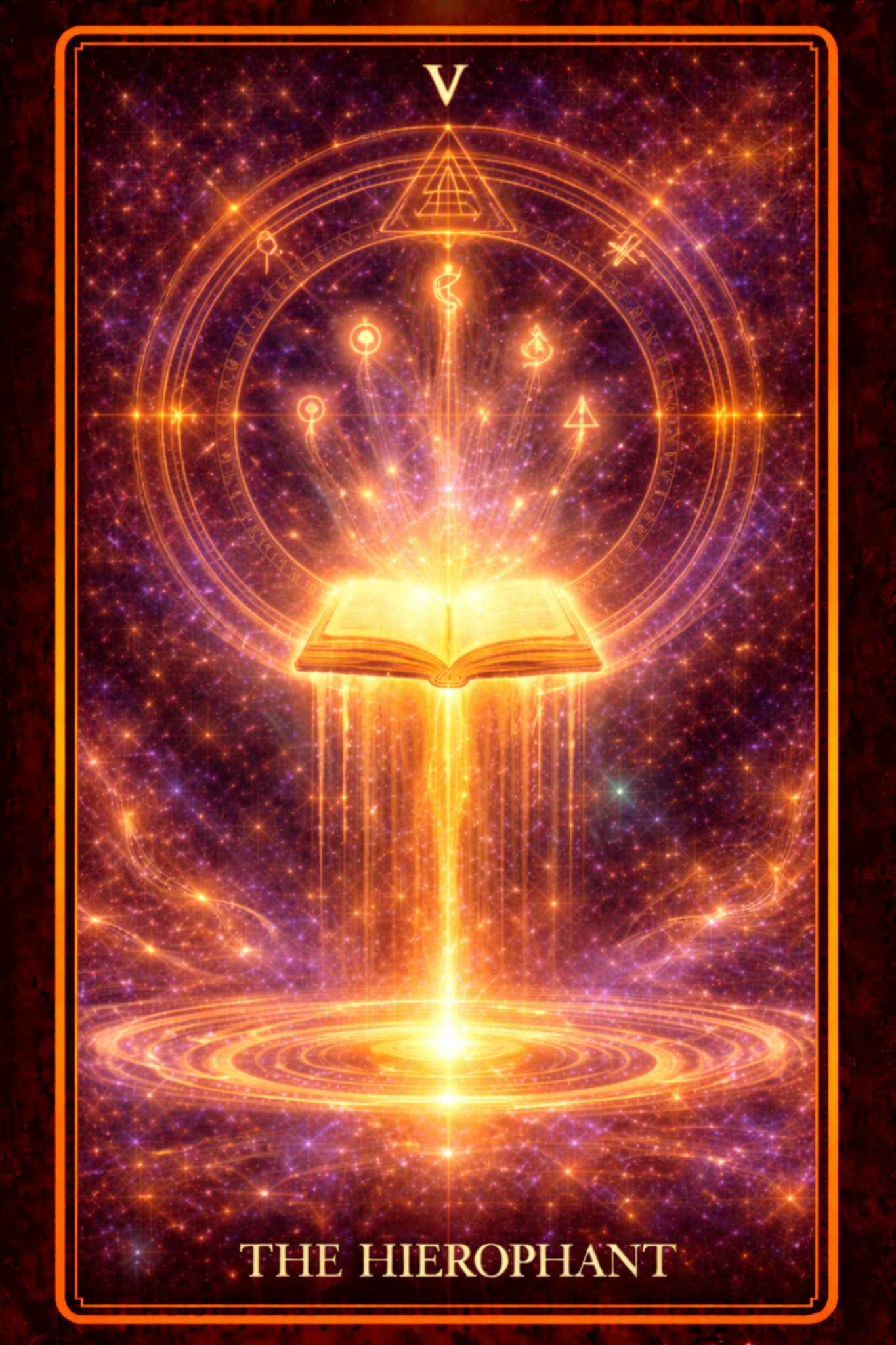
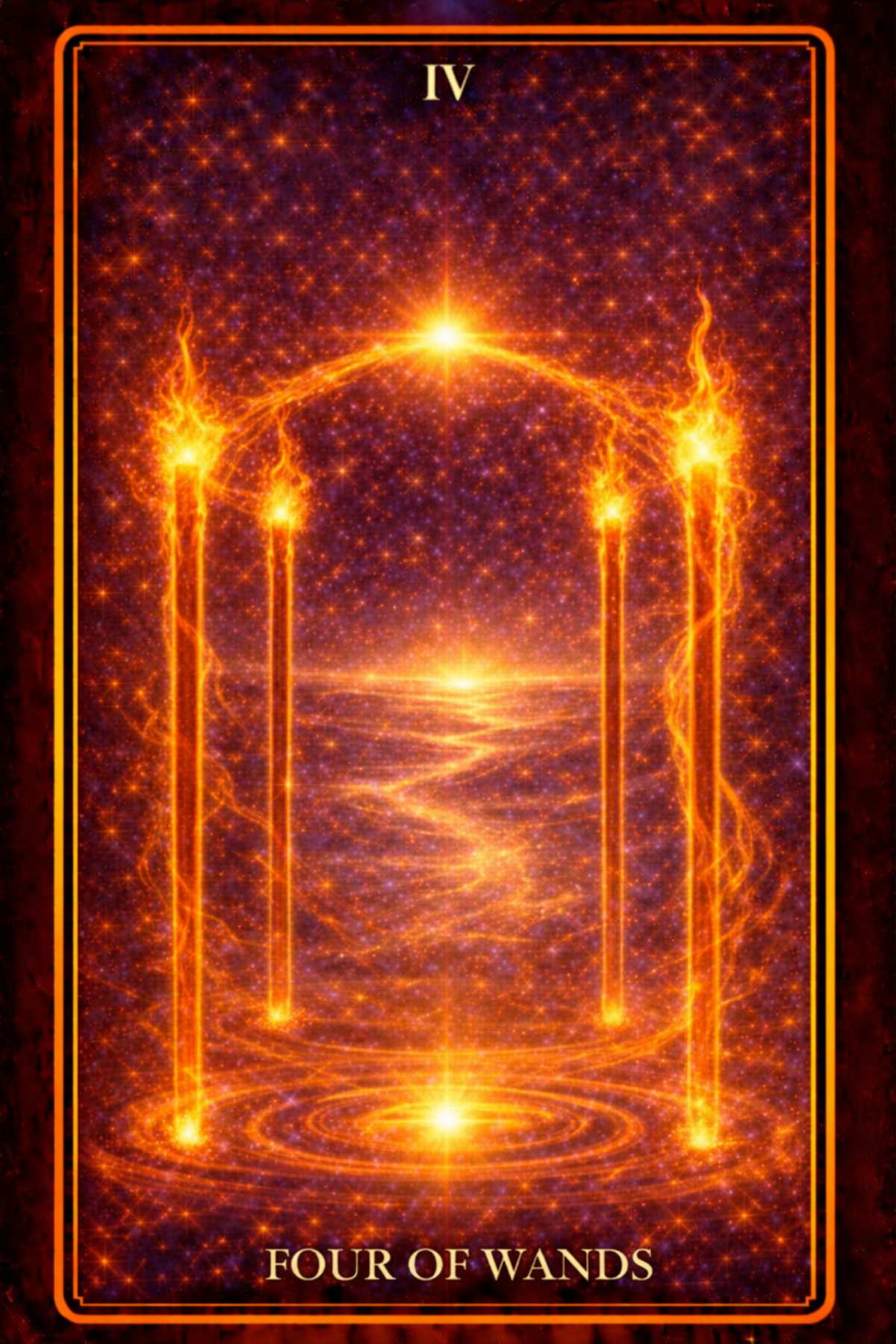
The Hierophant and Four of Wands Tarot Combination Meaning
The Hierophant and Four of Wands form one of those tarot combinations that immediately raise the subject of belonging. Not superficial belonging, and not simply the relief of being included, but the deeper question of what kind of structure allows joy to feel legitimate, shared, and steady. The Four of Wands is often associated with celebration, harmony, homecoming, emotional ease, or the moment when life becomes inhabitable rather than merely survivable. Yet on its own, even that stability can remain somewhat situational. It may describe a warm atmosphere, a milestone, a reunion, or a pause after strain, but not always the deeper principles that make such stability trustworthy over time. The Hierophant adds that enduring layer. He brings ritual, shared values, moral coherence, collective meaning, and the understanding that stability becomes stronger when it rests on more than convenience or mood. Together, these cards suggest a form of joy that is not accidental. It comes from what has been built, affirmed, practiced, or consciously held in common.
This is what makes the pairing richer than a simple promise of happiness. The Four of Wands can show warmth, welcome, emotional steadiness, milestones, and a feeling that something is finally beginning to settle into place. The Hierophant asks what gives that settled feeling its integrity. What values shape the home you are creating? What agreements make the connection durable? What rituals sustain trust after the celebration itself has passed? What does commitment actually mean in this space, beyond the image of it? In a grounded reading, this pair is rarely satisfied with appearances alone. Something may indeed be becoming more stable, more visible, or more affirming. But the cards are interested in the quality of the foundation. Joy becomes more trustworthy when it can be repeated. Belonging becomes more trustworthy when it does not demand self-betrayal in exchange for acceptance. The Hierophant and Four of Wands ask whether the structure around your happiness is truly worthy of your participation.
Core symbolic dynamic
Symbolically, this combination unites sacred order with lived harmony. The Hierophant represents inherited forms of meaning: teachings, customs, vows, ceremonies, institutions, codes, and the larger frameworks through which people understand what is right, valid, and worthy of respect. The Four of Wands represents a stabilizing field in which life can briefly exhale. It carries the feeling of arrival, though not final arrival. It is more like a threshold that has become solid enough to celebrate, inhabit, or recognize publicly. When these two cards appear together, the message often concerns the relationship between order and joy. Can structure feel warm rather than restrictive? Can shared rituals feel supportive rather than deadening? Can a home, relationship, or community hold both reverence and ease? These are central questions for anyone trying to build a life that is not only emotionally pleasing in the moment, but also durable enough to live inside for a long time.
The power of the pair lies partly in how each card corrects the weakness of the other. The Hierophant without the Four of Wands can become abstract, rigid, performative, or overly invested in form and approval. The Four of Wands without the Hierophant can become pleasant but under-defined, warm but inconsistent, celebratory without a deeper sustaining framework beneath it. Together, they suggest that genuine harmony is not only emotional. It is also ethical, relational, and practical. It is built from repeated agreement about what matters, how people will show up, what they will protect, and what kind of atmosphere they want to keep creating together. That can be deeply reassuring when the surrounding situation has been unstable. It can also be confronting when something that looks stable from the outside lacks real shared principle underneath the image of togetherness.
Love and relationship meaning
In love readings, The Hierophant and Four of Wands often point toward commitment, shared standards, and a relationship becoming more clearly grounded. This does not automatically mean marriage in every reading, but it certainly belongs to that symbolic family: agreements, public acknowledgment, deepening trust, shared home, family integration, or a stronger structure around the bond. The Four of Wands brings warmth, joy, and a sense that the relationship can become livable in a practical and emotional sense. The Hierophant adds the deeper question of what holds the connection together when the celebration fades into ordinary days. The strength of this pair is that it asks for more than feeling. It asks whether the relationship rests on principles both people can actually inhabit rather than merely admire.
Want to explore this combination in a more personal way?
If this pairing feels important right now, a simple tarot spread can help you reflect on it with more context.
In newer connections, this can show a bond that feels stabilizing because there is alignment not only in attraction, but in worldview. You may notice shared instincts around honesty, devotion, family life, loyalty, emotional tone, or the kind of home both people want to build. In established relationships, the pair may point to a milestone, but the milestone matters less than what it represents. It may be time to define the bond more clearly, strengthen the rituals of care that hold it together, or recognize whether the connection feels safe because it is genuinely grounded or simply because it follows familiar scripts. The Hierophant warns against empty form. The Four of Wands warns against assuming harmony will sustain itself without conscious participation. Together, they encourage a living stability in which love is supported by shared meaning, not trapped inside performance.
There is also a subtler possibility here. Sometimes this combination appears when someone is being asked to rethink what commitment actually feels like. Not everyone grew up with a model of stability that was both warm and trustworthy. Some people learned that order meant coldness, and others learned that affection came with inconsistency. The Hierophant and Four of Wands can mark a healthier synthesis. They suggest that steadiness does not have to be lifeless, and closeness does not have to be chaotic. In that sense, the pairing can speak not only about the relationship itself, but about the inner rewiring that makes a healthier relationship possible.
Home, community, and social belonging
One of the strongest dimensions of this combination lies in its connection to home and community. The Four of Wands often brings the feeling of a place where the nervous system can soften, where people gather, where a threshold has been crossed from improvising survival into some form of grounded participation. The Hierophant asks whether that place is spiritually and ethically habitable as well. Does the environment support dignity, truth, and mutual respect? Are the customs alive and nourishing, or are they merely conventional? Is the sense of belonging real, or does it depend on silent conformity? These questions matter because many people confuse familiarity with safety. The Hierophant and Four of Wands together help differentiate between the two.
Sometimes this pair reflects a genuinely supportive structure: a family system becoming healthier, a community offering real guidance, a spiritual environment that fosters both reverence and warmth, or a home life no longer shaped entirely by crisis. At other times, the combination reveals tension between the comfort of belonging and the cost of belonging. You may be welcomed, but only as long as you fit inherited expectations. You may enjoy stability, but sense that some part of you must remain smaller in order to preserve it. In such cases, the reading does not tell you to reject structure automatically. It asks you to evaluate the kind of structure you are participating in. A true home does not merely shelter the body. It allows the self to remain intact. A true community does not erase individuality in the name of order. It offers shared meaning without demanding self-erasure as the price of inclusion.
Career, practice, and meaningful foundation
In work, vocation, or long-term projects, this pair often indicates a period where effort begins to consolidate into something stable, reputable, and capable of being trusted by others. The Four of Wands suggests that a foundation has been built strongly enough to support recognition, completion of an early phase, or a more sustainable rhythm. The Hierophant adds legitimacy, standards, method, mentorship, and often the understanding that what you are doing is no longer just private experimentation. It may now need clearer principles, repeated practices, stronger boundaries, or a more visible relationship to a wider field of work. For some people, this shows entering a more established role. For others, it marks the transition from inspiration to framework, when talent begins to require a form sturdy enough to hold responsibility.
This becomes especially relevant when your work touches other people’s trust. Teaching, guiding, healing, advising, counseling, or any public-facing symbolic practice benefits from the deeper message of this pair. Stability is not enough. Credibility matters. Clarity about what you do and do not offer matters. Repetition matters. The Hierophant can represent training, ethical guidance, lineage, or the humility to understand the traditions you are drawing from. The Four of Wands brings the practical ability to create a space people can actually enter and feel held by. Together, they suggest that good foundations are not built from image alone. They are built from consistency, values, and an atmosphere that can support both warmth and trust without collapsing into vagueness or control.
Spiritual and psychological lesson
Spiritually, The Hierophant and Four of Wands can point toward the healing power of meaningful ritual. Modern life often encourages a split between sincerity and structure, as though spontaneous feeling is authentic but repeated practice is artificial. These cards challenge that split. The Four of Wands shows the beauty of a stable field. The Hierophant shows that ceremony, habit, and repeated forms can help create that field when they remain connected to real intention. This might describe prayer, meditation, seasonal observances, family customs, sacred space in the home, relational rituals, or simply the repeated acts that teach the body and mind they are allowed to rest. In that sense, the pair can be quietly profound. It suggests that joy may deepen not when everything is left loose, but when life contains forms that protect what matters.
Psychologically, the pair can also speak to re-patterning. Many people inherit models of stability that were orderly but emotionally cold, or affectionate but unreliable. The Hierophant and Four of Wands invite a different synthesis. Stability does not need to be lifeless. Belonging does not need to require confusion. Shared standards do not need to erase tenderness. You may be learning how to build a life where consistency and warmth support each other instead of competing. That is not a small shift. It asks you to stop confusing chaos with freedom, or rigidity with safety. It asks you to create forms of groundedness that are emotionally livable. For some, this lesson arrives through partnership. For others, through community, home, or spiritual practice. In every version, the invitation is similar: build structures that make peace more repeatable.
Shadow expression and challenge
The shadow of this combination appears when outer harmony hides inner emptiness, or when structure becomes so idealized that nobody is allowed to tell the truth inside it. The Hierophant can turn into social pressure, image management, moral rigidity, or unquestioned obedience to family, institution, or tradition. The Four of Wands can turn into decorative stability: a polished picture that avoids conflict, complexity, or deeper emotional honesty. Together, they may describe situations where everything looks settled, respectable, or celebratory, but the lived experience inside the structure is much less nourishing. In relationships, this may look like commitment without intimacy. In home life, it may look like order without authenticity. In community, it may look like belonging granted only through conformity.
Another shadow form is dependence on ritual without presence. People may continue the forms of connection, devotion, or celebration while the spirit has already gone out of them. That does not make ritual meaningless. It simply means that rituals need sincerity, ethical life, and participation inside them. The correction is not to reject structure, but to ask whether the structure still serves truth and aliveness. Are the routines and agreements in your life helping you feel more grounded, more respected, and more able to breathe? Or are they preserving an appearance of stability at the cost of real participation? This pair is strong enough to support deep stability, but only when form and life remain in contact with each other.
FAQ
Does The Hierophant and Four of Wands mean marriage?
It can point toward marriage, formal commitment, or a relationship becoming more publicly acknowledged, but the deeper emphasis is on shared values and a structure strong enough to support lasting warmth.
Is this a positive tarot combination?
Usually yes, especially when stability is being built on honesty, mutual respect, and meaningful agreement rather than image or obligation alone.
Can this combination refer to home and family?
Very often. It can highlight home life, family rituals, community belonging, or the need to create an environment that feels both safe and ethically livable.
Want to place this combination into a wider reading?
If this pairing feels close to something you are experiencing, a simple spread can help you reflect on the surrounding energy with more clarity.
Closing reflection
The Hierophant and Four of Wands describe a form of grounded happiness. Not dramatic happiness, and not happiness built on denial, but the kind that can actually be lived with. There is a sense here that something wants to become more settled, more shared, more recognized, or more consciously held. That may be a relationship, a home, a community, a spiritual practice, or a personal foundation you are finally learning how to trust. These cards support stability, but only the kind that remains alive. They support structure, but only the kind that serves meaning rather than replacing it. They support celebration, but one earned through coherence rather than held together by appearance alone.
The most grounded response is to build what you want to celebrate, and to celebrate what is truly worth building. Let ritual become real. Let home become ethical as well as comforting. Let commitment become warm rather than merely formal. When these two cards work well together, the result is not just a pleasant atmosphere. It is a durable one: a field of belonging in which joy does not have to apologize for needing structure, and structure does not have to fear joy.
More combinations with The Hierophant
More combinations with Four of Wands
Continue with The Hierophant
Explore Related Guides by Topic
If you want to explore this combination through a more specific emotional lens, these tarot guides can help you follow the broader pattern behind the reading.