
The Hierophant + Eight of Cups
Explore how these two tarot cards interact in a reading through symbolic overlap, contrast, and shared narrative. Tarot combinations often reveal meaning that neither card fully expresses on its own.
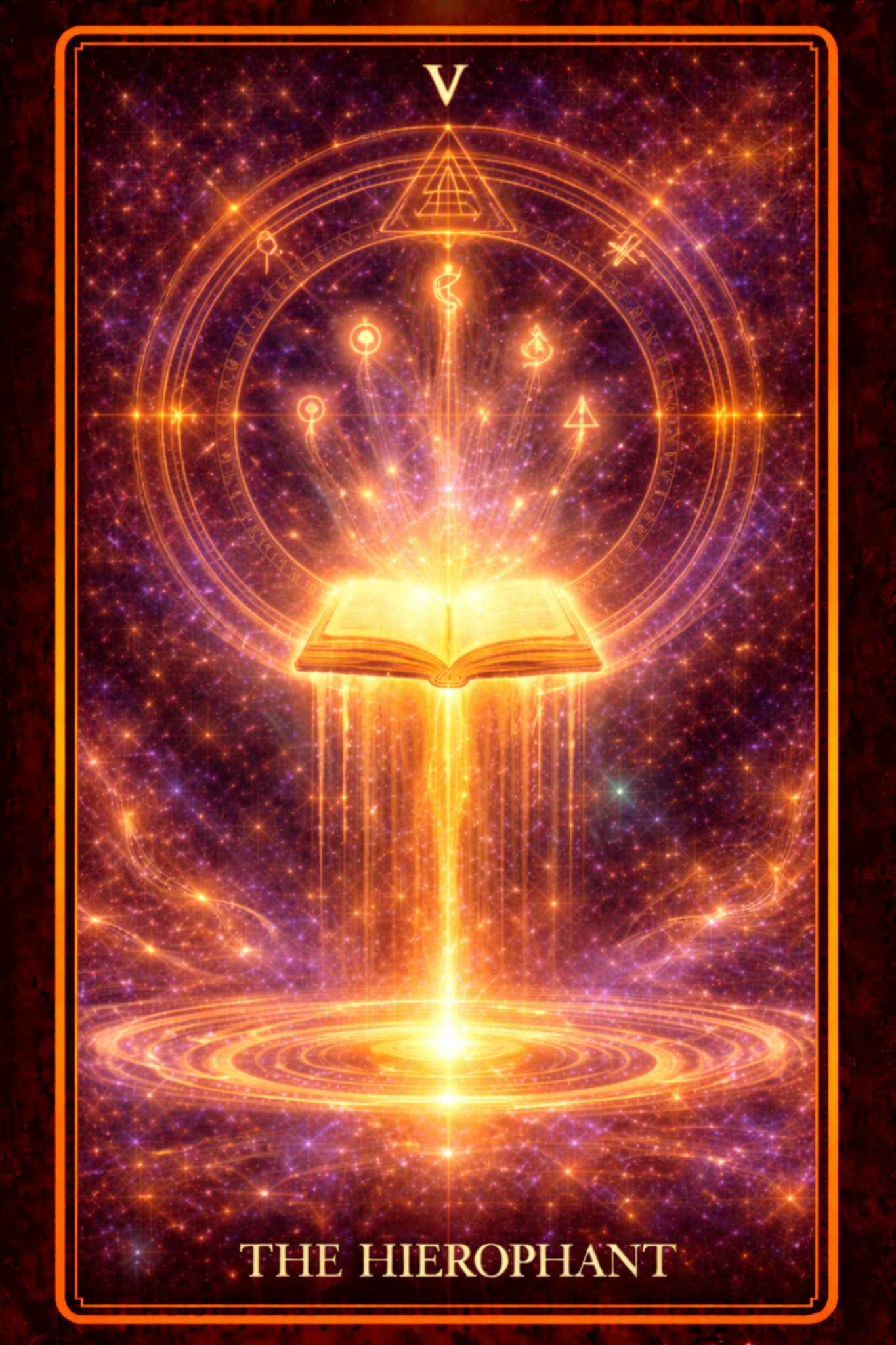
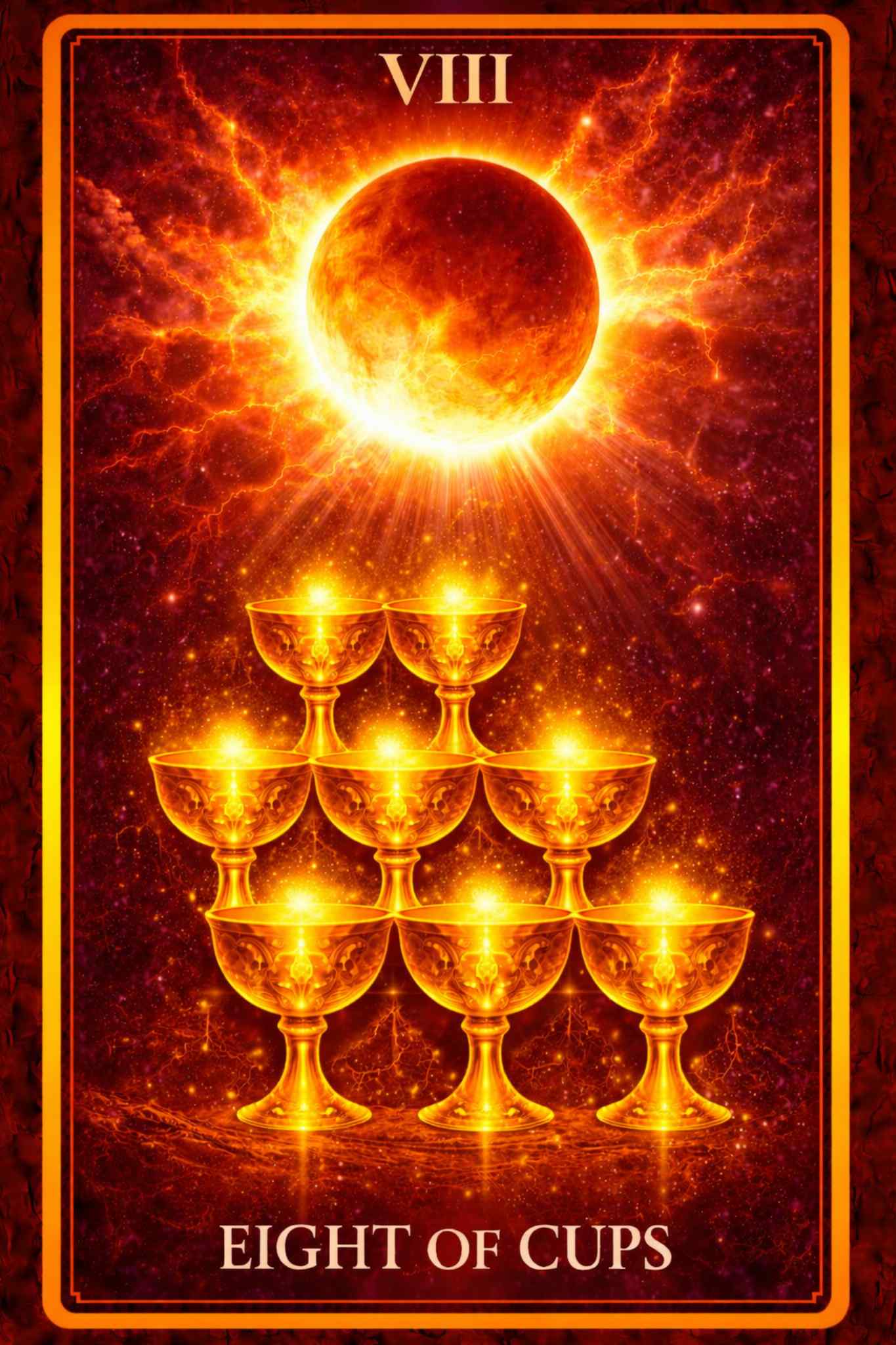
The Hierophant and Eight of Cups Tarot Combination Meaning
Some departures happen after visible collapse. A connection breaks down, a path becomes untenable, and the leaving follows what can already be seen. Other departures begin in silence. Much may still appear workable from the outside, yet inwardly the heart has started to loosen its hold because the life being lived no longer matches what the deeper self can sincerely stand inside. The Hierophant and Eight of Cups belongs to that quieter kind of turning away. This pair speaks of departure as a response to inner misalignment, of emotional withdrawal guided by conscience, and of the sober realization that meaning has thinned beyond what the soul can continue honoring. The Eight of Cups brings disengagement, weariness, inward distance, and the sense that what once nourished no longer reaches the same depth. The Hierophant brings values, spiritual seriousness, moral clarity, and the question of what truth your withdrawal is trying to protect. Together, these cards describe a leaving shaped less by drama than by integrity.
This is what gives the combination its unusual weight. The Eight of Cups often marks the moment when emotional participation has already changed, even if outer life has not caught up yet. A person may still be present, still loyal in form, still carrying out what is expected, yet inwardly they know something essential has shifted. The Hierophant enters there as the interpreter of that shift. He asks what part of your inner law is no longer being met. What value has become impossible to ignore? What truth has matured enough that staying in the same form now feels like self-betrayal? In his presence, departure stops looking like simple dissatisfaction and starts to look like a search for coherence.
That distinction matters because many people feel the pull to leave long before they understand it. They experience quiet detachment, diminishing emotional appetite, or the unsettling awareness that their heart is no longer fully participating. The instinct may be to force renewed feeling, to return to duty, or to remain inside a familiar pattern until certainty arrives. The Hierophant and Eight of Cups suggests another possibility. The emptiness may itself be a message. It may be revealing that the form you are living in no longer carries the meaning your deeper life now requires. In that sense, departure becomes less about escape and more about fidelity to what is most inwardly true. A more complete cycle of alignment and completion can be seen in The Hierophant and The World, where meaning finds a fuller resolution.
When staying begins to feel less honest than leaving
The Eight of Cups often appears when emotional life has begun pulling away from what once seemed enough. The person may still care, still remember the goodness that was here, still feel the gravity of what would be left behind. Even so, there is a growing recognition that something has ended at the level of meaning. Beside The Hierophant, the reading turns toward the values beneath that recognition. What has gone missing here that your soul can no longer ignore? What kind of truth is asking for more room than this situation can now offer?
This is where The Hierophant becomes deeply clarifying. He does not push the person toward departure for its own sake. He asks whether continued participation remains aligned with conscience. That is a far more serious measure. A person may be wrestling with loyalty, with inherited beliefs about endurance, or with the wish to preserve a form that once felt sacred. The Hierophant respects those impulses. Yet he also asks whether loyalty to form has begun to replace loyalty to truth. If so, the Eight of Cups becomes easier to understand. The withdrawal is not random. It is the soul asking to live more honestly. This process often connects with how The Hierophant shapes love, especially when values begin to outweigh attachment.
There is also a mature stillness in this pair. It does not need chaos in order to justify change. It recognizes that some endings emerge through inner knowledge rather than outer disaster. A person may discover that what once felt meaningful now feels partial, and that no amount of habit can restore what has quietly gone empty. That realization can be sad, though it can also be clean. It allows the person to approach departure with gravity rather than reaction, with reflection rather than resentment.
Walking away can be an act of reverence for deeper truth
One of the deepest teachings in this combination is that emotional withdrawal is not always avoidance. Sometimes it is reverence. The Eight of Cups shows a person moving away from what no longer reaches the heart in the same way. The Hierophant asks whether this movement is protecting something sacred in the inner life. Can you recognize that wanting more depth is sometimes conscience rather than restlessness? Can you admit that your heart has standards, and that those standards may be asking for a life more aligned than the one currently being lived?
This matters especially for people who have learned to remain faithful to structures long after their living truth has drained out of them. They may keep trying to revive a connection, a vocation, a belief system, or a role because leaving feels morally suspect. The Hierophant and Eight of Cups complicates that in a wise way. It suggests that morality is not blind attachment to old form. Sometimes morality is fidelity to the deeper meaning that the form was supposed to serve. When the form can no longer serve it, departure may become the more honorable act.
- Withdrawal may be revealing a value that has become impossible to compromise.
- Emptiness can function as guidance when old forms have lost their deeper meaning.
- Leaving grows more dignified when it arises from alignment rather than resentment.
- Some paths are outgrown inwardly before they are left outwardly.
- The unknown ahead may hold more truth than the familiar shape being maintained behind you.
The pair also says something important about the horizon that follows departure. The Eight of Cups moves toward what has not yet fully taken shape. The Hierophant suggests that this uncertainty is still meaningful when entered through conscience. A person may not know exactly what comes next. They may only know what can no longer be lived with sincerity. That knowledge is already significant. It marks the beginning of a life ordered more deeply around truth than around habit.
Love and relationship meaning
In love readings, The Hierophant and Eight of Cups often points to emotional withdrawal inside a connection that has become entangled with questions of meaning, values, and deeper honesty. There may still be care here. There may still be history, tenderness, and the memory of what once felt deeply right. Yet something essential no longer fits. The Eight of Cups shows the inward departure. The Hierophant shows that this withdrawal may be happening because the relationship no longer aligns with what the heart can genuinely honor.
This combination is especially important when a relationship still looks intact from the outside. The bond may still function in practical terms. Shared life may continue. Yet inwardly one or both people may feel that the form has outlasted the truth it once held. The Hierophant asks a difficult but necessary question: does this relationship still support the kind of love you believe in, or are you staying because the structure remains familiar and respectable? That question cuts to the center of the pair. It asks whether the soul is being asked to remain loyal to something whose deeper meaning has already faded.
At its healthiest, this combination supports sober discernment rather than impulsive reaction. A person may need to understand whether they are simply tired or whether they have truly reached the point where the bond can no longer hold their values, their conscience, or their deeper emotional truth. Once that becomes clear, the Eight of Cups starts to feel less like abandonment and more like a movement toward a more livable form of love. A more direct and action-oriented response to this inner tension can be seen in The Hierophant and The Chariot, where direction becomes more defined.
Spiritual path, vocation, and outgrowing old forms
Outside romance, this pair can speak strongly to vocation, faith, community, or any path that once gave meaning but now feels spiritually insufficient. The Eight of Cups may show someone stepping away from inherited roles, older identities, or emotional structures that have lost their nourishing power. The Hierophant helps them understand that this may be part of a serious maturation. What once guided them may still deserve respect, yet it may no longer be enough for who they are becoming. This is closely related to the yes or no meaning of Eight of Cups, especially when the answer involves leaving something behind.
Want to explore this combination in a more personal way?
If this pairing feels important right now, a simple tarot spread can help you reflect on it with more context.
Psychologically, the pair often marks an outgrowing that is painful precisely because the old form still appears valid on the surface. The person is not simply bored. They are no longer able to live wholeheartedly inside something that has fallen out of alignment with their inner law. This is why the combination can feel so quiet and so absolute at the same time. The soul has begun to move before the outer life fully knows how to follow. A more cyclical or fated version of departure can be explored in The Wheel of Fortune and Eight of Cups, where change feels guided by larger forces.
Ready to see how this applies to your situation?
A focused tarot reading can help you explore how The Hierophant + Eight of Cups may reflect your current situation, not just the general meaning of the cards.
Closing reflection
There is something deeply sober in The Hierophant and Eight of Cups because it understands that some departures are made out of respect for truth rather than rejection of the past. The Eight of Cups shows the heart turning away from what has grown too thin to sustain deeper life. The Hierophant gives that turning meaning, asking what values, what conscience, and what sacred inner standards are asking to be preserved through the leaving. Together, these cards suggest that withdrawal can become a dignified act of alignment when the soul can no longer remain truthful inside an old form. The grief of that realization is real, though so is the quiet strength that comes from choosing coherence over familiarity.
The deeper wisdom of this pair is to let departure become conscious. Let the emptiness tell the truth about what has been outgrown. Let your values become clearer through what you can no longer pretend to inhabit wholeheartedly. The path ahead may still be emerging, yet these cards trust that when a person leaves through integrity rather than impulse, the unknown becomes more sacred than the life they are no longer meant to remain inside.
More combinations with The Hierophant
More combinations with Eight of Cups
Continue with The Hierophant
Explore Related Guides by Topic
If you want to explore this combination through a more specific emotional lens, these tarot guides can help you follow the broader pattern behind the reading.