
The Hanged Man + Nine of Wands
Explore how these two tarot cards interact in a reading through symbolic overlap, contrast, and shared narrative. Tarot combinations often reveal meaning that neither card fully expresses on its own.
The Hanged Man and Nine of Wands Tarot Combination Meaning
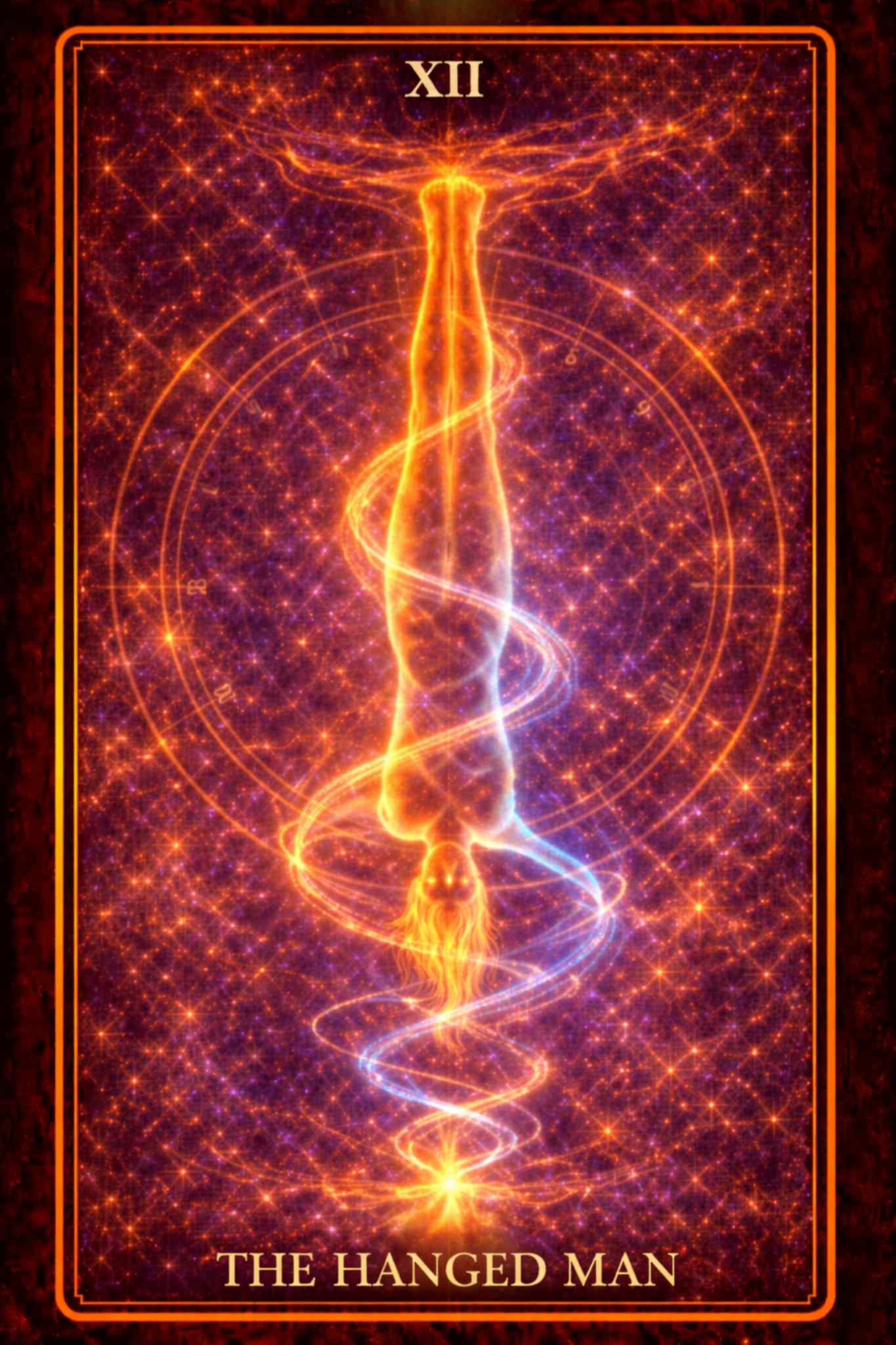
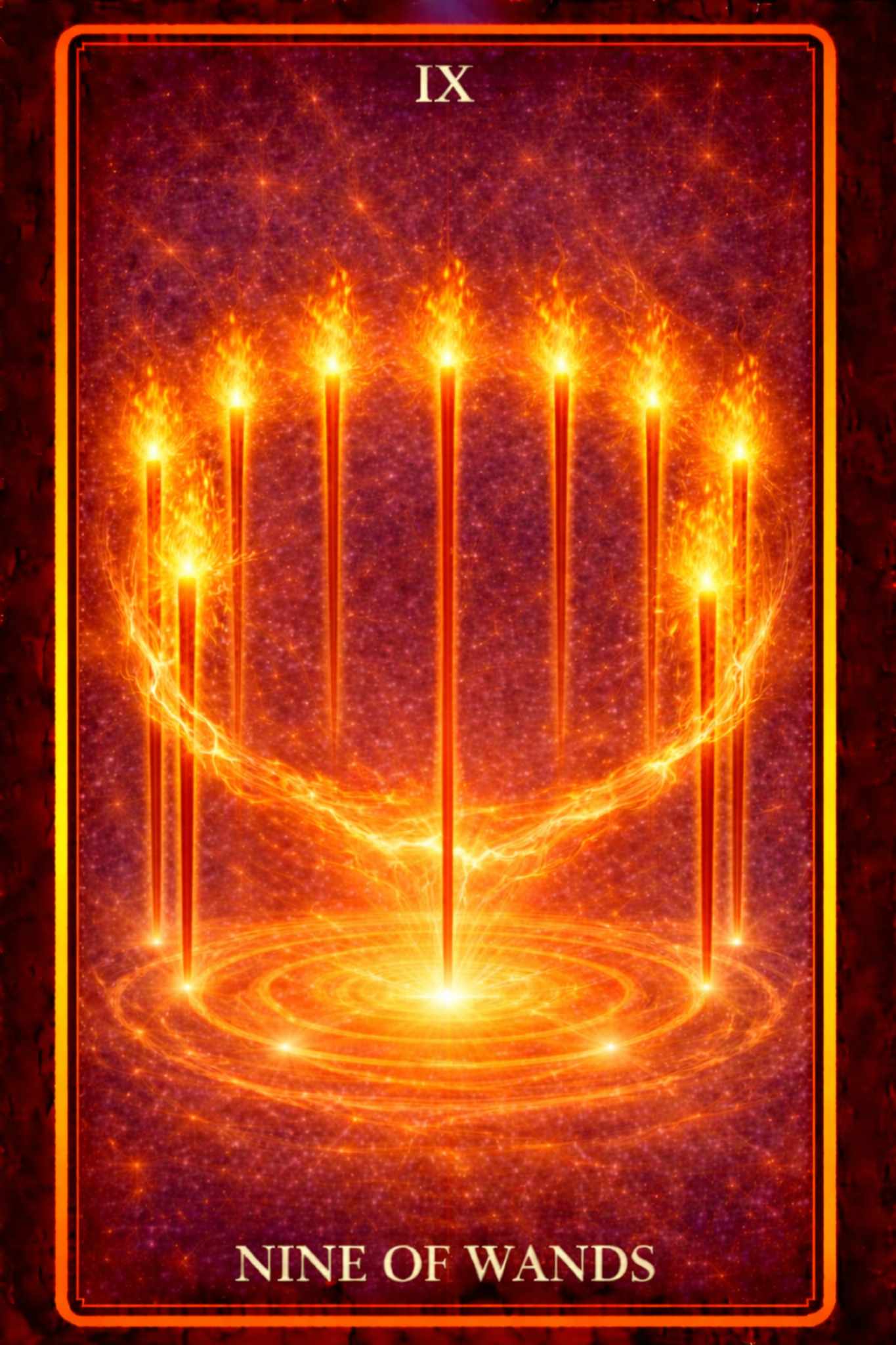
The Hanged Man and Nine of Wands meet where endurance has already been proven, but the way that endurance is being carried now calls for deeper examination. The Nine of Wands is the card of weariness that still remains standing. It shows someone who has already come through enough strain to understand that vigilance is real. The body remembers. The mind anticipates. The heart stays partly braced even when no fresh blow has landed, because experience has taught it that peace can be temporary and openness may carry cost. The Hanged Man enters this guarded field with a very different intelligence. He respects the strain, and he honors what life has taught the person. His question is harder: does the current posture of protection still reflect the living truth of the present, or has past pain become so deeply internalized that pause itself now feels dangerous?
This gives the combination unusual richness. The Nine of Wands is often read as resilience, perseverance, or final-stage grit, and all of that belongs here. Yet beside The Hanged Man, resilience stops being admired only for toughness and begins to be examined for consciousness. What exactly is being protected now? Is the person guarding a living truth, or guarding against the return of an older wound in ways that no longer fit the present moment? Is endurance helping them remain faithful to what matters, or has it quietly settled into a semi-permanent state of defense? The Hanged Man does not challenge strength itself. He asks whether strength has become so fused with tension that the person can barely distinguish safety from bracing.
When vigilance becomes identity
One of the central themes in this pairing is the possibility that protective awareness, once necessary, may begin to shape identity more than the person realizes. The Nine of Wands often appears after repeated difficulty. It reflects the stage where fatigue and alertness coexist. The person remains standing, yet innocence about the cost of openness has already been lost. That insight carries value. Yet The Hanged Man asks whether the insight has hardened into a lens through which everything must pass. When past difficulty becomes a permanent frame, even neutral moments begin to feel charged. The self looks out from behind its guard and reads life through readiness for impact.
You may also want to go one step deeper.
The Hanged Man + Nine of Wands can open up differently inside a focused personal reading.
This matters because alertness does not stay equally truthful forever. Some vigilance is wisdom. Some is inherited fear with very understandable roots. The difficulty is that both can feel equally convincing from the inside. A person may say they are simply being careful, while also preserving the identity of the one who must always remain careful. The Hanged Man asks whether they can suspend that self-image long enough to see what still belongs to real discernment and what belongs to old strain continuing in the nervous system. That is demanding work. Protective structure often feels like the only thing holding the self together. Yet healing sometimes begins through seeing that structure clearly enough that it stops governing perception unquestioned.
Endurance, surrender, and the last defensive layer
There is a quiet but profound tension between these two cards. The Nine of Wands says: stay ready, hold the line, remember what it took to get here. The Hanged Man answers: yes, and also remember that readiness and wisdom are not always the same thing. Sometimes the final defensive layer loosens because a person becomes able to see differently. That is subtle, and it matters. The Hanged Man is not calling for reckless exposure. He is asking whether the current posture has begun to outlive its deepest purpose. What if the thing now most needed is less hardening and more stillness, enough stillness to discover whether the old wound is still directing the present from the background?
This is where the pair becomes spiritually mature. Many people know how to keep going. Far fewer know how to loosen after difficulty without feeling foolish, weak, or endangered. The Nine of Wands honors the fact that the burden was real. The Hanged Man honors the fact that endurance alone does not complete the path. There comes a stage when the soul asks, “Can you stop organizing yourself around withstanding?” That question refines resilience. It allows endurance to become conscious enough that it no longer depends on constant tightening.
- Resilience that needs reflection, not only continuation
- Guardedness shaped by real experience and older strain
- A pause that reveals what protection still serves
- Vigilance that may become wiser when less automatic
- The invitation to loosen without becoming careless
Love and relationship meaning
In relationship readings, The Hanged Man and Nine of Wands often point toward a connection in which one or both people are weary, guarded, and carrying the memory of previous strain into the present. The Nine of Wands may show emotional defensiveness, reluctance to fully open, or the sense that someone is willing to remain present while also staying protected. That can come from the current bond, from older relational history, or from a longer pattern of disappointment that has taught the person to stay partly armored even when love is still desired. The Hanged Man suggests that this guardedness will soften through a different kind of seeing, not through pressure, persuasion, or emotional cornering.
This can be a very important combination in love because it asks whether the current relationship is being perceived through its own reality or through the lingering shape of earlier pain. Someone may think they are simply being realistic, while also remaining organized around anticipated hurt. The Hanged Man invites a slower honesty. What are you truly responding to in this person or this bond, and what are you responding to in yourself? Which boundaries are life-giving, and which are forms of pre-emptive protection that keep the present from being encountered fully? These are difficult questions, especially when caution has genuine reasons behind it. Yet they are often necessary if intimacy is to become more than repeated management of fear.
In more difficult expressions, this pair can indicate a bond held in suspension by exhaustion. The person is still there, still caring, yet tired and guarded. The Hanged Man may then point toward a necessary pause in interpretation. Instead of asking how to push the relationship forward, the better question may be what this guardedness means and what must be seen differently before any further step becomes real rather than dutiful.
Career, work, and long fatigue
In work readings, The Hanged Man and Nine of Wands often describe a stage of professional endurance in which the person is still functioning, still responsible, still showing up, while increasingly shaped by fatigue, vigilance, and protective self-management. The Nine of Wands may point toward repeated challenge, institutional frustration, burnout-adjacent strain, or the simple reality of having had to stay resilient for too long without adequate release. The person may be skilled, committed, and still standing, yet inwardly organized around guarding energy, anticipating pressure, and managing exposure. The Hanged Man asks whether continuing in the same way truly serves the deeper aim.
This can be especially meaningful for people who are proud of being reliable under stress. They may continue to function well enough that others do not recognize how much vigilance it takes to remain effective. Over time, that role becomes self-reinforcing. The person is the one who can withstand, absorb, and endure. The Hanged Man enters to ask whether this identity is still aligned. What if the next growth point lies in seeing what has been accepted as normal even though it no longer should be? What if the pause or delay that feels frustrating is actually revealing where constant readiness has begun to hollow out deeper meaning?
Psychological and spiritual meaning
Psychologically, The Hanged Man and Nine of Wands often describe the state of being tired in a way that affects perception. This is far more than physical fatigue. It is existential bracing. The person has lived through enough difficulty that the psyche remains slightly armed even when rest becomes possible. The Nine of Wands makes sense of that condition. It says, of course you are guarded; life taught you to guard. The Hanged Man accepts that logic and then asks whether life is now asking something else. Can you bear the suspension of constant readiness? Can you sit still long enough to realize how much of your world is being filtered through older tension?
Spiritually, this pair often marks a threshold where endurance gives way to surrender if transformation is to continue. This is surrender in the sense of release, not abandonment. More specifically, it is release of the self-image built around being the one who persists no matter what. That image can be noble, yet it can also keep the person from discovering softer forms of truth. The Hanged Man asks whether maturity here means less holding out and more letting go: release of the reflex to anticipate harm, release of the belief that wisdom always looks like guardedness, release of the identity that has become inseparable from being battle-tested.
Shadow expression and challenge
The shadow side of this combination appears when guarded endurance becomes a permanent worldview. A person may become so accustomed to tension that they barely notice how much they assume strain, mistrust rest, or interpret openness as danger. The Nine of Wands can then feel morally superior because its caution was earned. The Hanged Man exposes the limit of that righteousness. Experience may justify caution, yet justification alone does not keep the stance fully aligned with the present.
Another shadow expression appears when The Hanged Man turns into passive stagnation. A person may stop outward action without any real shift in perception. They remain just as guarded, just as tired, just as defended, only less visibly engaged. The healthier expression asks for actual reorientation. It asks for more than pausing; it asks for seeing the nature of the guard more clearly. If reflection only deepens the conviction that armor must stay in place forever, the deeper work has not ripened. If it brings more nuanced awareness of what still needs protection and what can finally soften, then the pair has done something profound.
Timing and the moment after too much strain
This pair carries a clear timing message around the stage after repeated effort, when the question is no longer simply whether the person can continue, but whether continuing in the same internal posture is wise. The Nine of Wands often suggests late-stage pressure, the feeling of being almost through yet still full of vigilance. The Hanged Man indicates that this may be exactly the moment when a pause becomes necessary. The path is still alive, yet the next step asks for a different consciousness than the guarded one that carried the earlier burden. A person may think they need one last push. The cards may instead suggest one honest suspension in which fatigue is allowed to reveal what it has been trying to say.
Sometimes that means a literal delay. Other times, it means an inward waiting period in which the person stops trying to force final resolution and instead allows deeper perspective to change. The lesson is that exhaustion does not always call for harder pushing or total surrender. Sometimes it reveals that the form of strength being used has reached its limit.
FAQ — The Hanged Man and Nine of Wands
Is this tarot combination about exhaustion?
Often yes. It can point to fatigue, guardedness, and sustained vigilance, while also showing the need to pause and examine what that strain has created in perception and identity.
Does this combination suggest boundaries in relationships?
It can. It often reflects emotional guarding, caution, and the legacy of past hurt, while asking whether present protection is fully aligned with present reality.
What does it mean in career readings?
It often points to long strain, repeated pressure, and the need to reassess how endurance is being carried. The cards may suggest that perspective shift is more necessary than one more act of sheer grit.
Is The Hanged Man telling me to give up?
Usually he is asking for conscious suspension, so you can see what you are carrying, why you are carrying it, and whether the current stance still serves what matters most.
What is the main lesson here?
The main lesson is that resilience becomes wiser when it grows less automatic. Protection may still matter, but it becomes healthier when it is shaped by present truth rather than only by past pain.
What this combination is really asking
The Hanged Man and Nine of Wands ask: are you still protecting what truly matters, or are you now protecting yourself from the memory of what once hurt you? That is the heart of the pair. The strain may be real. The caution may be justified. The endurance may be admirable. Yet the cards ask whether your current posture reflects the living present or the afterimage of previous struggle. They want to know whether you can become conscious enough inside your resilience that it stops functioning as permanent bracing.
The deeper lesson is that endurance is not completed only by surviving. It is completed when survival itself is integrated into a different way of seeing. The Nine of Wands brings weariness, vigilance, hard-won resilience, and the instinct to stay guarded. The Hanged Man brings suspension, surrender, altered perspective, and the humility to let protective identity soften where it has outlived its purpose. Together, they form a profound teaching: strength is real, and it becomes freer when it is no longer built entirely around anticipating the next blow.
Ready to see how this applies to your situation?
A focused tarot reading can help you explore how The Hanged Man + Nine of Wands may reflect your current situation, not just the general meaning of the cards.
Closing reflection
There are seasons when staying upright is already a significant act of courage. This pairing honors that. Yet it also suggests that the final movement of such a season may be something other than one more act of vigilance. It may be the willingness to stop living only as the one who has had to endure. That shift can feel vulnerable, even disorienting, because it asks the self to loosen where it learned to survive through tightening. The Hanged Man holds open that difficult mercy. The Nine of Wands tells the truth about how much has already been carried. Between them is a quiet and serious possibility: resilience that does not disappear, but finally becomes spacious enough to breathe.
More combinations with The Hanged Man
More combinations with Nine of Wands
Continue with The Hanged Man
Explore Related Guides by Topic
If you want to explore this combination through a more specific emotional lens, these tarot guides can help you follow the broader pattern behind the reading.