
The Emperor + Nine of Cups
Explore how these two tarot cards interact in a reading through symbolic overlap, contrast, and shared narrative. Tarot combinations often reveal meaning that neither card fully expresses on its own.
The Emperor and Nine of Cups Tarot Combination Meaning
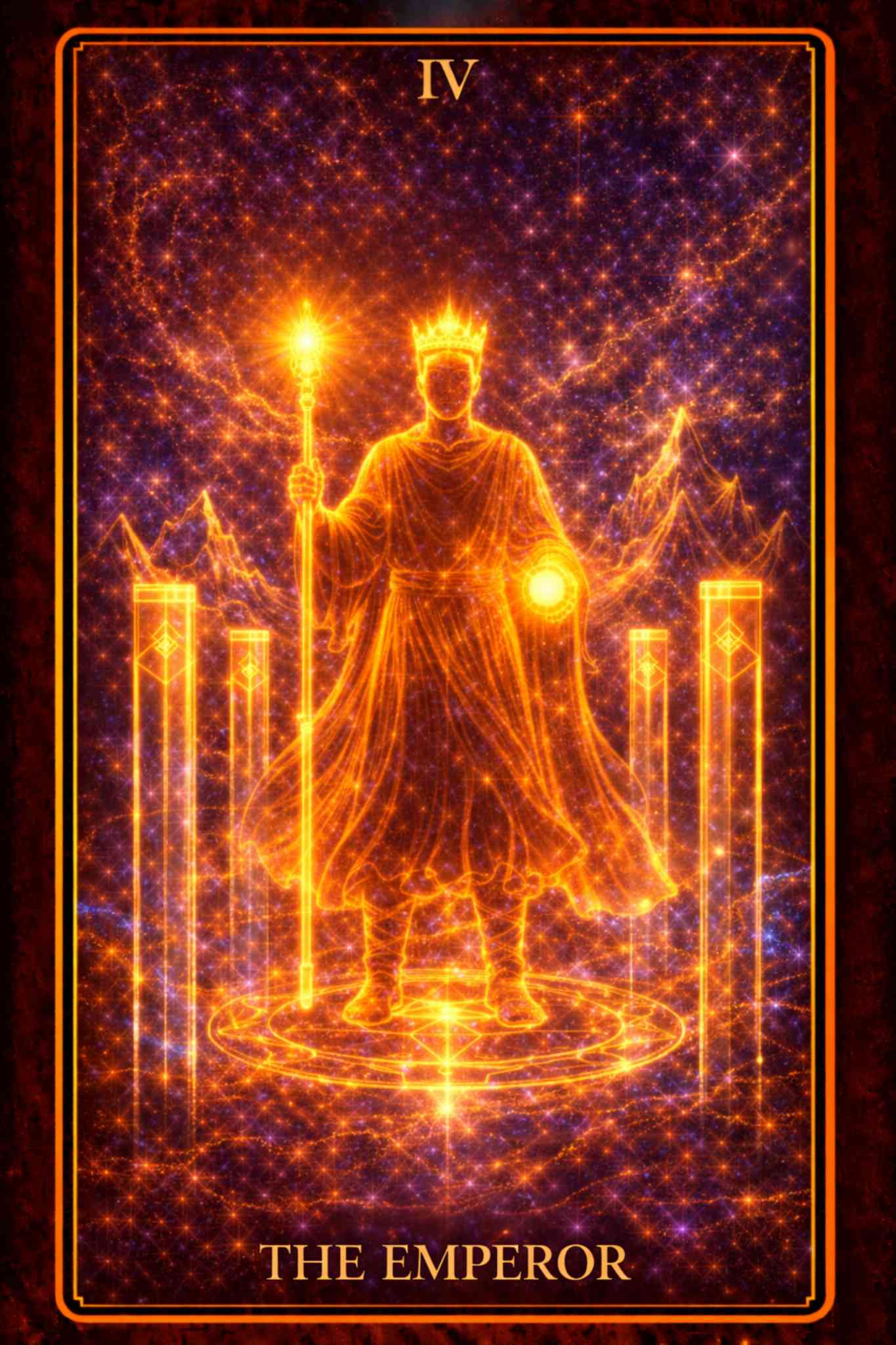
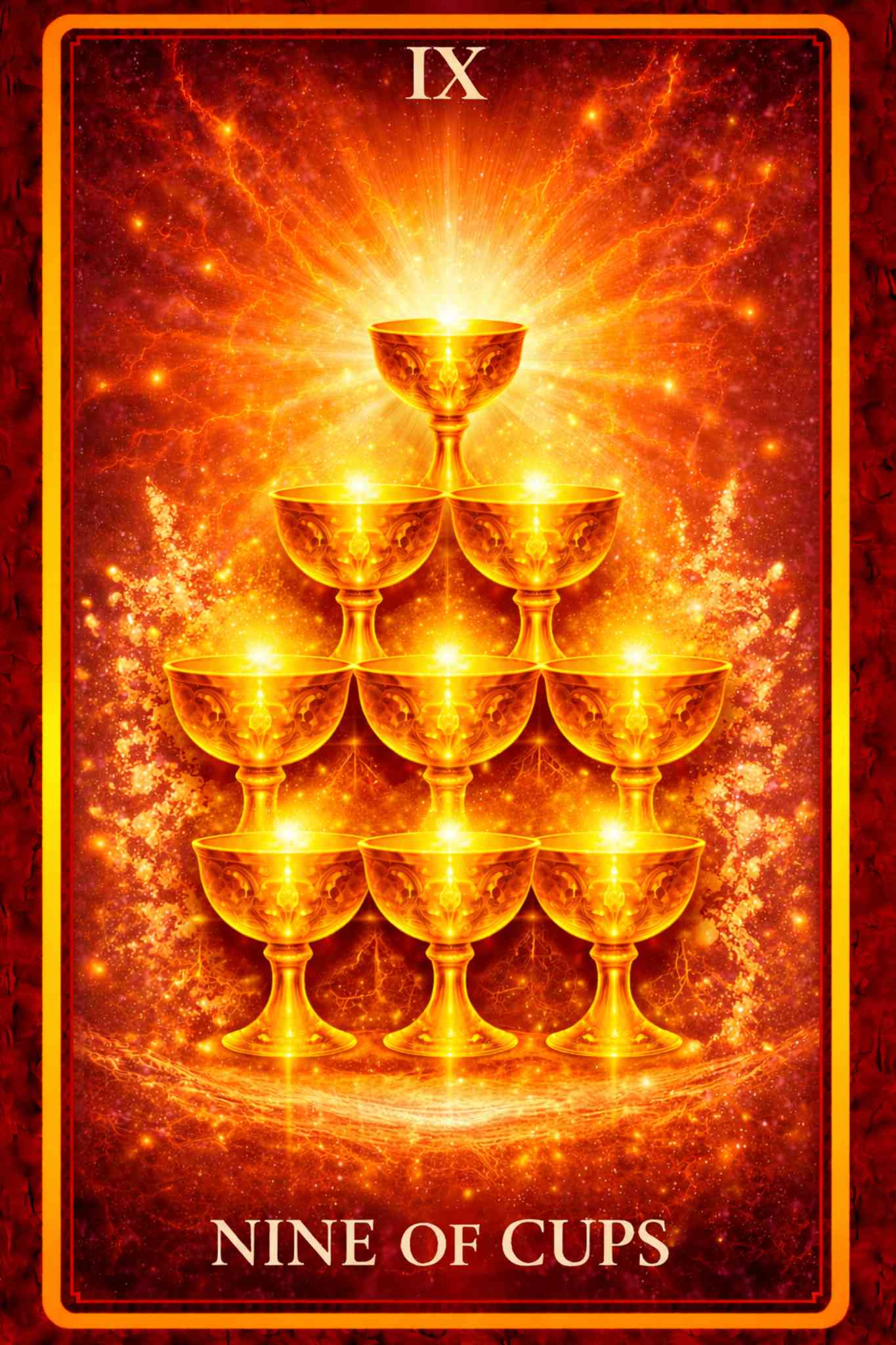
Some forms of satisfaction arrive like a soft exhale. A wish gets closer, the body relaxes, the heart stops straining, and for a while the experience of ease feels complete in itself. Other forms of satisfaction carry a more demanding lesson. They ask whether pleasure can live inside character, whether fulfillment can be held without turning into complacency, and whether emotional reward is strengthening the person or quietly beginning to govern them. The Emperor and Nine of Cups belongs to that second kind of fulfillment. This pair speaks of desire fulfilled inside a disciplined life, comfort held by self-possession, and the quiet authority required to enjoy what is good without handing over your center to the goodness itself. The Nine of Cups brings pleasure, contentment, emotional ease, gratification, reward, and the sweetness of getting closer to what the heart has wanted. The Emperor brings structure, standards, steadiness, and the kind of inner authority that makes fulfillment more durable because it is being carried with maturity. Together, these cards describe satisfaction that gains depth when it is held by a stronger self.
This is what gives the combination its real substance. The Nine of Cups is a card of enjoyment, and there is no need to diminish that. Something can genuinely feel good here. The person may feel more satisfied, more emotionally supported, more at ease with themselves, or more able to appreciate what life is offering. Yet The Emperor immediately raises a deeper question. What kind of life is this satisfaction entering? Is it becoming part of a stable structure, or is it being treated as a private kingdom where comfort is allowed to outrank discipline, truth, and proportion? He understands that pleasure can be meaningful and still require governance. In his presence, fulfillment stops being only a feeling and becomes part of a larger architecture of self-respect.
That distinction matters because receiving what you want can test a person just as much as lacking it. Desire often creates movement, discipline, and focus while it is still unmet. Once satisfaction arrives, different weaknesses can surface. A person may grow possessive of ease. They may become overly protective of comfort. They may begin measuring the whole value of a relationship, a season, or a path by how gratifying it feels in the moment. The Emperor steadies that tendency. He does not challenge the right to enjoy what is good. He challenges the fantasy that enjoyment alone is enough to sustain meaning. This is where the pair becomes wise. It shows how fulfillment can remain warm and human while also becoming more grounded, more responsible, and far less fragile.
When pleasure asks for stronger character around it
The Nine of Cups often appears when something feels emotionally rewarding. Relief may be entering after strain. Appreciation may be arriving after doubt. A connection may feel more nourishing. A person may be experiencing a welcome sense of emotional abundance, as though life is briefly answering the heart in a language it has wanted to hear for a long time. Beside The Emperor, the reading becomes interested in how this pleasure is being received. Is it deepening the person’s life, or tempting them into passivity? Is it strengthening self-trust, or making them too dependent on conditions remaining pleasant? These questions bring needed gravity to a card that can otherwise remain at the level of gratification alone.
This is where The Emperor becomes deeply useful. He does not step in to spoil enjoyment. He protects it from becoming shallow, overindulged, or emotionally overvalued. He asks what supports this satisfaction beyond the moment itself. Is there integrity beneath it? Is there structure that can hold it? Is the person still able to act from standards, or are they beginning to bend too much around what feels rewarding? The Emperor knows that pleasure becomes more trustworthy when it is integrated into a life with shape. A person who can enjoy and remain grounded is stronger than a person who can only chase or deny pleasure.
There is also a subtle truth here about emotional ease. Ease can heal, though it can also sedate if a person begins using it as their main measure of what belongs. The Nine of Cups can create a seductive atmosphere of enoughness, and sometimes that atmosphere is genuine and deserved. Even so, The Emperor asks whether the satisfaction is actually expanding the person’s life or encouraging a smaller and more self-enclosed version of it. Does this comfort nourish growth, generosity, and stability? Or does it invite a quieter stagnation, where the person becomes attached to feeling good and less willing to meet challenge, complexity, or the disciplines that keep fulfillment healthy? These are Emperor questions, and they reveal how much maturity this pairing really contains.
Fulfillment becomes wiser when it is joined to self-possession
One of the deepest teachings in this combination is that receiving well is a form of strength. Many people know how to long, strive, and endure. Fewer know how to let something good enter without becoming emotionally ruled by the relief of finally having it. The Nine of Cups opens the field of reward. The Emperor asks whether the person can remain internally organized while receiving that reward. Can they enjoy what is here without gripping it too tightly? Can they feel nourished without becoming lazy in spirit? Can they let pleasure be part of life without asking it to become the ruler of life? These are subtle questions, though they go directly to the heart of the pair.
This matters especially because fulfillment can expose hidden hunger. A person may feel so relieved to receive affection, comfort, praise, sensual ease, or emotional safety that they begin attaching exaggerated importance to the source of that satisfaction. The experience itself is real, though the dependency forming around it may be equally real. The Emperor helps uncover this. He asks whether what feels good is also making the person stronger, clearer, and more anchored. If it is, then the pleasure has substance. If it is making them more fragile, more entitled, or more afraid of change, then something in the structure still needs attention. He does not remove the fulfillment. He clarifies its place.
The pairing can also teach something important about dignity. There is a version of pleasure that becomes overly self-contained, almost private in its self-satisfaction, where the person begins treating comfort as a destination rather than a resource. The Nine of Cups can drift in that direction when left entirely to itself. The Emperor restores nobility to enjoyment. He makes satisfaction less about indulging the self and more about inhabiting goodness well. Pleasure then becomes less performative, less grasping, and more integrated into a life that still has direction. This is one of the most refined possibilities in the pair. The heart gets to enjoy, while the self remains sovereign.
When the energy is imbalanced, the distortions become clear fairly quickly. The Emperor can become too rigid, too guarded, too unwilling to relax enough to receive the very sweetness life is offering. The Nine of Cups can become too comfort-driven, too self-pleased, too attached to reward to notice where deeper structure is weak. The healthiest form of the pair avoids both extremes. It says yes to pleasure and yes to discipline. Yes to fulfillment and yes to standards. Yes to emotional ease and yes to a life strong enough to carry it with grace.
- emotional satisfaction becomes stronger when it is held by self-command
- pleasure needs structure if it is to remain healthy over time
- comfort can nourish growth when it lives inside clear values and steady habits
- fulfilled desire still asks for proportion, boundaries, and maturity
- receiving well is a discipline, not only a feeling
Love and relationship meaning
In love readings, The Emperor and Nine of Cups often points to a connection that feels emotionally rewarding, pleasurable, or deeply relieving, though the deeper message is about how that satisfaction is being carried. There may be affection here, comfort here, sensual ease here, and the sense that a wish has been answered in some meaningful way. The Nine of Cups shows the enjoyment of the bond. The Emperor asks whether the bond also has enough strength, consistency, and structure to hold that enjoyment over time. This is what makes the pair more mature than a simple romance card. It suggests that good feeling alone is not the whole story. The relationship becomes more trustworthy when the pleasure it brings is matched by steadiness, standards, and dependable conduct.
Want to explore this combination in a more personal way?
If this pairing feels important right now, a simple tarot spread can help you reflect on it with more context.
At its healthiest, this combination can describe love that feels both satisfying and well-contained. Two people may genuinely enjoy being together. There may be appreciation, warmth, physical closeness, emotional reward, and the sense that the relationship brings out a softer, happier state in both of them. The Emperor strengthens that goodness by asking for reliability. He wants the pleasure in the bond to be supported by something solid: consistency, respect, clear intentions, and the ability to keep showing up even when the mood is less easy. In this form, the relationship becomes more than gratifying. It becomes sustaining.
The pair can also reveal a subtle vulnerability within fulfillment. Sometimes a person is so pleased to receive what they have wanted that they become less curious about the actual structure of the relationship. They enjoy the comfort, the affection, the relief of having the bond, and because of that enjoyment they may overlook imbalances, weaker foundations, or places where the connection still depends too heavily on the current emotional tone. The Emperor helps slow that process down. He asks what exactly is being enjoyed and whether the relationship has the frame required to support it long term. If it does, the satisfaction deepens into something far more secure. If it does not, then pleasure may be temporarily covering structural weakness.
There is a valuable relational lesson here around emotional hunger as well. A bond can feel wonderful because it answers an old longing. That does not automatically make it unhealthy. In fact, it may be exactly right. Even so, The Emperor encourages the person to remain aware of the difference between genuine compatibility and the relief of finally receiving what was missing for a long time. That distinction shapes everything. A relationship becomes stronger when the people inside it can enjoy the pleasure it brings without turning that pleasure into the sole reason for staying, giving, or believing. The Nine of Cups says the heart is being fed. The Emperor says that what feeds the heart deserves a structure worthy of that feeding.
Self-worth, prosperity of feeling, and the right use of emotional abundance
Outside romance, this combination can speak strongly to seasons of success, self-worth, emotional contentment, and the ability to enjoy what has genuinely been created or earned. The Nine of Cups may show a period where life feels more generous, where the emotional body relaxes, or where the person finally has room to appreciate something long desired. The Emperor helps them receive this season with maturity. He encourages building around what is working instead of simply basking in it. This can be especially meaningful for those who have complicated relationships with pleasure, either distrusting it when it arrives or clutching it once it finally becomes available. The Emperor offers a third way. Let it nourish you. Then let it become part of a stronger and more ordered life.
Psychologically, the pair often marks a movement from craving into more grounded receptivity. The person may be learning that satisfaction does not need to be chased endlessly, nor treated with suspicion as though comfort will somehow weaken the soul. They may be discovering that emotional abundance can be held cleanly when it is joined to boundaries, values, and stable inner posture. This is a subtle but profound development. The person stops treating pleasure as proof of worth and starts allowing it to become one part of a much larger life. That shift reduces fear and increases dignity. They can enjoy what is here without making enjoyment itself into a fragile throne.
Timing and the wisdom of stabilizing what already feels good
Timing matters strongly with this pair because it often appears when something is already emotionally rewarding and the next right step is to give it stronger ground. This may be a time to create habits that support what nourishes you, to define healthier boundaries around pleasure, to turn comfort into consistency, or to ask how current fulfillment can become part of a more durable structure. The Emperor and Nine of Cups rarely asks for denial. It asks for stewardship. Let enjoyment remain alive, though support it with enough form that it does not become unstable through overreliance or neglect.
There is also a practical timing lesson here about emotional maintenance. People often work hard to reach a satisfying moment and then assume the satisfaction will sustain itself. These cards suggest a wiser pattern. What feels good deserves care. What fulfills the heart deserves structure. What brings emotional ease deserves enough maturity around it that it can continue nourishing rather than fading into entitlement, passivity, or self-enclosure. The Emperor makes fulfillment last longer precisely because he refuses to leave it unsupported.
Frequently asked questions
Does The Emperor and Nine of Cups mean a wish coming true?
It often can. The Nine of Cups strongly suggests satisfaction, emotional reward, or the fulfillment of a desire. The Emperor adds the message that what is received now needs structure, responsibility, and steadiness if it is to remain meaningful over time.
Is this combination good for love?
Yes, especially when the relationship feels both enjoyable and dependable. The pair supports emotional ease, pleasure, and warmth, while also emphasizing boundaries, consistency, and a stronger framework around what feels good.
Can this pair show indulgence?
It can, particularly if the Nine of Cups becomes too focused on comfort or gratification. The Emperor usually appears to correct that drift by asking whether the pleasure is strengthening the person’s life or quietly making them too dependent on ease.
What is the core lesson of this pairing?
The core lesson is that fulfillment needs stewardship. It is one thing to receive what you want. It is another to hold it with self-command, proportion, and enough maturity that the pleasure can nourish rather than rule the heart.
Want to place this combination into a wider reading?
If this pairing feels close to something you are experiencing, a simple spread can help you reflect on the surrounding energy with more clarity.
Closing reflection
There is something quietly rich in this pairing because it shows that satisfaction becomes more beautiful when it is carried by character. The Nine of Cups says the heart can receive what it has long desired. The Emperor says that receiving well is part of mastery too. Together, they suggest that pleasure becomes deepest when it is welcomed fully, held steadily, and given a life strong enough to keep it from turning into either dependency or waste.
More combinations with The Emperor
More combinations with Nine of Cups
Continue with The Emperor
Explore Related Guides by Topic
If you want to explore this combination through a more specific emotional lens, these tarot guides can help you follow the broader pattern behind the reading.