
The Emperor + Eight of Cups
Explore how these two tarot cards interact in a reading through symbolic overlap, contrast, and shared narrative. Tarot combinations often reveal meaning that neither card fully expresses on its own.
The Emperor and Eight of Cups Tarot Combination Meaning
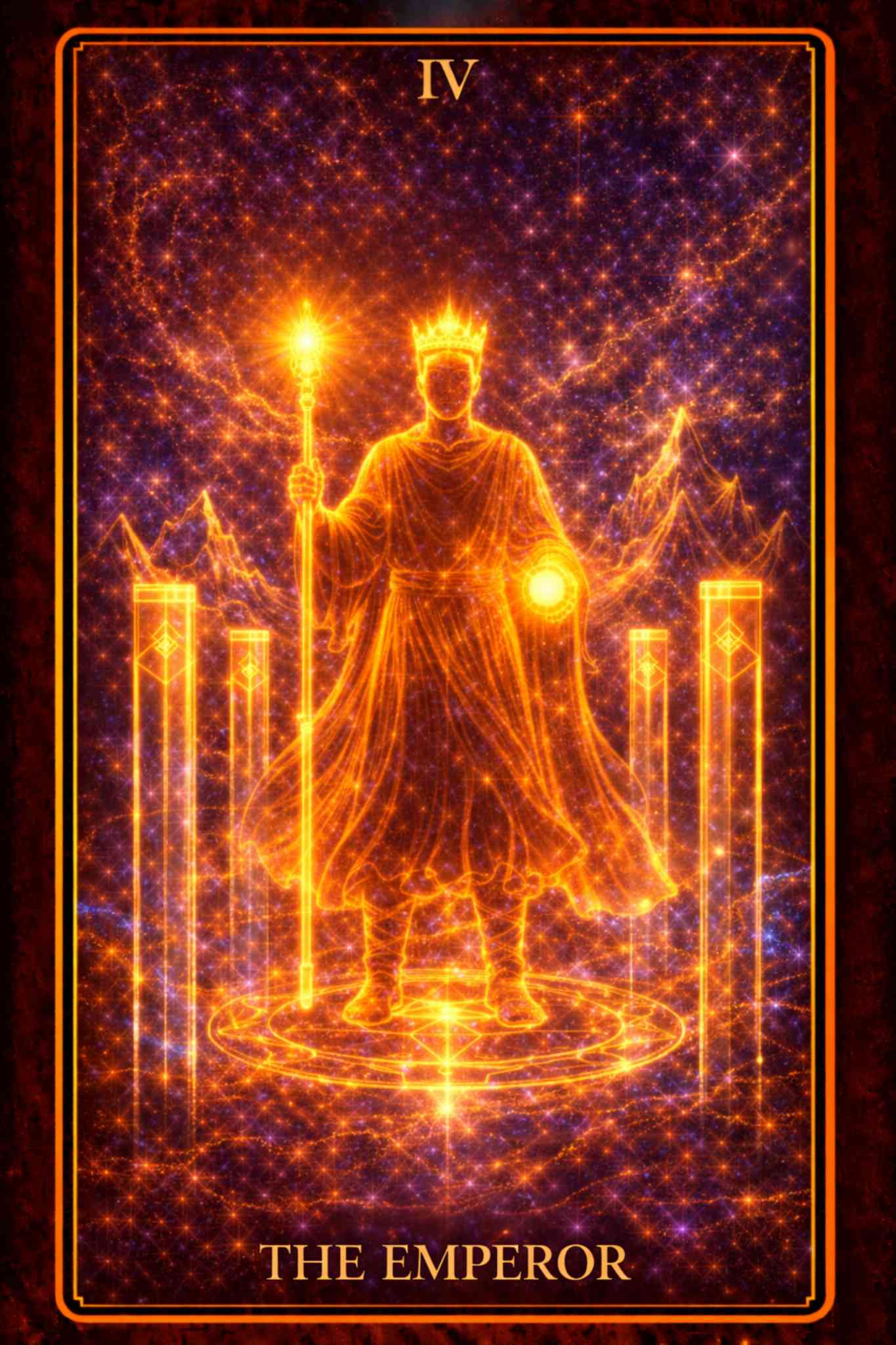
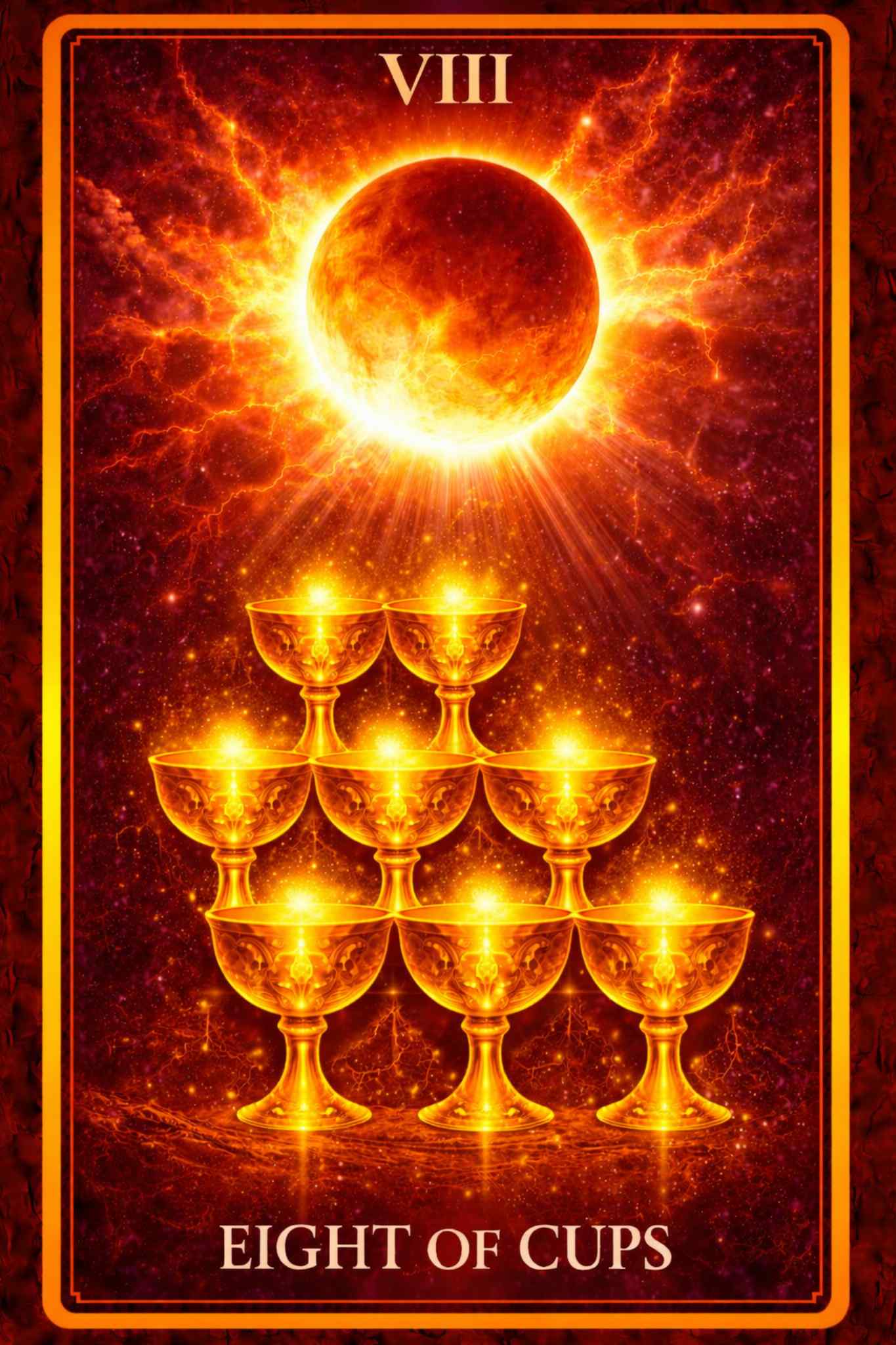
Some endings happen through visible rupture. Emotion rises, disappointment becomes impossible to contain, and a person leaves because staying has already become intolerable. Other endings arrive through a quieter, more demanding clarity. The bond may still look intact from the outside. The role may still function. The path may still offer familiarity, routine, or partial comfort. Yet inwardly something essential has withdrawn, and the deeper question is no longer whether the form can be preserved, but whether the self can remain honorable while continuing to inhabit it. The Emperor and Eight of Cups belongs to that second kind of threshold. This pair speaks of emotional departure governed by self-respect, of walking away as an act of inner law, and of the moment when the heart stops negotiating with what can no longer sustain real allegiance. The Eight of Cups brings disengagement, disappointment, the sober recognition that emotional life has thinned, and the turning away from what once mattered but no longer carries the same truth. The Emperor brings authority, structure, clear boundaries, and the strength to make a difficult transition without becoming scattered by guilt, fear, or emotional drift. Together, these cards describe a departure shaped by standards rather than collapse.
This is what gives the combination its unusual force. The Eight of Cups is often associated with leaving, though the deeper issue is not movement alone. It is the recognition that continued participation has become inwardly false. Something may still contain effort, history, or the appearance of stability, yet the heart has already begun separating from it because what once nourished now merely persists. The Emperor enters that emotional reality without softening its seriousness. He does not ask the person to stay for appearances, and he does not romanticize the pain of departure. He asks something sterner and more clarifying: what kind of self are you becoming by remaining here now? In his presence, leaving becomes less about reaction and more about moral alignment with one’s own inner truth.
That distinction matters because many people remain far beyond the point of honesty. They keep giving time, effort, and emotional access to structures they have already outgrown because ending them would force a painful kind of clarity. The Emperor and Eight of Cups refuses that half-life. It suggests that there are moments when endurance stops being noble and starts becoming self-betrayal. The person may still care. They may still feel tenderness, sadness, or responsibility. Yet they also know that care alone cannot justify staying inside something that no longer carries living depth. This pairing is powerful precisely because it shows the point where emotional truth becomes a matter of self-governance.
When staying begins to cost too much of the self
The Eight of Cups often appears when the emotional center of a situation has already shifted. A person may have spent a long time hoping that meaning would return, that connection would deepen again, or that effort would somehow restore what has gradually been draining away. Very often this card arrives after patience, after attempts, after repeated inward negotiation. Beside The Emperor, the reading becomes less concerned with whether the leaving is justified and more concerned with how the person will carry it. What boundaries are needed? What practical steps must be taken? What inner order will keep the transition clean enough to preserve dignity on both sides?
This is where The Emperor becomes deeply protective. He recognizes that necessary endings can still become messy when they are delayed too long or handled without structure. The Eight of Cups may already know the truth emotionally, though emotional knowledge alone does not always create movement. Without form, the person may remain in prolonged partial withdrawal, appearing present while inwardly absent, keeping the outer shell intact long after the inner allegiance has gone. The Emperor interrupts that suspended state. He says that if the truth is already known, then the task is to give it a stronger shape. That may mean firmer boundaries, clearer language, more decisive pacing, or the courage to stop feeding a situation that survives only through avoidance.
There is something soberly compassionate in that. The Emperor does not advocate cruelty. He advocates coherence. He understands that unclear departures often prolong pain far more than direct ones. They keep everyone inside a fading structure, hoping for life where only habit remains. The Eight of Cups shows the heart’s withdrawal. The Emperor asks the person to stop pretending that inward departure can remain consequence-free forever. This is one of the more mature messages in tarot. It says that truth deserves embodiment, especially when continuing to delay it would erode integrity further.
Walking away is sometimes the form self-respect takes when emotional honesty can no longer be postponed
One of the deepest teachings in this combination is that leaving can be an act of order rather than rebellion. People often imagine departure as drama, emotional overflow, or the inability to endure. Yet the Eight of Cups paired with The Emperor suggests another pattern altogether. The leaving may be quiet, deeply considered, and even restrained. The person is not necessarily fleeing pain. They are choosing to stop living inside a structure that no longer deserves their loyalty. That is what makes the pair so strong. It reframes departure as discipline.
This matters especially when there is no obvious catastrophe to point to. Sometimes nothing has exploded. Nothing scandalous has happened. Nothing external looks broken enough to satisfy the expectations of others. Yet inwardly the person knows that the emotional life has gone out of the arrangement. The Emperor validates this kind of knowledge. He reminds the person that they do not need public disaster in order to honor private truth. A form can remain outwardly functional and still become inwardly false. The Eight of Cups recognizes that loss of vitality. The Emperor gives the person permission to act from it with seriousness.
The pair can also reveal a very important distinction between grief and misalignment. Leaving something meaningful often hurts, and the hurt may tempt the person to assume they should stay longer simply because departure carries sorrow. The Emperor helps separate those layers. Pain does not always mean the choice is wrong. Sometimes pain is the cost of finally bringing action into alignment with what has already been known for a long time. This is why the combination can feel both heavy and clarifying. The sadness remains real, though it stops having veto power over what maturity requires.
When the energy becomes imbalanced, the distortions are easy to recognize. The Emperor can harden the leaving too much, turning clean boundaries into coldness, pride, or emotional overcontrol. The Eight of Cups can stay too indefinite, circling departure inwardly without ever giving it a shape strong enough to protect the future. The healthiest expression avoids both extremes. Let the leaving remain human. Let tenderness remain visible. Then let the decision become firm enough that life can actually move. That balance is what allows a necessary departure to become dignified rather than punishing.
Love and relationship meaning
In love readings, The Emperor and Eight of Cups often points to a relationship threshold where emotional truth has matured beyond wishful endurance. One person may realize that the bond no longer offers the depth, reciprocity, or living nourishment it once seemed to promise. There may still be attachment, care, memory, or a sense of responsibility toward what has been shared. Even so, the deeper current has changed. The Eight of Cups shows that inward movement away from the connection. The Emperor shows the need to stop carrying that truth only in silence and begin giving it a form strong enough to protect everyone involved from prolonged ambiguity.
At its healthiest, this combination supports a clean and honorable response to relational emptiness. If there is still something real to rebuild, then the relationship would need far greater structure, accountability, and substance than it currently has. If that structure cannot be created, then staying may become a slow injury to both people. The Emperor helps the person resist the temptation to keep offering partial presence simply because total clarity feels difficult. He asks whether the relationship is being preserved out of genuine vitality or out of fear of the consequences that truth would bring. In many cases, that is the decisive question.
The pair can also describe someone who is already gone emotionally while still present outwardly. They may continue fulfilling roles, speaking responsibly, or maintaining order on the surface, though their inner allegiance has already shifted elsewhere. This is where The Emperor becomes especially important. He asks whether that inner departure will remain hidden and therefore corrosive, or whether it will be brought into a more direct and mature form. The issue is not heartlessness. The issue is whether emotional reality will be handled responsibly before delay turns into a different kind of betrayal.
There is a demanding relational lesson here. Love is not measured only by how long someone stays. It is also measured by the honesty with which they recognize when the structure has ceased to hold real life. The Emperor and Eight of Cups often appears when a person is learning that self-respect and relational respect may require the same action. To leave what no longer carries emotional truth can be painful. To remain while inwardly absent can be crueler over time. These cards bring that difficult wisdom forward without sentimentality.
Inner authority, life transitions, and choosing a stronger terrain
Outside romance, this combination can speak strongly to work, vocation, identity, family roles, friendships, or long-standing life arrangements that once offered meaning but now feel emotionally depleted. The Eight of Cups brings the awareness that continuation is no longer the same as devotion. The Emperor helps the person translate that awareness into a more stable transition. This may involve planning, simplifying, reducing entanglements, strengthening outer structure, or reclaiming authority from situations that have quietly been consuming more life than they return.
Need a little more context around this pairing?
A short reading can help you reflect on the tension, direction, or lesson this combination may be pointing toward.
Psychologically, the pair often marks a major developmental threshold. The person is learning that maturity does not always mean remaining faithful to old forms. Sometimes maturity means becoming faithful to truth even when truth requires departure. This can be especially profound for those who were taught to equate goodness with endurance, accommodation, or the ability to keep functioning inside emotionally empty structures. The Emperor and Eight of Cups offers another model. It shows that adulthood can include the disciplined courage to leave what no longer deserves the heart’s continued allegiance.
There is also something deeply strengthening in the terrain that opens after such a choice. The Eight of Cups often carries sadness because it leaves behind something once loved or once hoped in. The Emperor makes sure the person does not interpret that sadness as failure. He understands that grief and correctness can coexist. What matters is whether the person is moving toward a life with more integrity, more inner alignment, and more honest use of emotional energy. When viewed this way, the departure becomes less about loss alone and more about the recovery of personal command.
Timing and the wisdom of decisive transition
Timing matters strongly with this pair because it often appears when the inner departure has already begun and the next task is to stabilize it into action. This may be a time to reduce mixed signals, organize practical realities, name boundaries clearly, and stop postponing what the heart has already concluded. It can also be a time to protect the transition from impulsive drama. The Emperor rarely favors chaotic exit. He favors deliberate movement, where the person remains accountable to their own standards while allowing the necessary ending to unfold.
There is a valuable timing lesson here around exhaustion as well. Many people wait until they are so depleted that they can leave only through collapse. This pair suggests another rhythm. Recognize the truth earlier. Gather your structure earlier. Move before bitterness becomes the main voice left in the room. That is not impatience. It is wisdom. The Eight of Cups knows when emotional life has gone thin. The Emperor helps ensure that this recognition becomes a clean turning point rather than a prolonged private erosion.
Want to place this combination into a wider reading?
If this pairing feels close to something you are experiencing, a simple spread can help you reflect on the surrounding energy with more clarity.
Closing reflection
There is something stern and deeply respectful in this pairing because it shows that leaving can be one of the clearest expressions of inner law. The Eight of Cups says the heart knows when something no longer carries enough life to justify continued allegiance. The Emperor says that this knowledge deserves shape, boundaries, and decisive embodiment. Together, they reveal a form of maturity that many people resist until they have no other choice: the willingness to stop inhabiting what has already become false inwardly.
The deeper wisdom of these cards is that a necessary departure becomes powerful when it is carried with order. Let the sadness be real. Let the tenderness remain. Then let the decision honor what the heart already knows. The Emperor and Eight of Cups often appears exactly there, where emotional truth has crossed the threshold from feeling into law, and the real work is learning how to leave with enough steadiness that the self does not get lost in the act of protecting itself.
More combinations with The Emperor
More combinations with Eight of Cups
Continue with The Emperor
Explore Related Guides by Topic
If you want to explore this combination through a more specific emotional lens, these tarot guides can help you follow the broader pattern behind the reading.